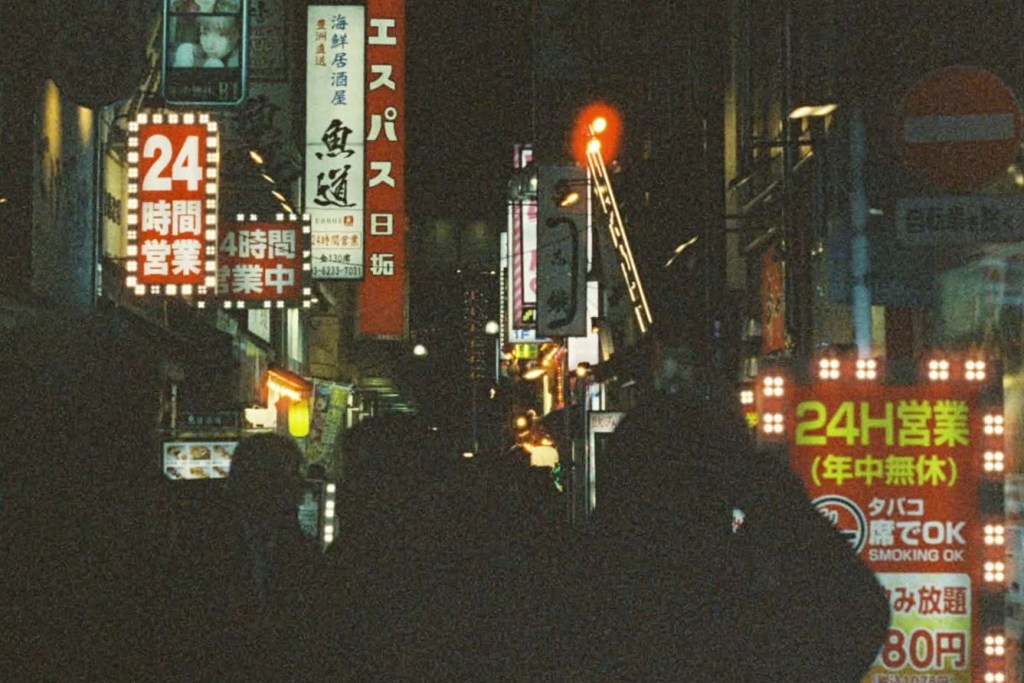
Cover image courtesy of Iain Stott: Instagram @iainastott
Shinjuku station is the human equivalent of an anthill. Every day millions pour through its labyrinth of malls, concourses and platforms in continuous, faceless streams. Incomprehensible at the macro level, on the ground everything appears to operate seamlessly; trains arrive to the minute, cancellations are coolly resolved, logjams are unfathomably avoided. Still, arriving there for the first time can incur a semi-catatonic response, senses engulfed by the intricacies of a network that seems to defy logic. No relief comes when an exit is somehow found, for there Shinjuku proper begins, defying analogy even by Tokyo’s incommunicable standards. A nonsensical pileup of infrastructure and real estate welcomes the eye, buildings overlapping like a surrealist’s imagination, businesses layered upon businesses like tiers in a wedding cake. An uninterrupted chatter of adverts pipes through enormous loudspeakers, pitch-shifted, sugary melodies that stick to the hippocampus like glue. And around every corner the whimsical, if not bizarre: a 3D cat on an electronic billboard entertaining a busy intersection; a jumbo, smoke-breathing Godzilla head rising red-eyed from a hotel roof, fifty metres above the ground.
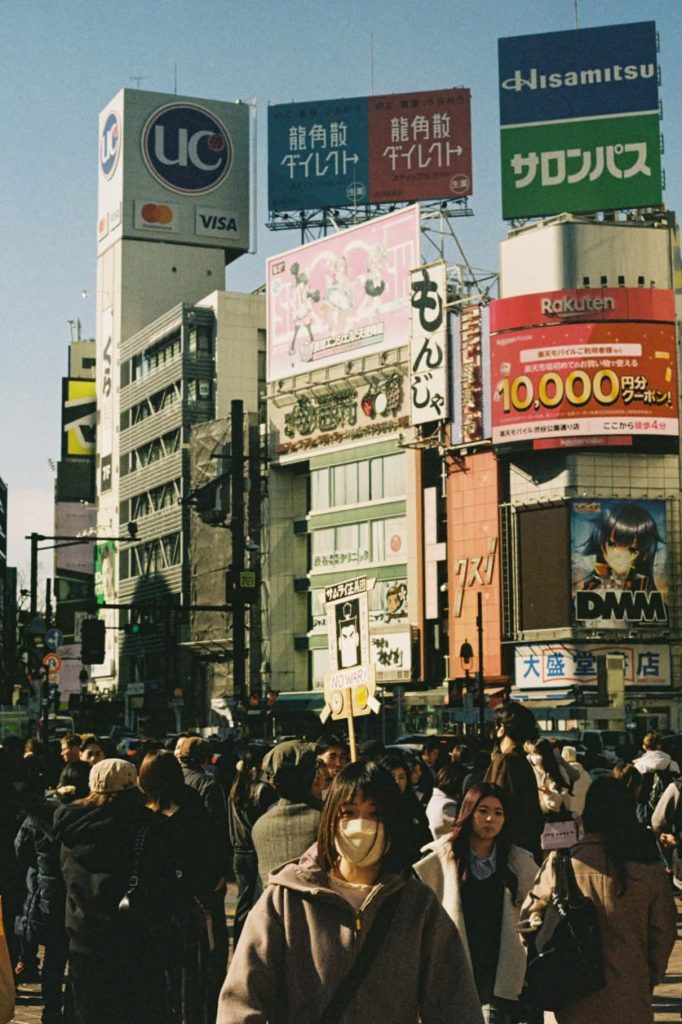
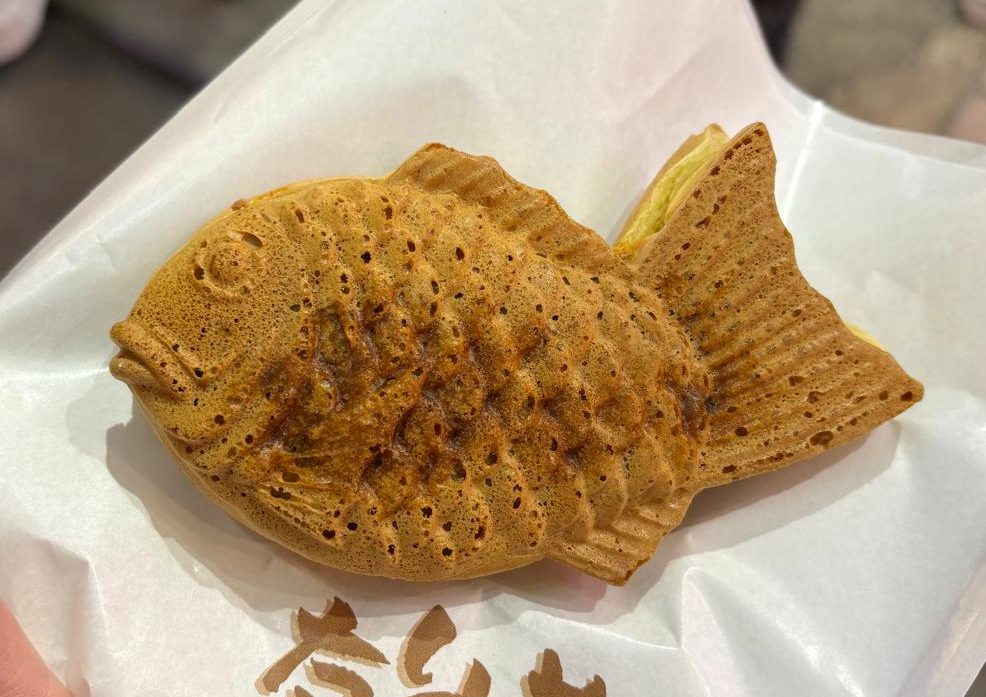
We’d come to Japan, in part, to meet friends from home, and how surreal it was to see their faces materialize from this panorama of unfamiliarity. Following the success of our feed in Kuala Lumpur, and given our relative inexperience with Japanese cuisine, we proposed a food tour to quickly immerse ourselves in options for the upcoming fortnight. Beleaguered and under slept, we elbowed our way through swarms of bodies as dusk spread violet overhead and night-time Tokyo blinked to LED-lit life. Mercifully, there was less food than in KL, though enough to introduce the essentials: sashimi (raw fish, different from sushi where rice is the defining ingredient), and chewy translucent strips of jellyfish, and prawns in tangy kewpie mayo; bowls of yakisoba, fiendishly oily stir fried noodles, and karaage (fried) chicken, and tonkatsu (fried pork cutlets) dipped in hot mustard; and to finish, taiyaki, fish-shaped pancakes filled with sweet red bean paste or chocolate or vanilla custard, our go-to streetside treat for the rest of our time in Japan.
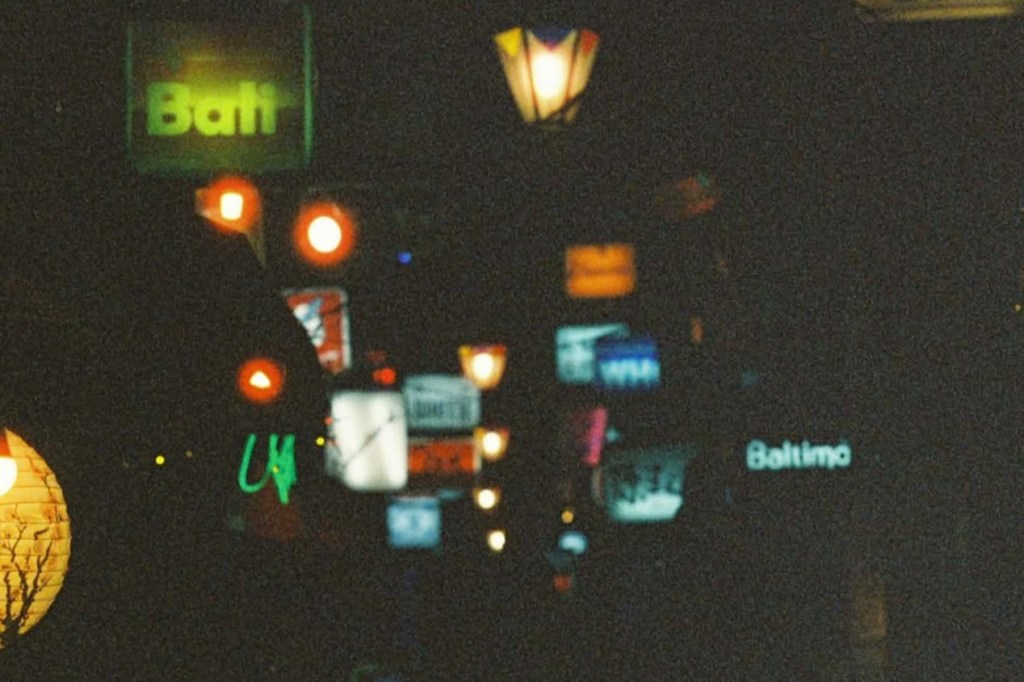
On that tour we met Vincent, a German Swiss visiting Tokyo alone. He moved with us afterwards to Golden Gai, a network of six narrow alleyways providing a snapshot of old Tokyo before the mass redevelopments of the ‘economic miracle’. A shadowy complex of intimate bars burrowed within the heady metropolis, the area has commonly been a favoured haunt of Japanese artists and intellectuals. Today tourists are more easily found wandering its tight streets, though some bars do refuse their custom, remaining admirably loyal to the regulars. It’s an expensive place to drink, a premium being paid on space, for each izakaya (many occupy just one storey of each cramped, two-storey building) can often hold only 5 to 8 people at a time. Still, we discovered an empty bar that would welcome us and set to enjoying one of Japan’s national pastimes, with lemon highballs and Suntory whiskies, glasses of Kirin Ichiban beer, and shots of sake aplenty. To maintain our stamina there were otoshi, snacks of edamame beans or rice crackers, included as a seating charge to guarantee income even from the stingiest of drinkers – not us.
After a few rounds we moved to another izakaya, slightly more spacious, where an older Japanese gentleman drank alone. The young barmaid seemed familiar with him, though relieved to welcome us to the fold. The elder, however, only glared at us. But the ice was broken when Iain picked up a rubber chicken from the bar and squeezed it, emitting an almighty hoot. The barmaid hopped and clapped with joy, and even the old man cracked a smile; for Iain had failed to notice the sign stating whoever squeezed the chicken owed the bar a round of sake. He graciously bought it in despite Vincent’s attempts at haggling through the language barrier, and after shotting with cries of ‘kanpai!’ the old man seemed ready to warm to us. His first conciliatory gesture was to pass us his phone, which displayed a photograph of a half-dressed, highly curvaceous young woman. Through his murmurings we caught the word ‘granddaughter’, and a quick translation check confirmed it the case. Assuming he sought our blessing on her looks, we awkwardly nodded our assent, failing to hide our discomfort. Perhaps he was hoping to establish some sort of man-to-man understanding, or perhaps he was genuinely proud of his granddaughter’s appearance; either way, cultural or generational barriers remained entrenched, and an unmovable unease settled over the bar. Sensing the tension, the man clammed up again. ‘Sorry’ he muttered, over and over, eyes locking onto the opposite wall as he returned solemnly to his beer. We reassured him there was nothing to apologise for, pitying his fruitless attempts at connection and subsequent self-reproach. We bought him another sake before we left and shook his hand. That cheered him a little, I think.
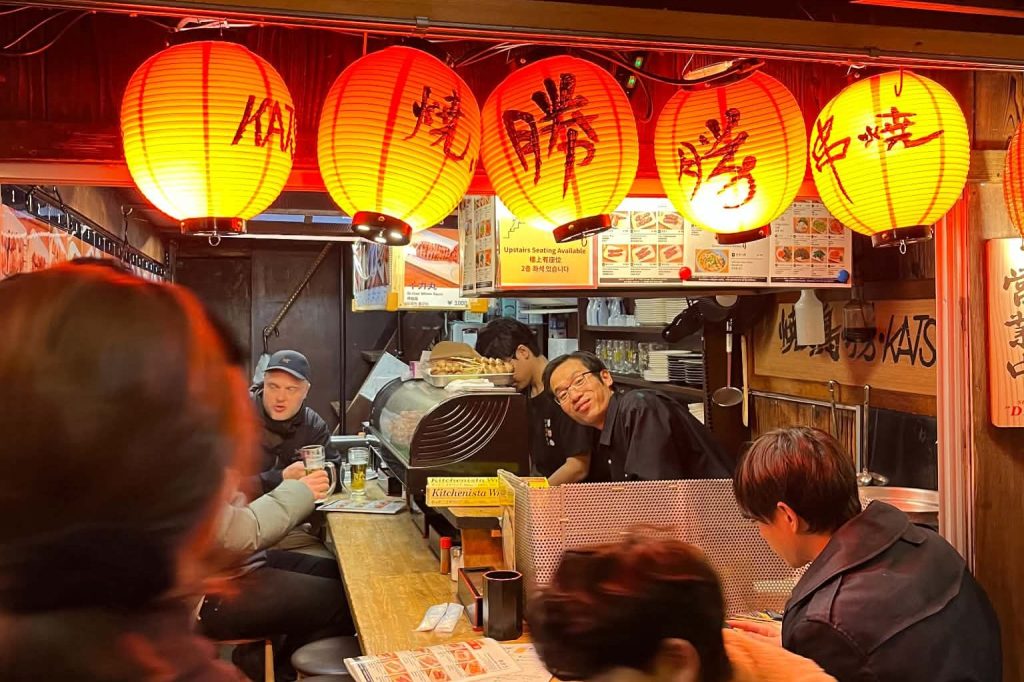
The next night we met another friend from home who, at a height of 6ft5, towered over the crowds to the great delight of all around. Together we slipped – literally, and figuratively – down Omoide Yokocho, ‘Memory Lane’, a half-hidden alleyway tucked near the west exit of Shinjuku station. Here the izakaya also served up yakitori (charcoal-grilled chicken skewers) amongst other salty, fatty goodies on bamboo sticks, perfect prolongers of inebriation. The bar was even more restricted than those in Golden Gai, a line of stools against a wall facing a narrow counter and a crowded kitchen where four men bobbed and weaved, mixing drinks and sizzling skewers in stifling proximity to each other. We stuck to beers this time, ideal accompaniments to the chewy chicken skins and meatballs and shiitake mushrooms glazed in sweet soy. That night was cold, the heat of the open flames and cram of bodies steaming through the curtained doorways all along the lane, melting against the winter air. Like Golden Gai, Omoide Yokocho sprouted from the bombed-out ruins of WWII, a black market serving the needs of a battered populace. It’s traditional name persists, ‘Piss Alley’, recalling the days when amenities lacked and drinkers relieved themselves on the nearby train tracks. A fire tore through in 1999, but against all odds the area was restored to its traditional essence (albeit with restrooms and cladding). Around here you can see groups of salarymen at nomikai, work-sponsored drinking socials. Though alcohol consumption isn’t enforceable, it’s not uncommon for suited and otherwise respectable-looking men to get utterly spangled on a weeknight, even to the extent of passing out streetside or on the subway. Office culture is less draconian than it once was, when junior workers were expected to wait on their bosses and couldn’t leave until after superiors were done. It’s easy to see how the young and ambitious could still be driven to problematic states though, all in the seemingly remissible name of career-advancement.
East of the station is Kabukichō, the pleasure centre of Shinjuku, commonly known as the red light district. Prostitution has been illegal in Japan since 1958, but this applies only to penetrative intercourse, leaving room for plenty titillating, imaginative alternatives. We were astonished by the ranks of touts lining both sides of the street, hundreds of girls (many looked like children) in long rows, jostling to entice passers-by into their clubs with shouts and waves. Many would work for the hostess clubs, different from brothels in that they solicit emotional companionship instead of sex. The clubs are particularly popular in the corporate world as a place for salarymen, sometimes on company expense, to boost their status by lavishing money on beautiful young women who may not otherwise look at them. There’s often no touching in the clubs, though relations have been known to develop in the outside world. Instead, the hostess pours the drinks, lights the cigarettes, and sings karaoke. Above all, she makes her clients feel important. It can be a lucrative side-hustle for students, or even a full-time career choice – and it’s not limited to women either. We saw male touts working the streets for host bars, anime-looking guys with razor sharp features and not a millimetre of facial hair, walking adolescent fantasies that contrasted starkly with the rugged, cowboy ideal of Western masculinity.
The hostess bars aren’t the only option. For otaku – ‘geeks’ infatuated by anime and manga and video games – there are maid cafes, where the emphasis is less on advertising status than on role playing intimacy. The girls here, dressed up as maids, are less overtly sexualised, presuming to embody a childish innocence – though that, in itself, can be disconcerting. Clients are greeted as ‘master’ or ‘mistress’ and welcomed ‘home’, even if it happens to be their first time visiting the café. For many it’s not – some come most days, if not multiple times per day. The maid café functions as a space where imagination and reality can blur. The girls are not real; that would defeat the point. Instead they are living embodiments of the characters otaku encounter in the worlds of their hobbies. For varying fees they provide degrees of companionship, recognition, and emotional intimacy. They laugh at jokes, dote on, flatter, even mistreat if that’s what the client desires. For some, it’s an essential, if imperfect, substitute for an absence of real-life intimacy, a relationship sitting somewhere between the reciprocal and the parasocial.
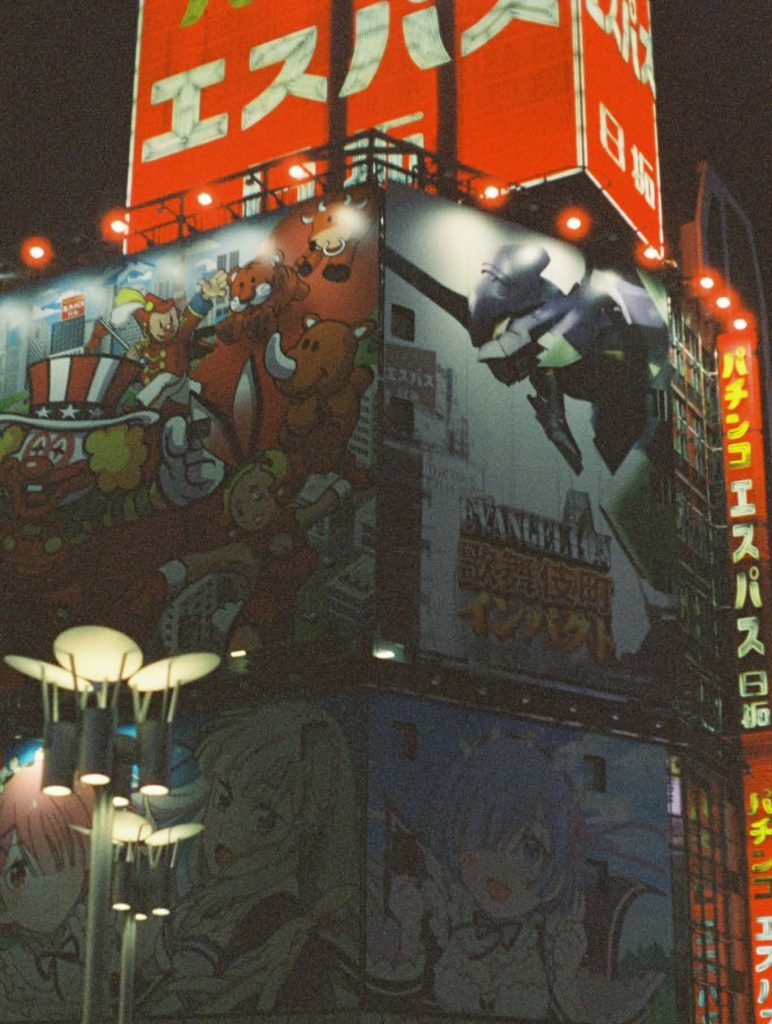
In some ways, Japanese culture seems oxymoronic. A tradition grounded in etiquette and social harmony, where unspoken norms, baffling to outsiders, dictate behaviours we wouldn’t otherwise consider (no phone calls on the train; no eating on the street while walking; no crossing at red lights, even if it’s clear). Greetings are often accompanied by bows, expressions of gratitude are profuse and repetitious (‘arigato gozaimaaasu’), and courtesy is extended to strangers in ways I would never have anticipated in an alienating megalopolis. And yet, beneath the veneer of ultra-politeness, there was often a simmering undercurrent of lewdness. We spied men on public transport blatantly watching hardcore pornography, entered bookstores where explicit schoolgirl manga neighboured textbooks aimed at actual schoolgirls, and were continually baffled by images fusing childish purity with sexuality. All lurid in a coy way, admittedly. The only openly aggressive misogyny we witnessed was that of white Western men, obnoxious sex tourists who saw Kabukichō as a playground to fulfil their orientalist fantasies judgement- and consequence-free.
There is a dark undercurrent to all this emphasis on play, and not simply the Yakuza involvement, whose workings have been clamped down on in recent years. No, the darkness lies in the very emphasis on escapism itself, a culturally coded inducement to fly from a reality that perhaps refuses to be avoided. Modern terminologies have emerged over the decades to express a plethora of modern dysfunctions: hikikomori, the isolated who rarely ever leave their homes; kodokushi, those who die alone and undiscovered; karoshi, those who die from overwork, possibly trying to surmount insurmountable financial or social obligations. Perhaps play is extremized here because the pressures of normal life are extremized. The maximalism of areas like Kabukichō functions as a salve to the drear of working life, where basic human pleasures are either too unstimulating or too inconvenient. Signs of compulsion greeted us everywhere: from the morning queues outside pachinko halls, to the arcade stations where teens drilled high scores with blistering intensities; from claw games where lone adults slotted coins for a chance at anime figurines, to subway riders smashing numbly at colourful mobile games, seemingly fraught with some unchanneled tension.1
When work is intense and play is intense, there’s no time to squander on the basic frivolities of everyday life. Convenience, therefore, is an absolute must. Cue toilet seats like armaments, cleanliness at maximum efficiency. Or vending machines on every street serving hot drinks, snacks, cosmetics, collectibles, even full meals. Or the now widespread sushi bar, dispensing with human interaction, where one push of a button whisks grilled eel or crab or battered cod or salmon eggs along a conveyer belt with nought but a ping and a jingle. Nowhere, however, is convenience more coded than in the 24/7 konbini, the 7/11s and Lawsons and FamilyMarts. Every day we’d end up in one, usually multiple times a day, drawn like moths to their bright white lights and pre-packaged, usually artificial, wares. After a month of deliberately undereating, we could hardly resist this cornucopia of bite-sized snacks: famichiki from the hot counter, melon pan, egg salad sandwiches, smoothies, cakes, chocolates, onigiri, on and on and on . . .
But too much convenience and pleasure can be exhausting. After only a few days of hard play, throats scratching from the smoky izakaya and tottering on the brink of illness, we began to crave a slower pace of life. It was hungover on a dull morning, snow drifting down from a steely sky, that we headed back to Shinjuku station with thoughts of a different Japan; the Japan of Dōgen and Hokusai, of misty bamboo forests and Shinto shrines perched upon impossible peaks. Above all, we fantasized a certain mountain, symbol of all things timeless and numinous in Japan, spiritually worlds apart from Shinjuku, if only a couple hours’ train ride.
Yes, we were going to pay our respects to Fujisan.
- Or yet, maybe that’s all projection. Maybe these are healthy outlets that simply make life in Tokyo liveable. Maybe my scepticism is just a product of my own cultural otherness, if not parochiality. The jury remains out, I’m afraid. ↩︎
References
Galbraith, P.W. (2011). ‘Maid in Japan: An Ethnographic Account of Alternative Intimacy’. Intersections: Gender and Sexuality in Asia and the Pacific, 25. http://intersections.anu.edu.au/issue25/galbraith.htm


Leave a Reply