Snow drifted from a forlorn sky as our train pulled away from Shinjuku. Despite being crammed with bodies, the carriage was a vessel of serenity after the clamour and confusion of the station. A polite hush reigned, eyes withdrawing to phone screens or windows, beyond which Tokyo, grey and unfathomable, radiated out as far as the eye could see. With each passing station a handful of passengers were swallowed back into the conurbation. Few boarded as we approached the peripheries, where buildings started to dwindle in size and the city slowly disintegrated. Then came the hills, hunching either side of the carriage as the track began to climb. The flurries thickened, visibility shortened, and with every stop a blast of freezing air ripped through the doors like a marauding horde. Ash and I huddled closer together, regretting the thin layers we’d prioritised to save money on luggage fees. Iain and Linda were better prepared, though they too felt the cold’s invasiveness, crawling under the gaps in our clothes and wrapping our bodies in a chilling embrace.
“No Fuji today,” the woman behind the desk had warned, gesturing towards a laminated card that forecasted, in the international language of little symbols, very heavy snow. Only with some persistent reassurance – that we weren’t day trippers, that we had somewhere to stay – was she convinced to concede us our tickets. It was with relief then that we’d boarded the train from Shinjuku, glad to be leaving the madness of the city, gladder still for some respite from the cold. Yet as we ascended into that world of whiteness, I wondered exactly what awaited us. I think we all were silently hoping our journey would not be in vain.
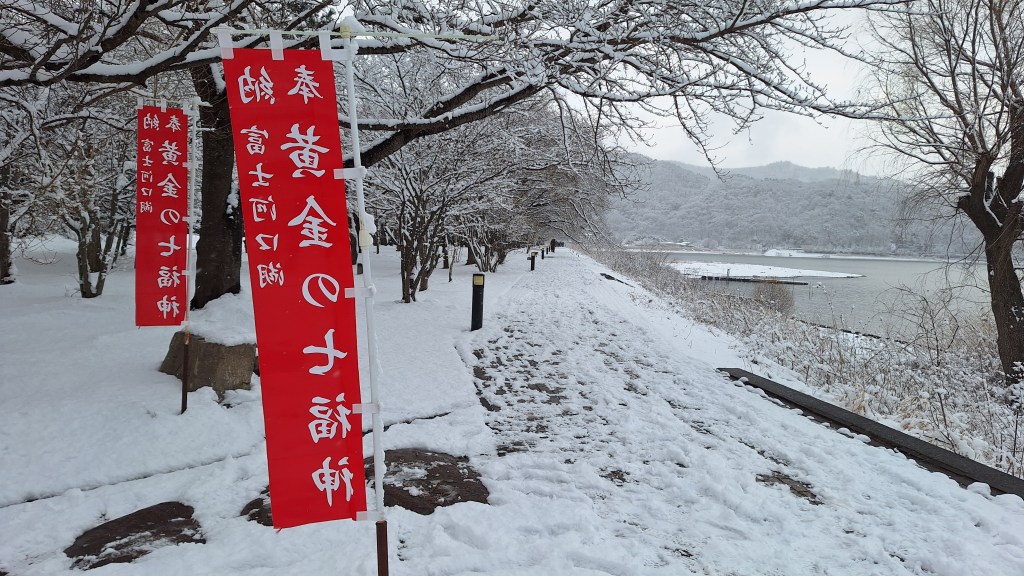
Mount Fuji, Japan’s conical icon, is ringed on its northern side by five lakes formed from past eruptions1. The most popular of these is Lake Kawaguchi, around which the resort town Fujikawaguchiko has developed, bustling in summer and in cherry blossom season but mostly dormant in late winter when we arrived in town. Standing, the four of us, on its northern shore, staring disappointedly at a bank of clouds, we felt like the only people in the world. The sharp air was eerily still and barely a ripple stirred the lake. The nearby corridor of maple trees, firing with colour in every online picture, was a line of twisted shapes: dark, gnarled and naked. Every so often another visitor would appear on the shore, wrapped up like some mysterious Arctic explorer. But for the most part we stood there alone, willing the clouds to lift, fancying dark slopes where in reality nothing could be seen.
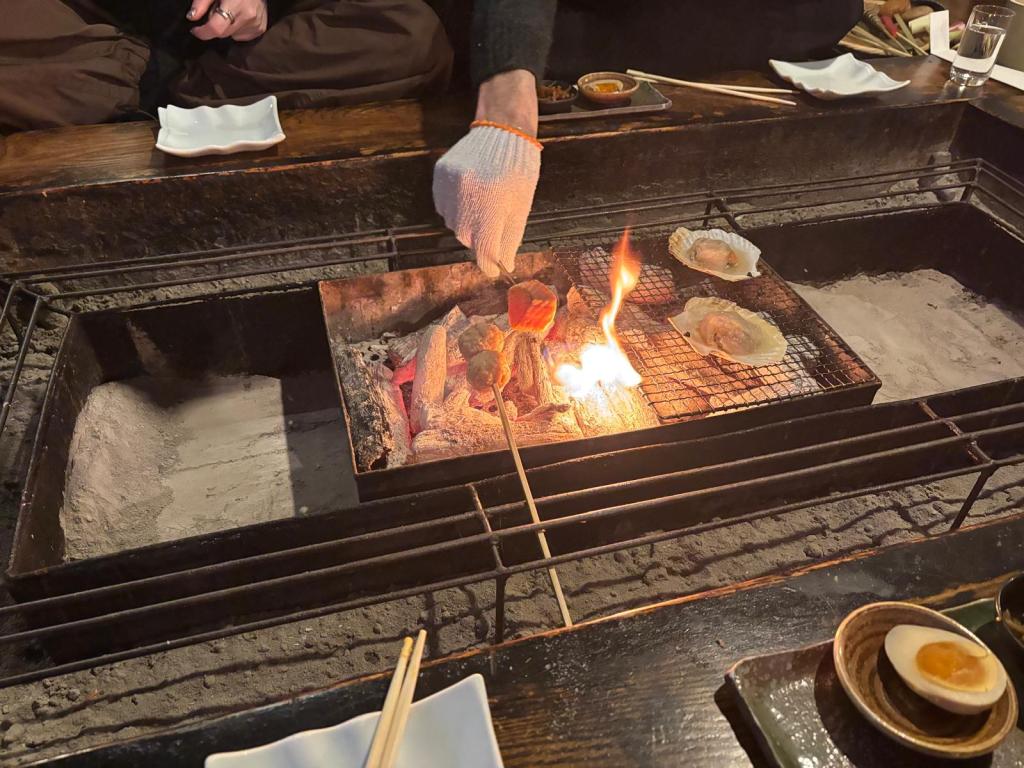
Only as evening approached did we accept defeat, seeking warmth in a robatayaki restaurant, a style of dining inspired by the fishing traditions of snowy Hokkaido, Japan’s northernmost island. Tatami mats and cushions surrounded an irori, an open charcoal hearth, which flushed our cheeks pink and set our spirits to defrost. As darkness draped across the windows we grilled duck, pork, chicken, fish, clams, eggs and tofu over the coals, sipping on bowls of broth and basking in a warmth that, for the first time that day, felt more than skin-deep. After finishing with some chewy mochi, we returned to our hotel rooms for cups of fruit tea and an early night, hoping for better luck in the morning.
It wasn’t to be. Ash and I woke with dreadful colds, our bodies mutinying at the abrupt change from summer Otago to winter Tokyo in less than a week. Still, we donned as many clothes as would fit and, with streaming eyes and leaden heads, crawled into the backseat of the hired Nissan, granting Iain and Linda full responsibility for the day’s itinerary. The snow, which had continued to fall overnight, showed few signs of letting up, and where the mountain was supposed to be there remained an opaque wall of grey. We resolved to make the best of it though, tentatively following the snowy highway westwards into the sprawling forest of Aokigahara, a sacred space made infamous abroad for entirely morbid reasons – as Japan’s ‘suicide forest’.
For decades many a lost soul has wandered into this sea of trees with thoughts of ending their life. Signs at the trailheads beg walkers to consider their loved ones and carry suggestions of helpline numbers. But getting lost here is incredibly easy, for those actively seeking it or not. The forest was formed atop one of Fuji’s hardened lava flows, so the mineral content of the earth is said to tamper with magnetic compasses. Along the highway plastic ribbons dangle sadly from branches, breadcrumb trails for those who ventured in with at least some hope of coming back. Whether they managed to or not, we had no way of knowing.
Following the highway through the hushed forest, we too fell into respectful silence. The snow dropped serenely on the trees, peaceful and beautiful. Somewhat unexpectedly, I felt I understood why someone would choose this place to spend their last moments on earth. The contrast between the forest and the manic city we’d just left was striking; the latter felt overwhelming and impersonal, the former moving and profound. Yet, though I’m rarely prone towards the supernatural, I felt sure we were tiptoeing around the edge of something dreadful. They say the forest is haunted by yūrei, spirits who cannot transition to the afterlife, who linger on earth awaiting the necessary funeral rites to send them away to their ancestors. I felt little desire to go near those trees, but the others wanted to experience their aura themselves. So we decided to stop for a moment, in an empty car park at the edge of the forest. All was silent, the fallen snow thick and powdery at our shins. A thin waterfall trickled in the blank light and a yellow-chested bird hopped from branch to branch, the only life – it felt – for miles around.
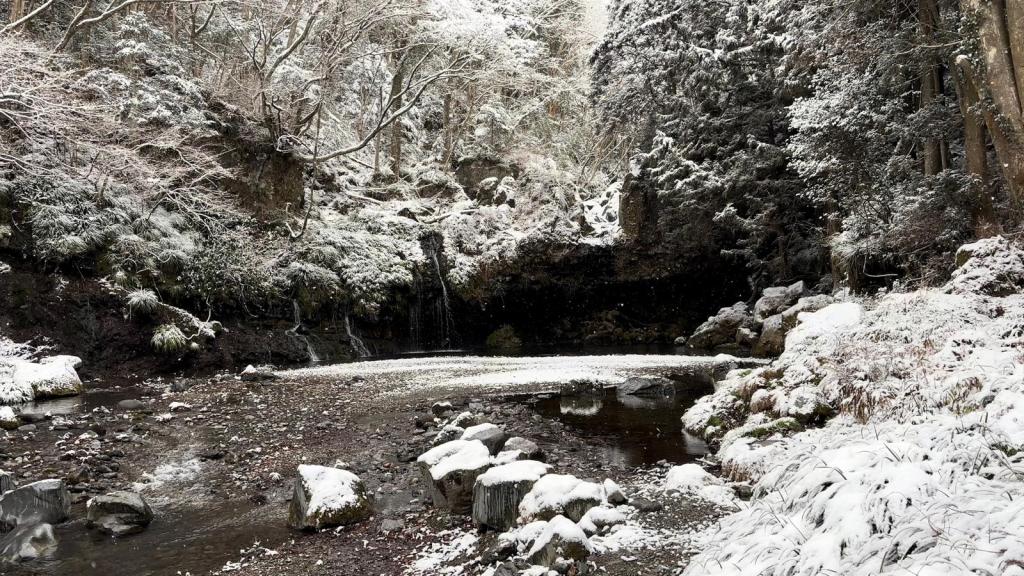
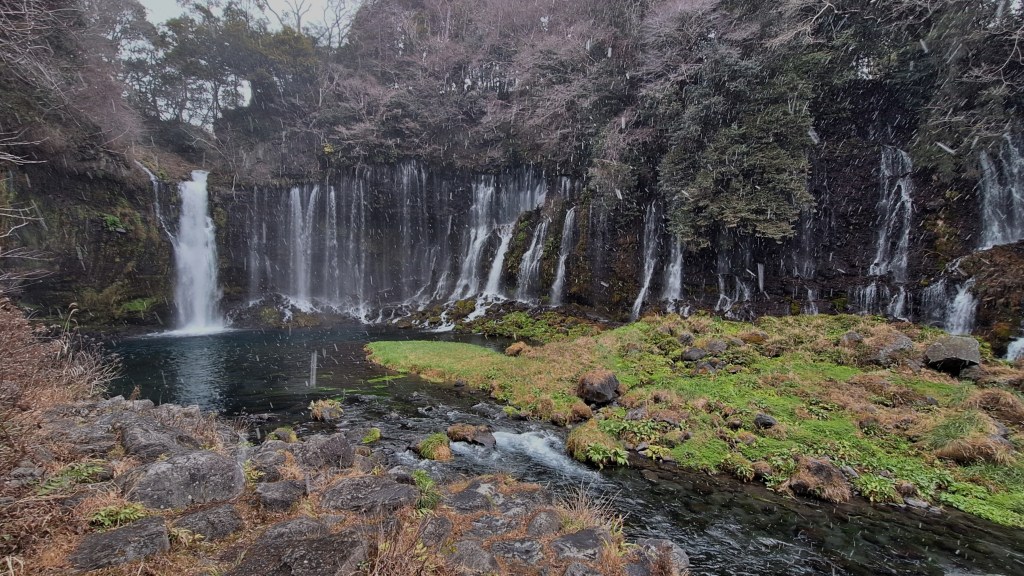
We’d resolved to circumnavigate Fuji that day, giving ourselves the best possible chance of seeing it should the clouds disperse. Driving south towards sea level we stopped by Shiraito Falls, where water slips from twenty-metre high cliffs like long threads of silk. The snow had faded here, but the wind blew harsher up from the coast, forcing us repeatedly into the car for relieving blasts of heating. We drove as far as Fuji City, an industrial-looking port town that looked wistful on that bleak Sunday afternoon. The townsfolk were sensibly sheltered indoors, and without the mountain to spectacularize the scene, we found little there to detain us. An inevitable konbini stop lifted our spirits, not least because Ash and I could dose up on syrupy lemon tea to soothe our raw throats. Then, tucked back into the car with our snacks, we set the GPS again for Fujikawaguchiko.
But the weather had caused havoc with the roads. Barriers prevented us accessing the eastern highway, forcing us to U-turn onto a toll road. This too was inaccessible because none of us were carrying hard yen, and our explanations to the frantic intercom were inevitably lost in translation. Before we knew what was happening, we were careening westwards along the highway in the direction of the coast, satnav frantically recalibrating a circuitous detour. We veered north as soon as we could, tunnelling through hills before dropping abruptly into a bamboo forested valley. The GPS sent us down increasingly quiet roads until we were turning hairpins up a forested track with no other car in sight. The others tried to keep spirits high, but I was feeling extremely sorry for myself. Daylight would soon be disappearing, and even if Fuji revealed itself now, it would be masked by the surrounding hills. Sinking back into the rear seat, I dreamt of my hotel bed, wishing the day to be over.
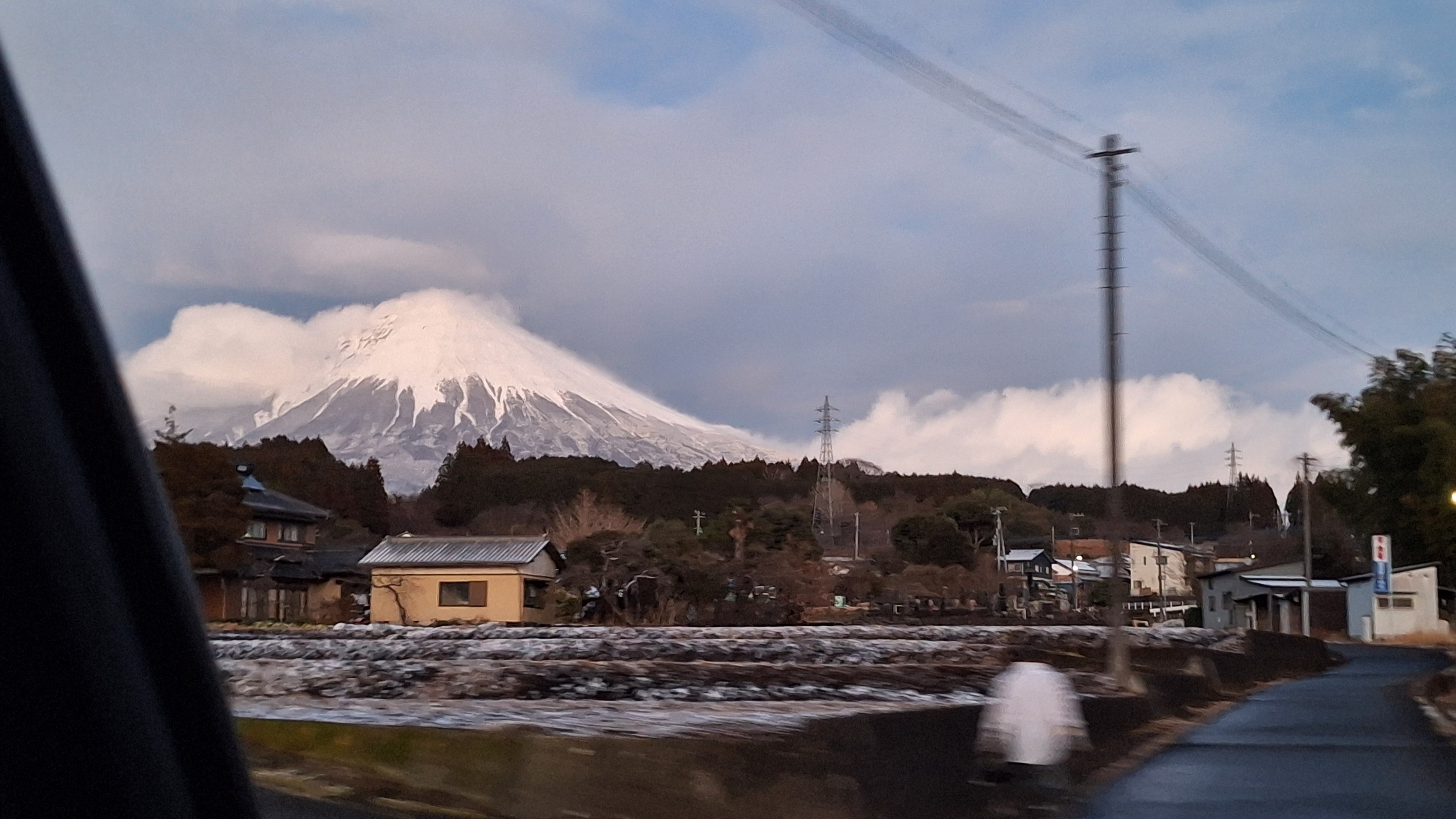
And just like that, it happened. The grey day was turning to a grey dusk as we crested a hill and, turning one last sharp corner, were presented with Fuji’s sudden, spectacular enormity. Clouds coyly masked the summit, but we grasped for the first time its unbelievable rise, slopes steeper than anything we’d envisioned when drawing it’s shape on the blank canvas of clouds. We took as many pictures as we could before darkness fell, thinking this might be our only chance; yet even when night came we continued to stare up through the gloom, imagining a silhouette there long after its shape was truly gone.
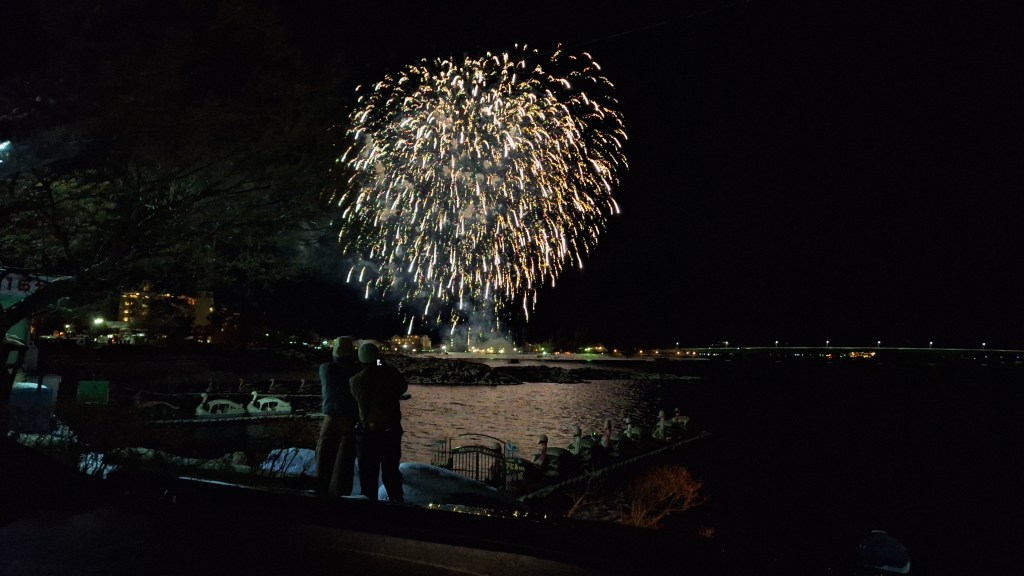
Linda did an excellent job steering us back home. The roads were treacherous and we witnessed a few cars lose control on the road, but she took the corners slowly and kept us gripped the whole way to Kawaguchiko. We stopped at a ramen restaurant in town, and never will I forget the feeling of rejuvenation as the spicy miso hit my tongue. We lingered a while to watch the winter fireworks festival, stocking up of course at the konbini. Linda and Iain stood out on the lakeside, but Ash and I remained huddled in the car, heaters firing on high.
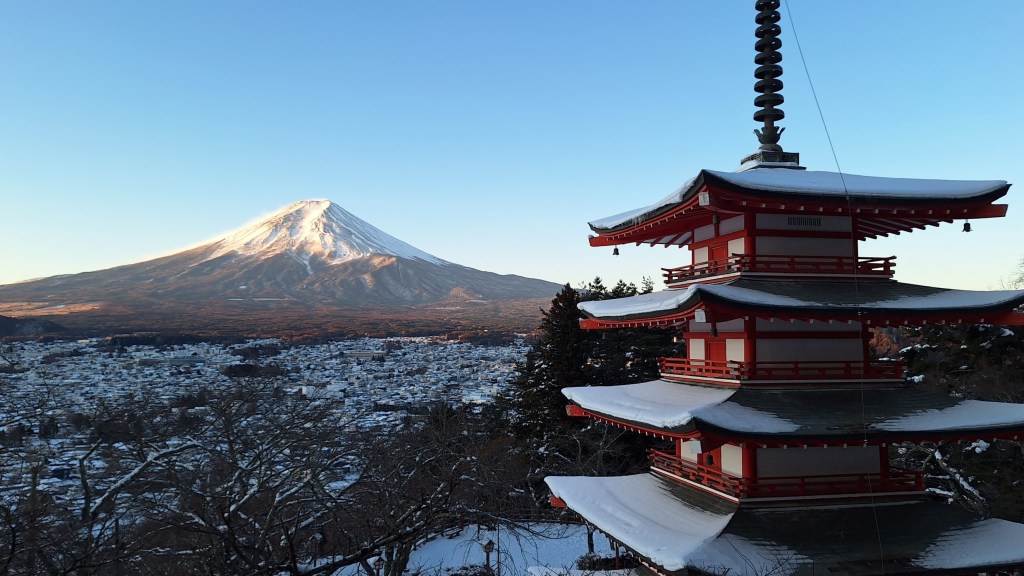
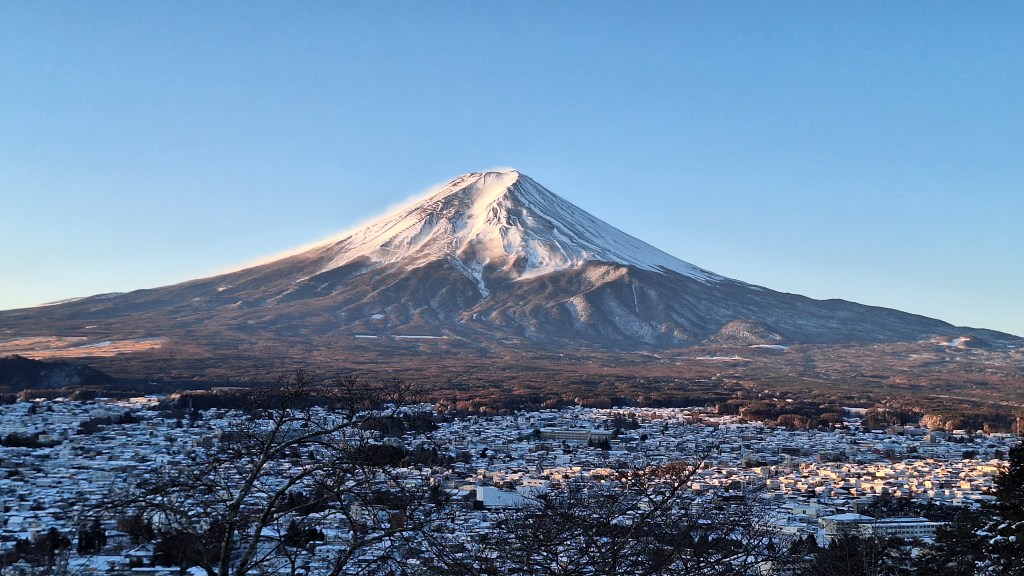
There is a saying in Japan: you do not decide to see Fujisan, Fujisan decides to see you. Evidently we’d passed the test, for the next morning we woke to the clearest, bluest dawn imaginable. At first light we hurried to Arakurayama Sengen Park where a famous pagoda overlooks the mountain, clichéd cover to many a Japanese guide book and blog post (this one included). The sun had not yet risen, the temperature hovering around -10 Celsius, so we bought some bottles of hot coffee from a vending machine to nurse in our pockets as hand warmers. Iain and Linda dashed off ahead, but Ash and I trudged up at our own pace, shivering and snivelling, our lungs burning from the jagged air.
Fuji changed our perspective of the surroundings completely, drawing out distances we’d been forced to imagine, dominating a landscape that, since we’d arrived, had lacked all depth. The town at the mountain’s base was shadowed by hills, but the rising sun turned its slopes first to pink then dusky yellow. The windblown snow danced over its contours, making it appear hazy and trembling like a mirage. But there was nothing unreal about it, sitting in meditation pose, a solid mass of snow and rock, perfectly poised and effortlessly picturesque. If you were to ask a child to draw a mountain, they’d probably draw something like Fuji.
The sun crept over the horizon, offering some respite from the gnashing cold, but we barely noticed. It was as if, having battled the elements and our own frailties, we were unknowingly being tested the whole time. Now our patience and determination were rewarded. The satisfaction wasn’t simply that we were seeing Fujisan. It was that Fujisan seemed to agree we deserved it.
- It remains an active volcano, most recently erupting in 1707 ↩︎


Leave a Reply