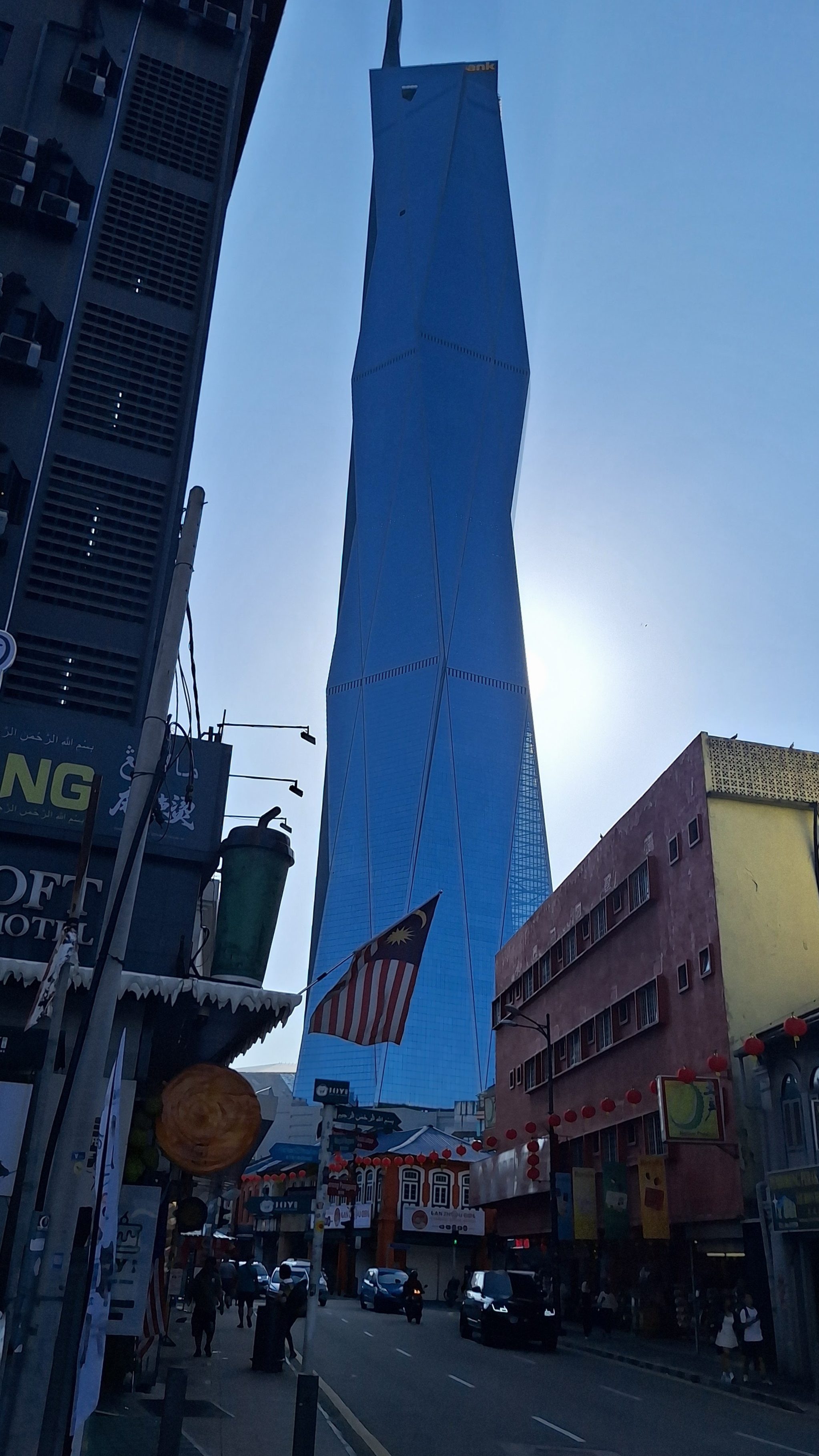
Merdeka 118 loomed over Chinatown like some grounded alien spaceship: mysterious, unearthly, immense. The world’s second tallest building thrust an imperious spire towards heaven – homage, we’d learn, to Tunku Abdul Rahman, first Prime Minister of independent Malaysia, whose raised hand and seven cries of ‘merdeka’ (freedom) hailed independence from Britain here back in 1957. Far below, Chinatown bustled, like it had done for generations. Few save us paid heed to this colossal addition to the Kuala Lumpur skyline, an extravagant and extortionate commemoration of Malaysia’s national past, not to mention a paean to the power and prosperity of its future.
A day layover in Malaysia’s capital left us little time to explore. Wanting to cram as many sights and tastes in as we could, we decided a food tour was the way to go. In the past I tended to avoid tours, preferring to think of myself as a ‘traveller’ and not a ‘tourist’ (pretentious, I know). Now I realise the distinction isn’t so clear-cut, that the pursuit of so-called authenticity, that ever elusive and illusory ideal of travel, can also become its own crutch. No, we were happy to outsource the guidance – someone to feed us and lead us – even if that lay, as everything does in modern life, behind a paywall.
AJ wasn’t a natural guide. He was polite but spoke infrequently, not to mention inaudibly, beneath the blare of KL traffic. We rendezvoused in Chinatown under the shadow of that brooding tower: us, two Swedes, two Australians, three Americans – a patently Western cohort, fired by a shared culinary curiosity. Together we would embark on a four hour expedition of the city’s fare, encompassing dishes from the three main ethnic groups that call Kuala Lumpur home: Chinese, Bumiputera (Malays and other indigenous groups), and Indian.
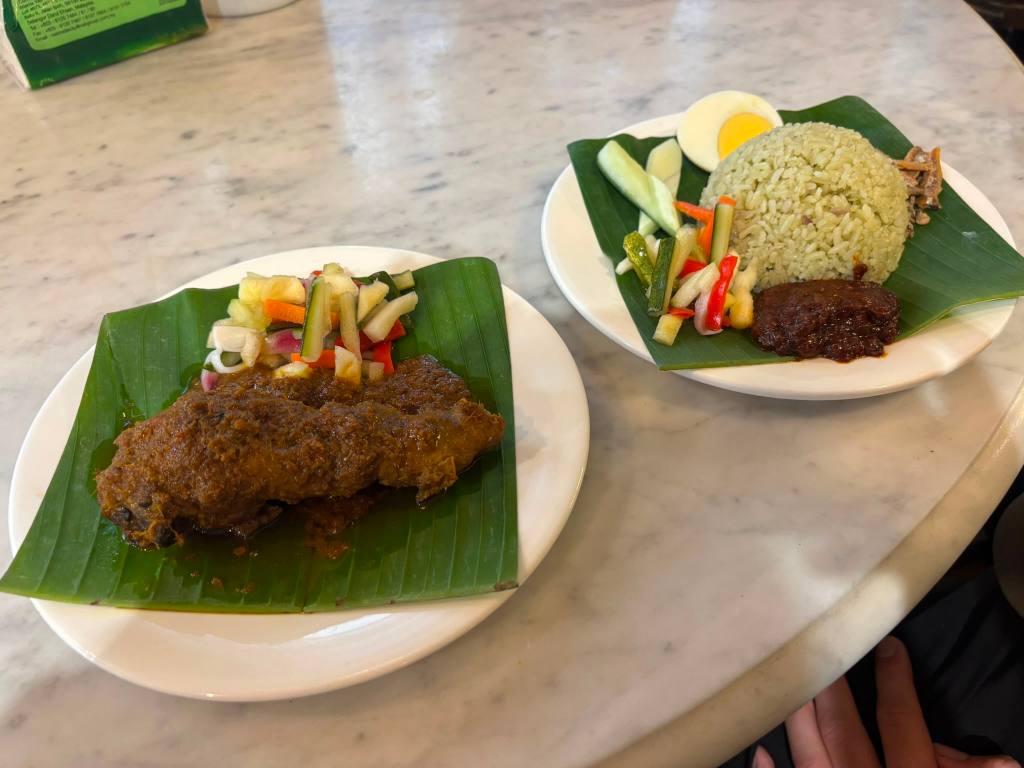
We began the traditional Malaysian way with breakfast in a kopitiam, or coffee shop. There was nasi lemak, the national dish, rice cooked in coconut milk and pandan leaves (‘the vanilla of Southeast Asian cooking’), plus vegetables, fried anchovies, sambal (a chili-based paste), and a hard boiled egg. There was also rendang, chicken slow-cooked in a spiced coconut sauce, and kopi, coffee sweetened and thickened with sugar and condensed milk. All tasty enough, but the highlight was kaya, a green coconut jam scraped over white toast soldiers. Less appealing was the half-boiled egg swirled in soy sauce, a lukewarm brown concoction I had to force down in one hesitating gulp.
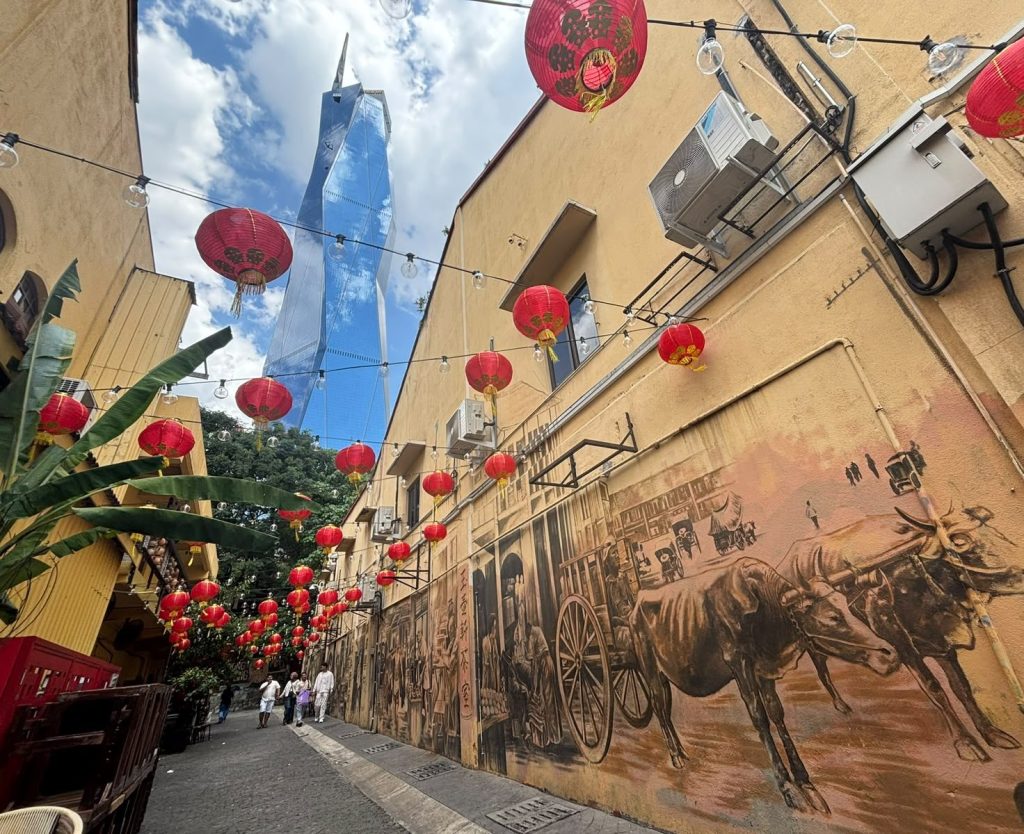
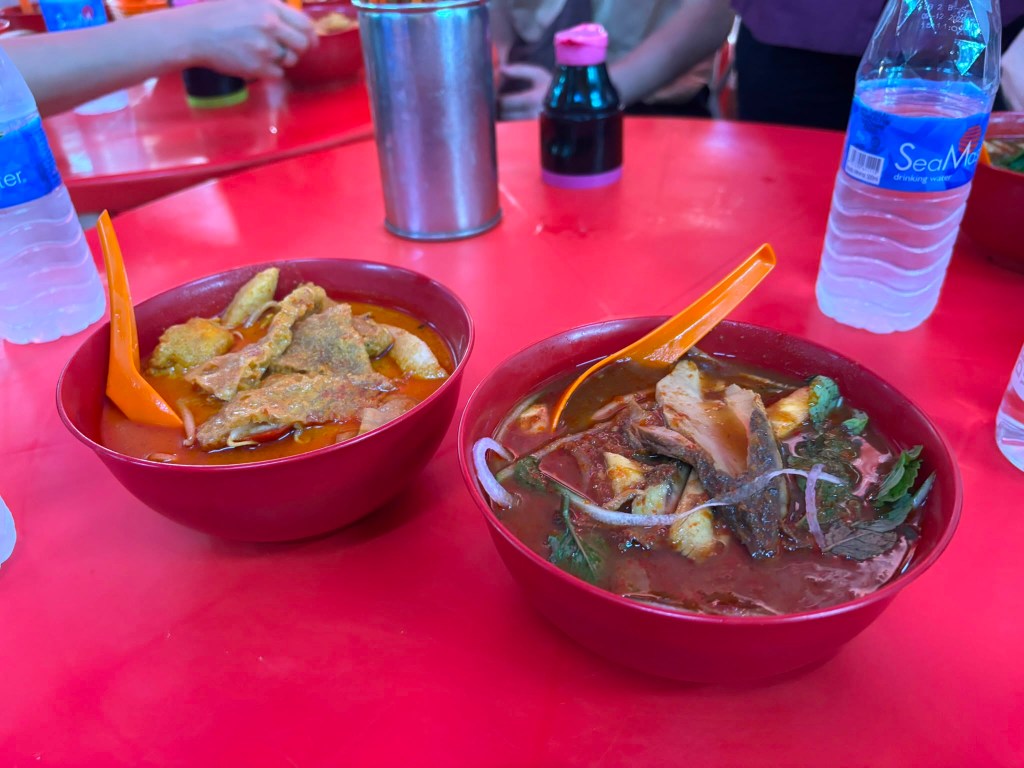
Out on the street preparations were underway for Chinese New Year. Red lanterns swung above Kwai Chai Hong, a once unremarkable alleyway brought to life by murals evoking everyday life in ’60s Chinatown. Round the corner was Petaling Street market, where cantillating touts pedalled improbable goods for a conveyer line of bag-clutching tourists. AJ ushered us secretively into a dingy alley, its entrance flanked by cauldrons bubbling with hellish heats but enticing smells. An unsmiling old woman brusquely emptied a bucket of water onto the concrete floor, barking orders at a young man who conjured up some plastic tables and chairs. Two bowls each were gruffly presented: one asam laksa, dense weeds of rice noodles in a sour fish broth, dosed with so much tamarind it overwhelmed our tastebuds; and curry mee, thicker egg noodles in an oily curried sauce, layered with folds of pork (evidently Chinese in this officially Islamic country).
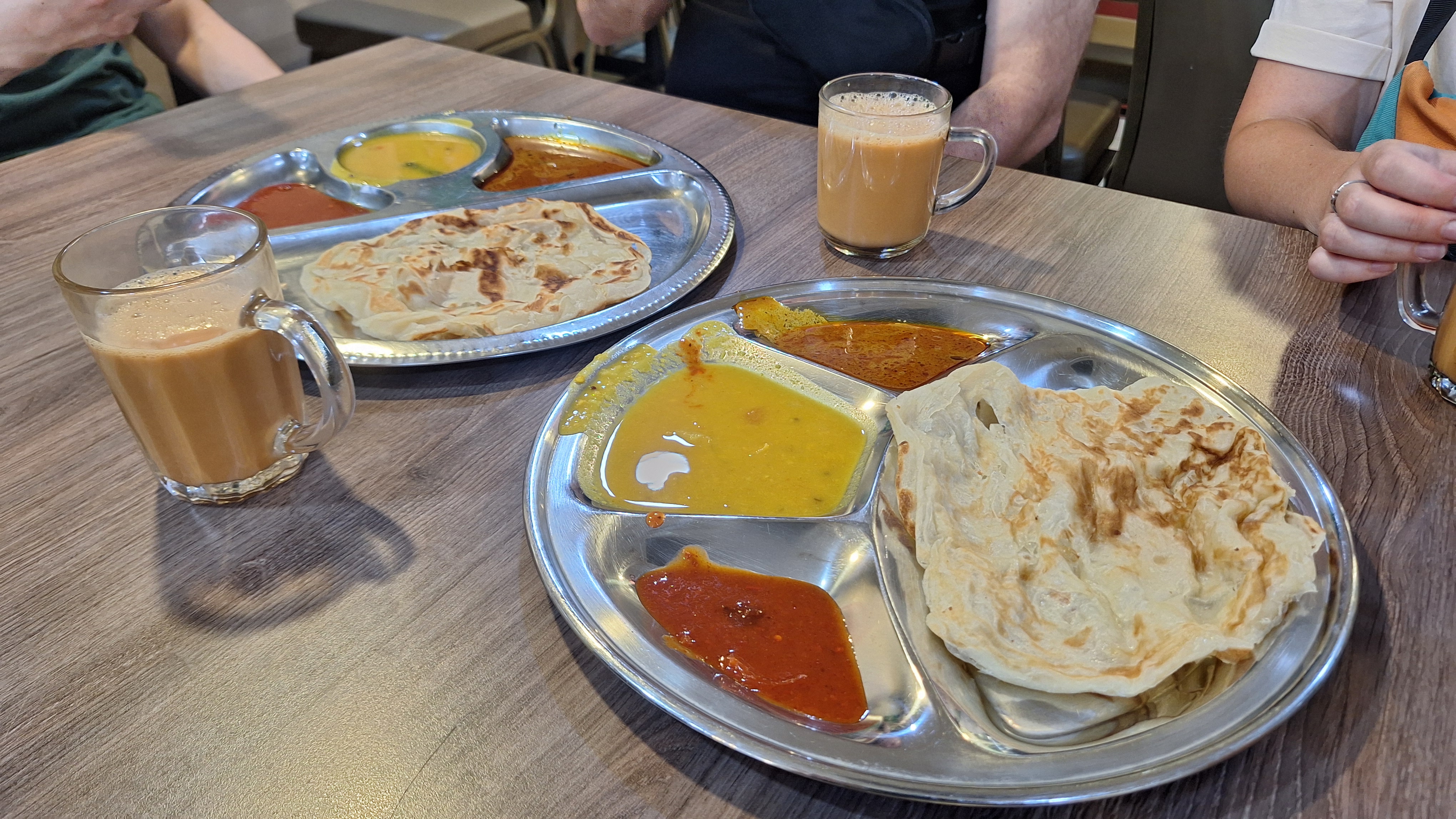
After apam balik from a street vendor – coconut milk pancakes layered with either coconut cream or whole peanuts – we left the market for an unassuming Indian canteen by the highway. There was roti canai, thin crispy flatbreads with dhal and sauces, and teh tarik (‘pulled tea’), a condensed milky chai poured between containers until thick and frothy in consistency. Loaded glances and stifled sighs suggested some of us were filling up, but still AJ led us on unperturbed. Lala noodles from a crowded Chinese food hall followed: thin noodles in a rice wine broth with tiny clams floating around like rowboats on a grey sea. The clams were fiddly and the broth overpowering, the dish a lowlight for many of us.
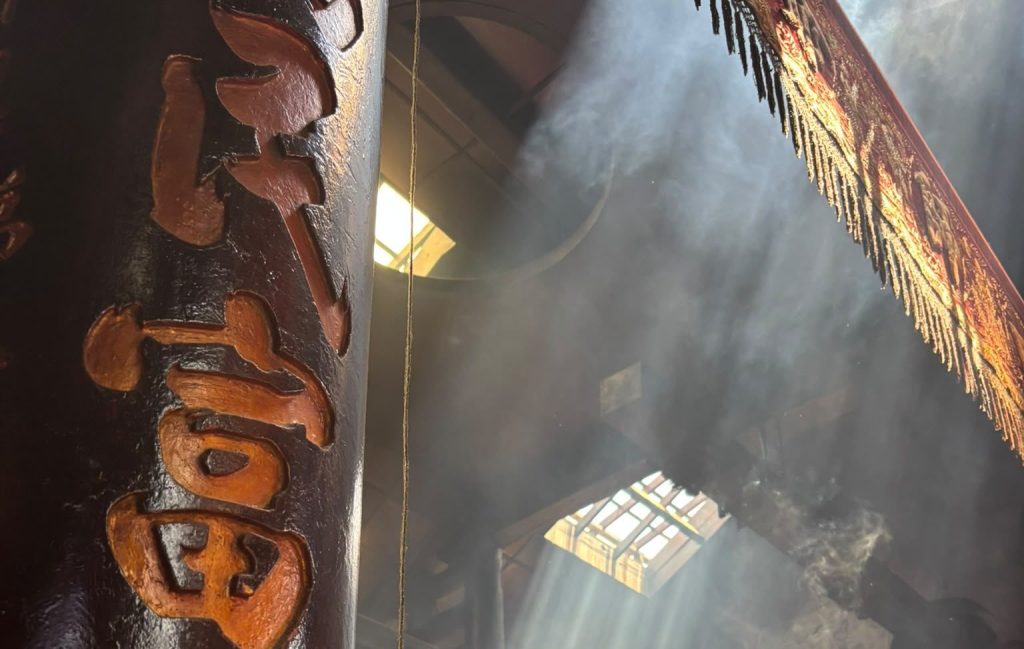
Tucked away from the highway is Sin Sze Si Ya, the oldest Taoist temple in the city. The temple was built in 1864, eight years after Kuala Lumpur (‘muddy estuary’ in Malay) began life as a work camp for Chinese tin miners. The Chinese were ethnic majority until 2010 when they were replaced by the Bumiputera, so their cultural stamp lies across much of old KL. Stepping into the temple, we were greeted by an unexpectedly industrious atmosphere in contrast to the solemn reverence of Western places of worship. Here the sacral coexisted with the profane: unelaborate piles of cardboard flanked the entrance, and despite the thick narcotizing clouds of incense adrift on the sunbeams, a vibrant communal life played out around the central altar. No one batted an eye as we wandered around, save the chittering kids drawing pictures while their mothers worked in the wings, preparing fortunes or joss sticks to be offered in prayer to the deities.
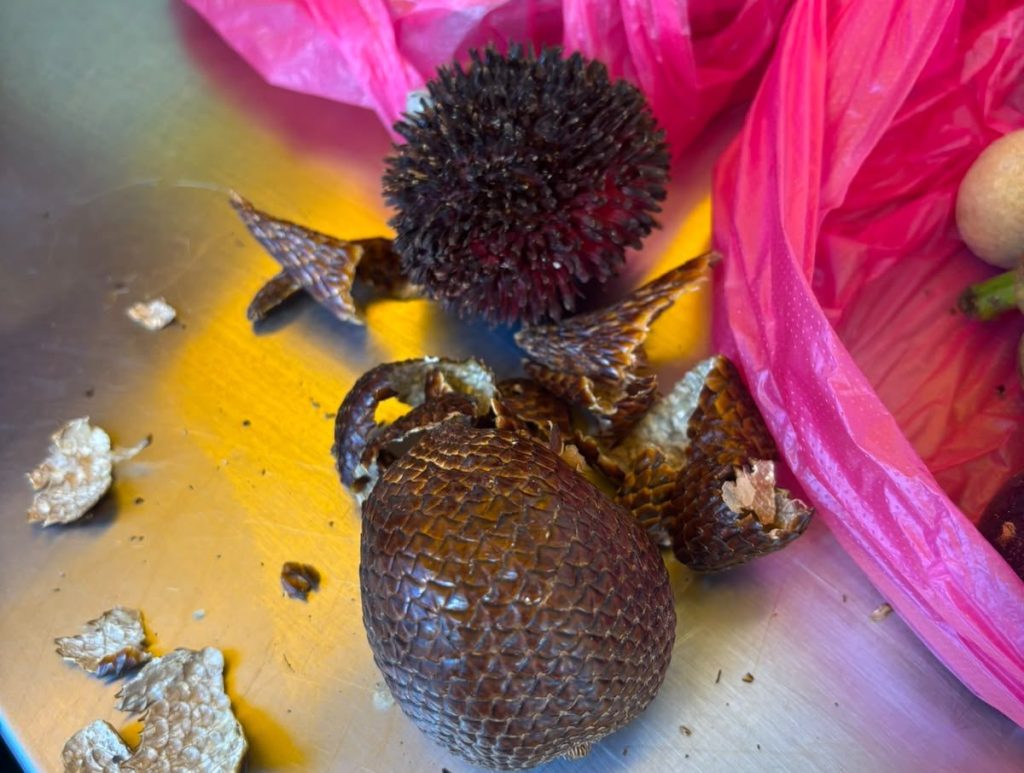
No time for contemplation or digestion, however. Pisang goreng – fried banana fritters – outside Central Market, then putu bambu, bamboo-steamed rice pancakes stuffed with palm sugar and topped with grated coconut, pandan green and sickeningly, deliciously sweet. AJ also haggled us some fruit, though I was disappointed not to see durian go into his bag, those spiky delicacies banned in indoor public spaces for their notorious stink (the Swedes assured us we weren’t missing much). Instead there was salak, known as snake fruit for its scaly outer skin, with insides like garlic cloves though lacking any intensity of flavour; pulasan, spiny and other-worldly on the outside, chewy white eyeballs on the inside; and longan, grape-like and sweet, a taste akin to lychee.
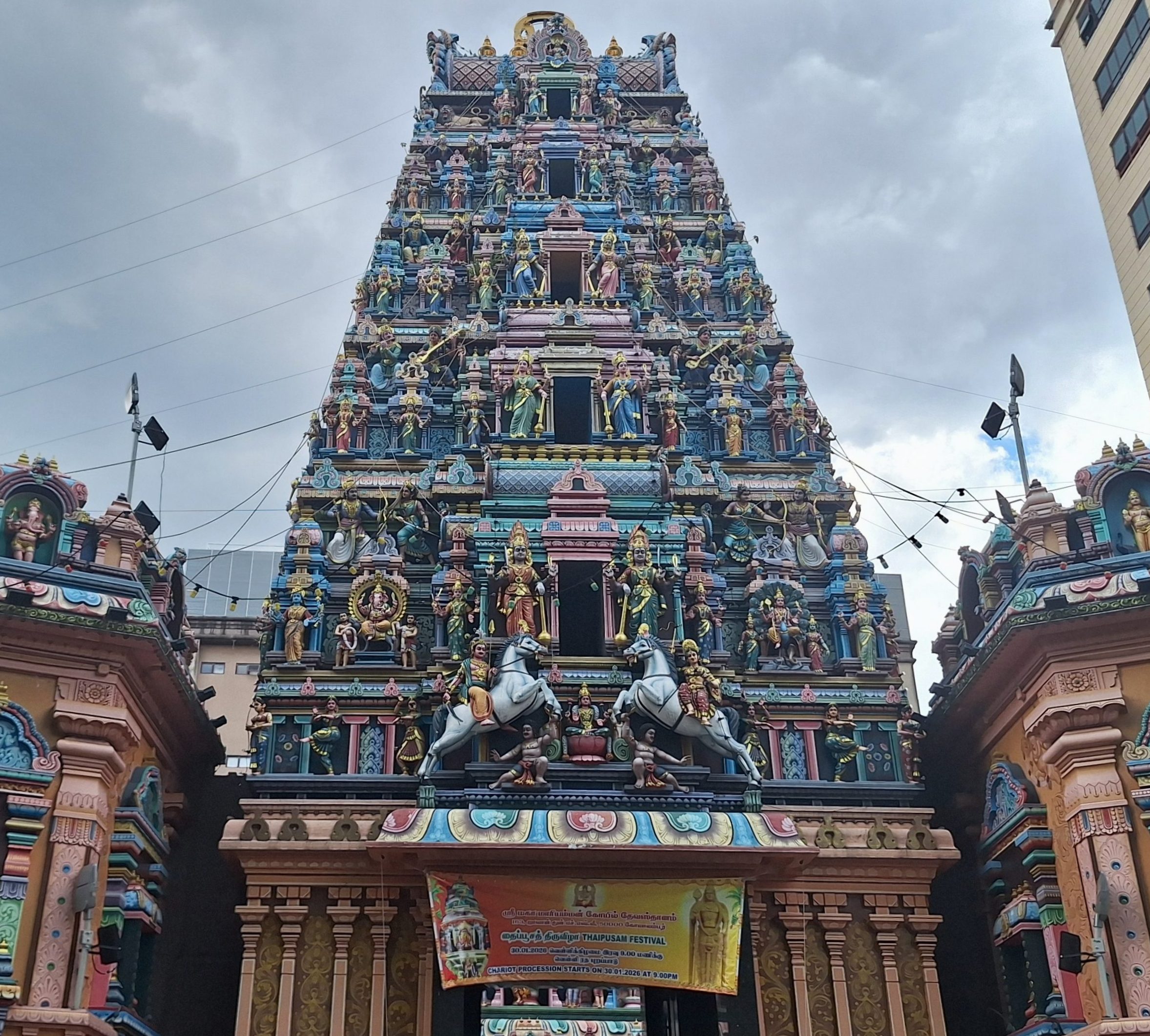
What with all the cakes and fruit, we felt sure we were approaching the end. But no! Mercilessly AJ bundled us into yet another Indian canteen, where barefooted men nodded over handfuls of dahl, confused by the arrival of our sweaty, groaning party. We struggled through nasi daun pisang, more rice cooked in banana leaf with papadum and pickles, though took some relief in the tall glasses of citrusy calamasi juice. The news that one more restaurant remained was greeted with open pleas for compassion, and it was with over-extended stomachs and tired tastebuds that we filed past Sri Mahamariamman, the oldest Hindu temple in the city, just about managing appreciative nods for its staggeringly ornate gopuram.
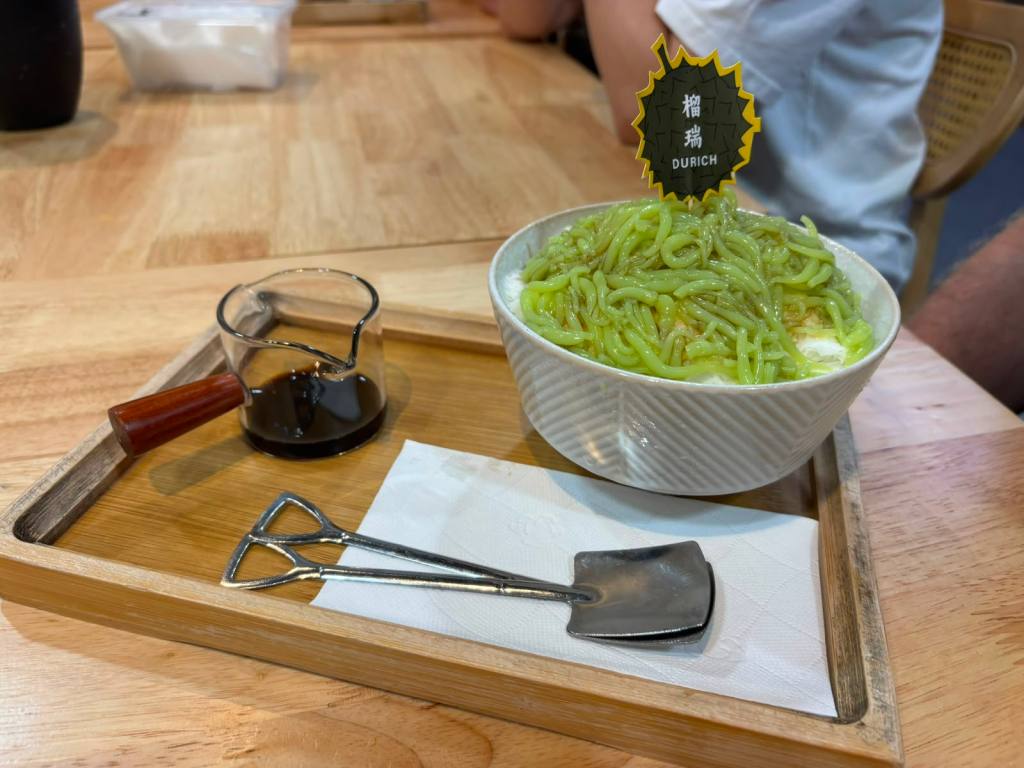
Back in Chinatown, where we’d begun so earnestly over three hours before, we entered our last establishment. Crazed, hallucinatory durian cartoons dangled from the ceiling and ogled us from every corner, mirrors to our own loosening grip on reality. Though we were all uncertain about the bowls of radioactive green noodles served up, our bravery was justly rewarded. It was cendol, a dessert of coconut milk, palm sugar syrup, and rice flour jelly snakes warped green by pandan, all laid on a smoothly digestible mattress of shaved ice. It was a sugary, soothing relief from all that curry and rice and noodles, and it reignited conversations that had been faltering for the final hour. Licking our spoons on a high, we basked in the glow of accomplishment. AJ acknowledged our gratitude with abashed nods before disappearing into the crowd with his clipboard, and the rest of us parted ways soon after, culinary comrades of an afternoon resuming our separate ventures.
Ash and I had hours to kill before our overnight flight to Tokyo. Kuala Lumpur is no pedestrian-friendly city, the public transport being cheap and efficient, but still we decided to walk off our mammoth 14-course lunch. Wandering through a network of flyovers and carriageways, we soon became immersed in that riddle of towers known as the Golden Triangle, the commercial centre of KL. Face to face for the first time with the glassy reality of the Asian Century, I felt myself to be humbly provincial, ‘teuchter’ as we’d say back home. Our European cities may be replete with history, but they lack the scale of real estate spawning across the eastern half of the world. Necks craned and wheeling in circles, stomachs summersaulting, we basked in the baffling sense of our own insignificance. It seemed unthinkable that only a few days before we’d been cherry picking in the cool idyll of rural, mountainous Central Otago.
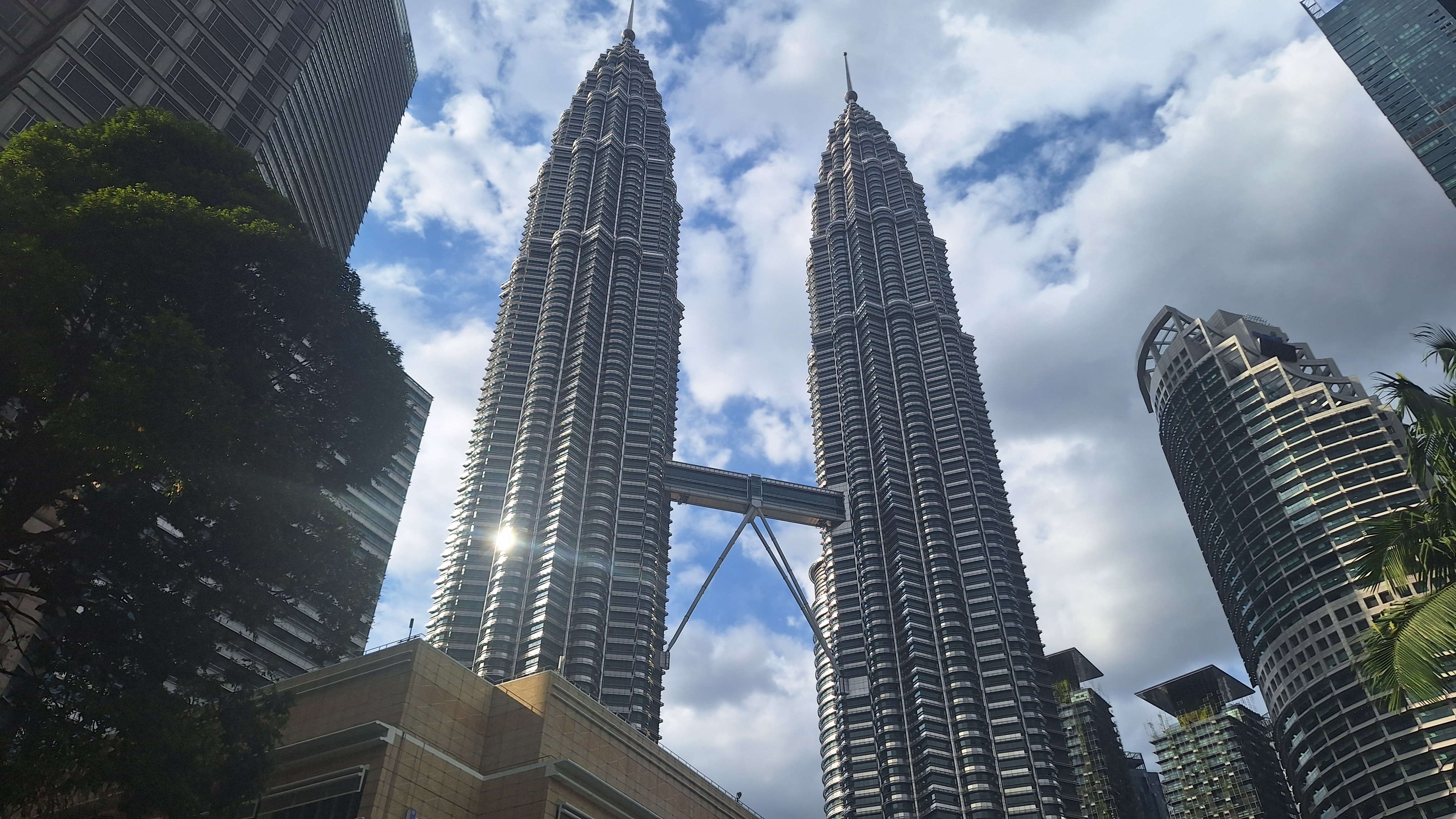
Though Merdeka 118 stands taller, the Petronas Towers remain the symbol of Malaysia’s breakneck development, if not that of Asia in general. Upon completion in 1998 they were the tallest structures in the world, the first to exist outside of Europe and America since the Great Pyramids of Giza. (Since then every successive tallest building has been constructed in Asia and the Middle East, evidence of how the balance of global economic power has shifted). The towers are more beautiful than their new gloomy neighbour across the city, built according to traditional Islamic octagrams, the Rub el Hizb. Standing below, the late afternoon light flashing across the folds of glass, I unearthed a buried childhood memory of seeing those towers for the first time on a fridge magnet at my Gran’s house. I remembered how they were emblematic of all that was faraway and strange in the world, evidence that places existed which my young mind had no resources to envisage. Even the name Kuala Lumpur sounded unreal, like a planet from Star Wars and not a real place in my own familiar universe. Gran died almost twenty years ago, so I was unexpectedly moved to imagine her standing there with me, separate only in time if not in space.
The afternoon was waning, our energy reserves low. We trudged through yet another mega mall before agreeing to call our time in Malaysia short. On the train to KL Sentral we looked out over the blue canopy of the National Mosque as late afternoon calls to prayer poured forth from the great minaret. Overstuffed, lethargic, untalkative, we collected our bags from the station and travelled out of the city, passing apartment block after apartment block that looked less and less glossy, more and more stained and brutalist. Soon the city itself was receding, displaced by pockets of half-tamed jungle, and looking back I saw that Merdeka 118, so enormous up close, had already disappeared from sight. It was a reminder that, for all the megacities and skyscrapers we construct, we will always be dwarfed by the unfathomable stretch of primordial wilderness out there, prowling around the frontiers of our so-called civilisations, biding its time to reclaim the space we’ll one day leave behind.


Leave a Reply