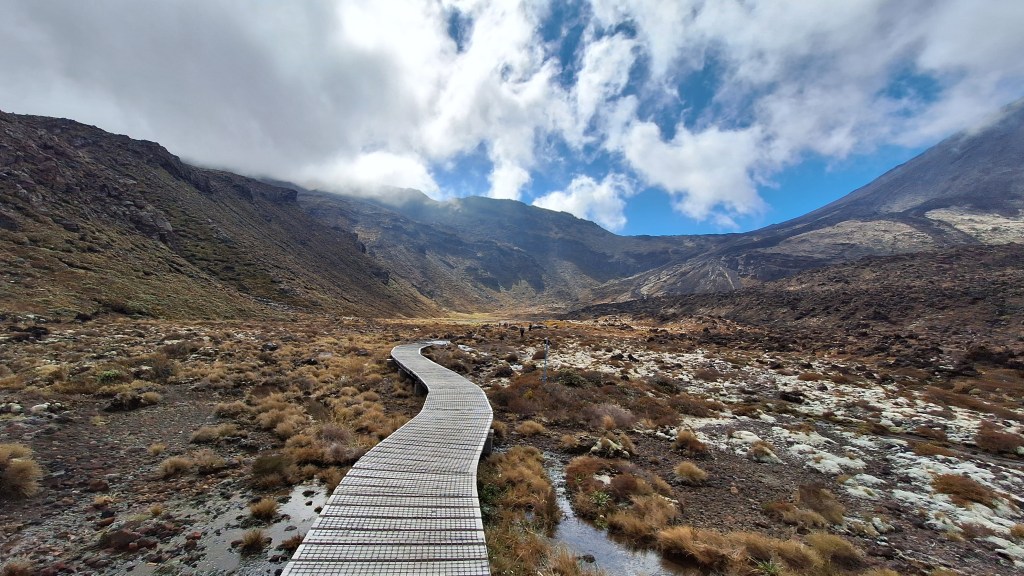
“You’ll be starting your walk a little later today.”
The kuia was short and sturdy. Her lips, darkened by the moko that crept from her mouth to her chin, were stretched into a smile, but her eyes were fierce in their friendliness. We stood together, strangers in a blackened land, enveloped by the acrid smell of charred scrub, the wind vibrating with prayer.
“Go now,” she declared, firmly but warmly. “Go with our blessing.”
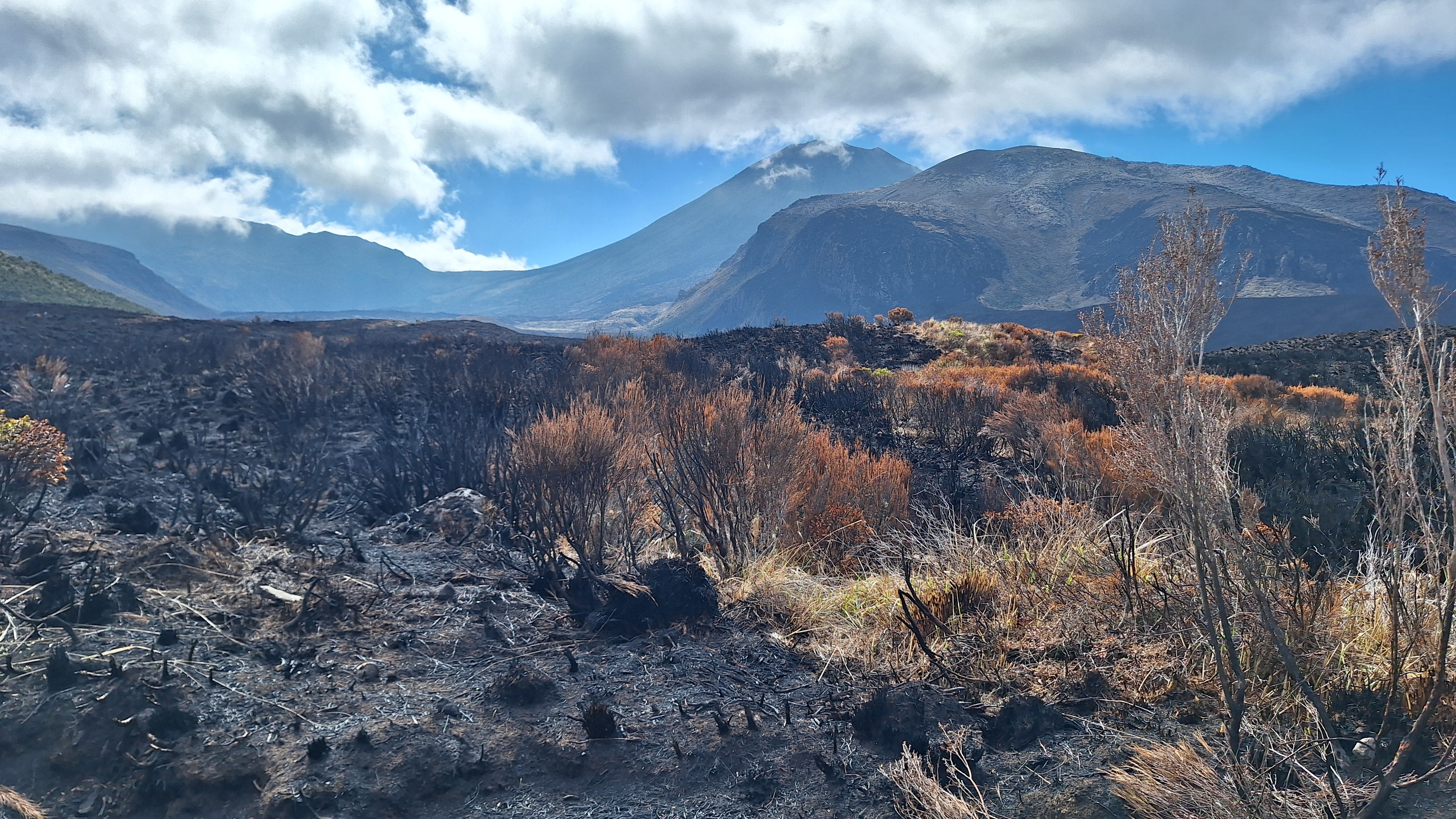
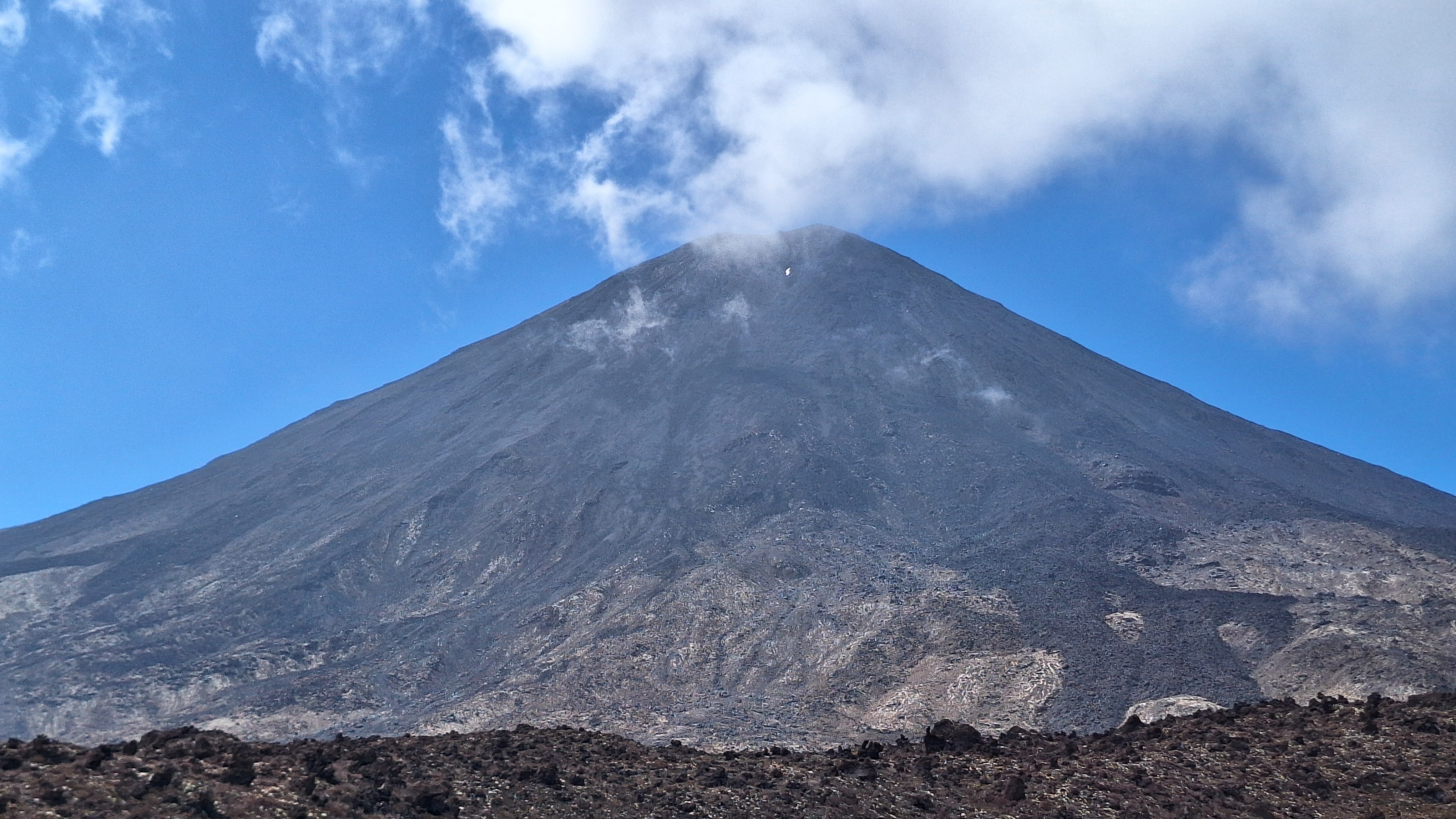
Steve, our shuttle driver, had fought flames approaching 8 metres in height. The fire had burned swiftly across the landscape of tea tree and manuka, forcing him down gravel roads at 100km per hour as it threatened to cut off his escape to the highway. A car exhaust, he hypothesised, eyeing us in the rear-view mirror as he steered those same roads with practiced ease. The heat of an exhaust of a broken down car, igniting a patch of sun-parched grass, resulting in almost 3000 hectares of devastation.1 We watched the infernal scenes streak past, a colourless expanse of scraggy vegetation that crawled across the slopes of the mountains ahead. Even through the barely open windows of the mini bus, the smell of burnt land was overpowering.
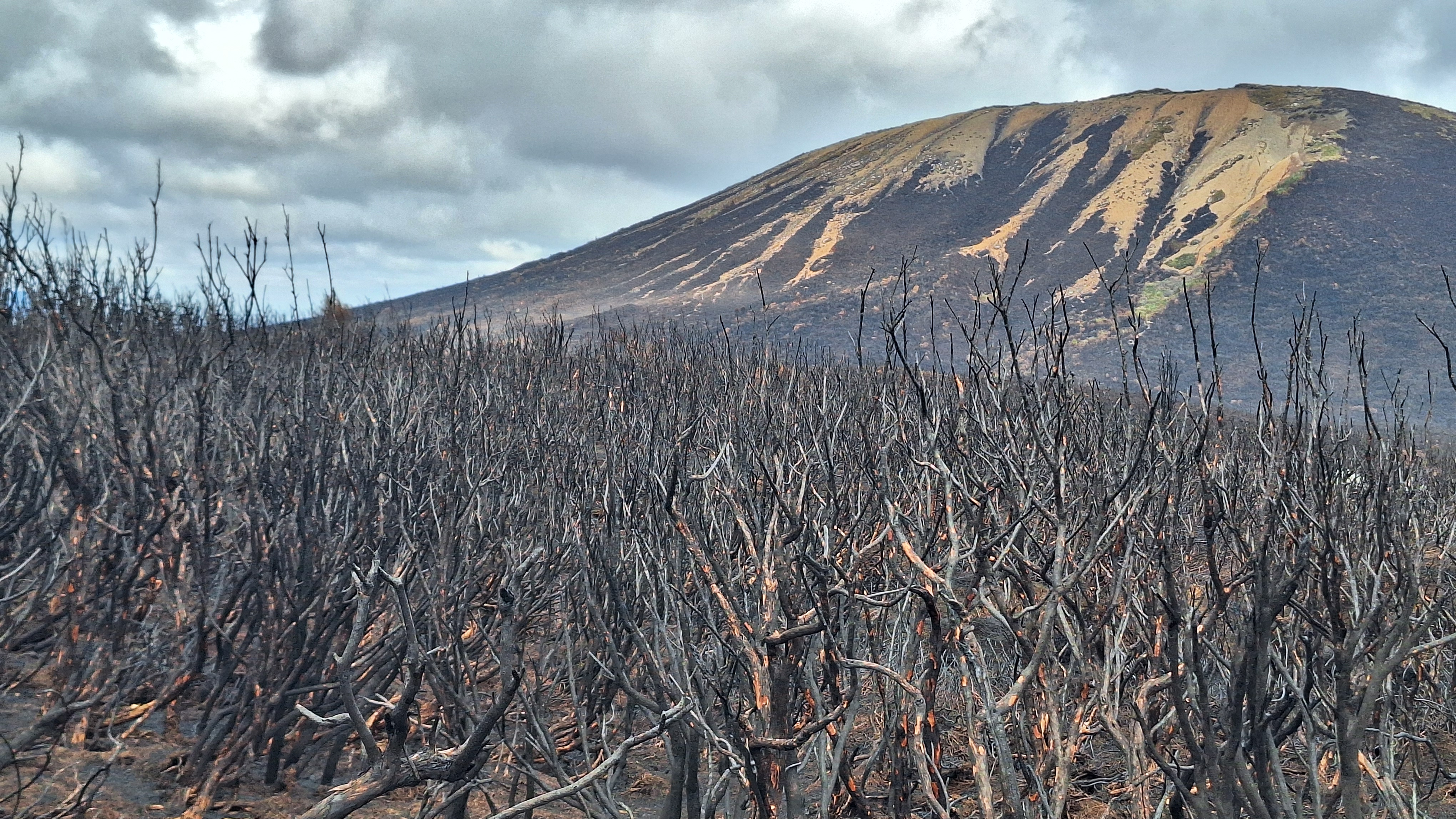
Tongariro National Park, the volcanic centre of New Zealand’s North Island, erupted in flames on the 8th November 2025. For three days volunteers tried to halt the destruction of the UNESCO dual World Heritage site, but in the end it was divine intervention, a biblical coming of the rains, that extinguished the blaze. Fire can be healthy, Steve reminded us, resetting ecosystems and promoting growth. But Tongariro, like much of New Zealand, is the scene of a silent battle between invasive plant life and native species. The fear is now that foreign weeds such as heather and gorse will thrive in the aftermath, overwhelming the already endangered alpine tussock and shrubland.
The local Māori hapū (sub-tribe) responded swiftly, declaring two rāhui (prohibitions): a decade-long ban on entering the affected land to encourage full regeneration, and a short-term ban on accessing the usually tourist-choked paths, including those of the ultra-popular Tongariro Crossing. The Crossing, winding between the volcanic cones of Mount Ngauruhoe and Mount Tongariro, is considered New Zealand’s best one-day trek, attracting up to 3000 hikers a day in peak season. Its popularity props up the local economy, with many employed by the flotilla of bus operators that transfer hordes of trampers to the beginning of the trail each morning. Steve was one of the few drivers operating that day, the day the rāhui on the path was to be lifted and we were scheduled to make the crossing ourselves.
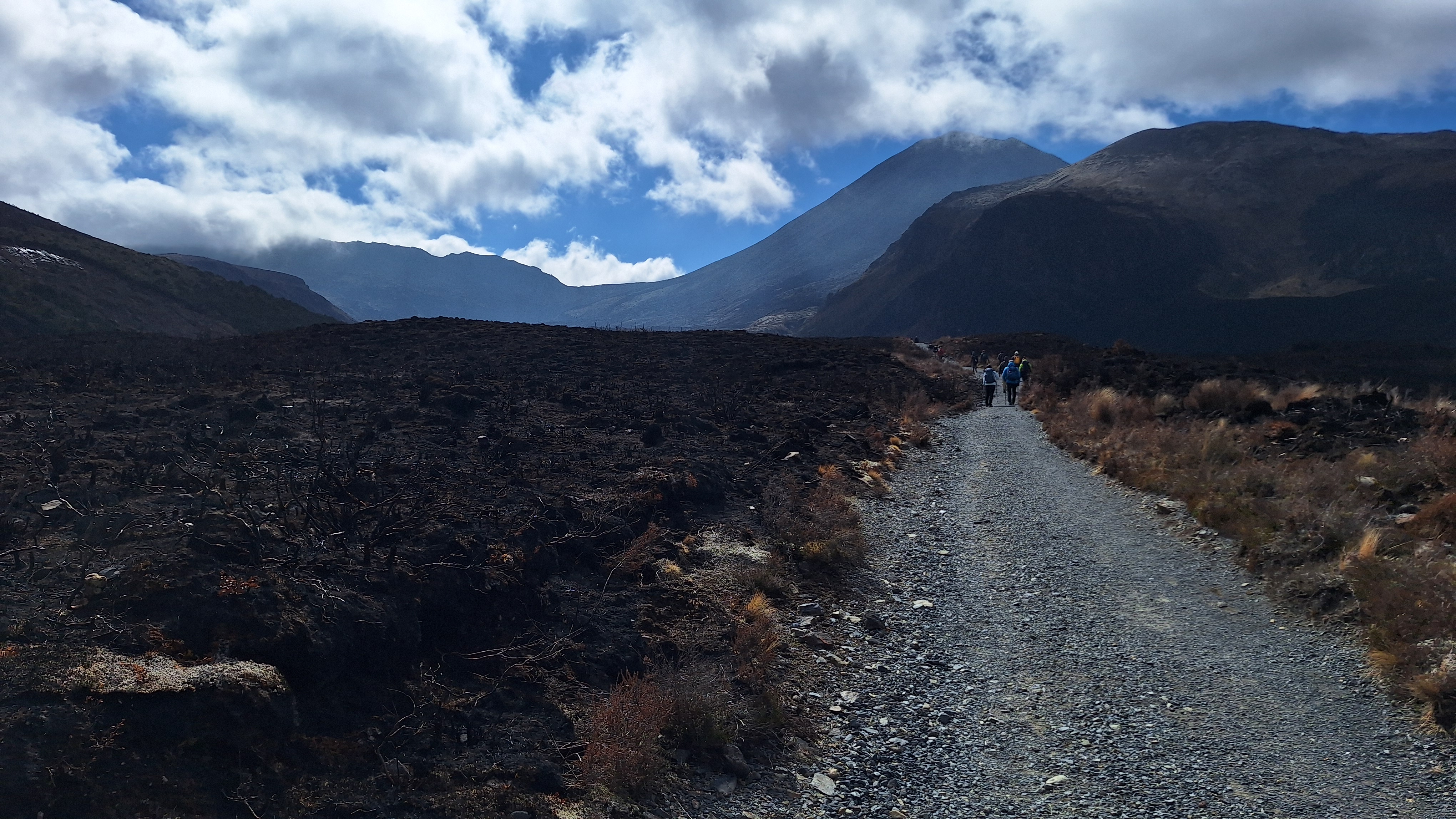
We arrived at the car park, an island of grey concrete in a sea of dark earth, as the reopening ceremony was coming to an end. A line of volunteers dressed in the green uniforms of the Department of Conservation passed beneath the cold gaze of Te Ririō, guardian of the crossing, to exchange hongi with the local Māori dignitaries. Choral song warmed the sub-alpine air as the breath of life was shared between those who had fought and those who had mourned the conflagration. Saying goodbye to Steve, we took our place among the assembly of hikers awkwardly spectating this show of communal grief. Most looked on curiously, interestedly, but some were visibly impatient, pawing at the dusty ground with their boots like bulls preparing to charge.
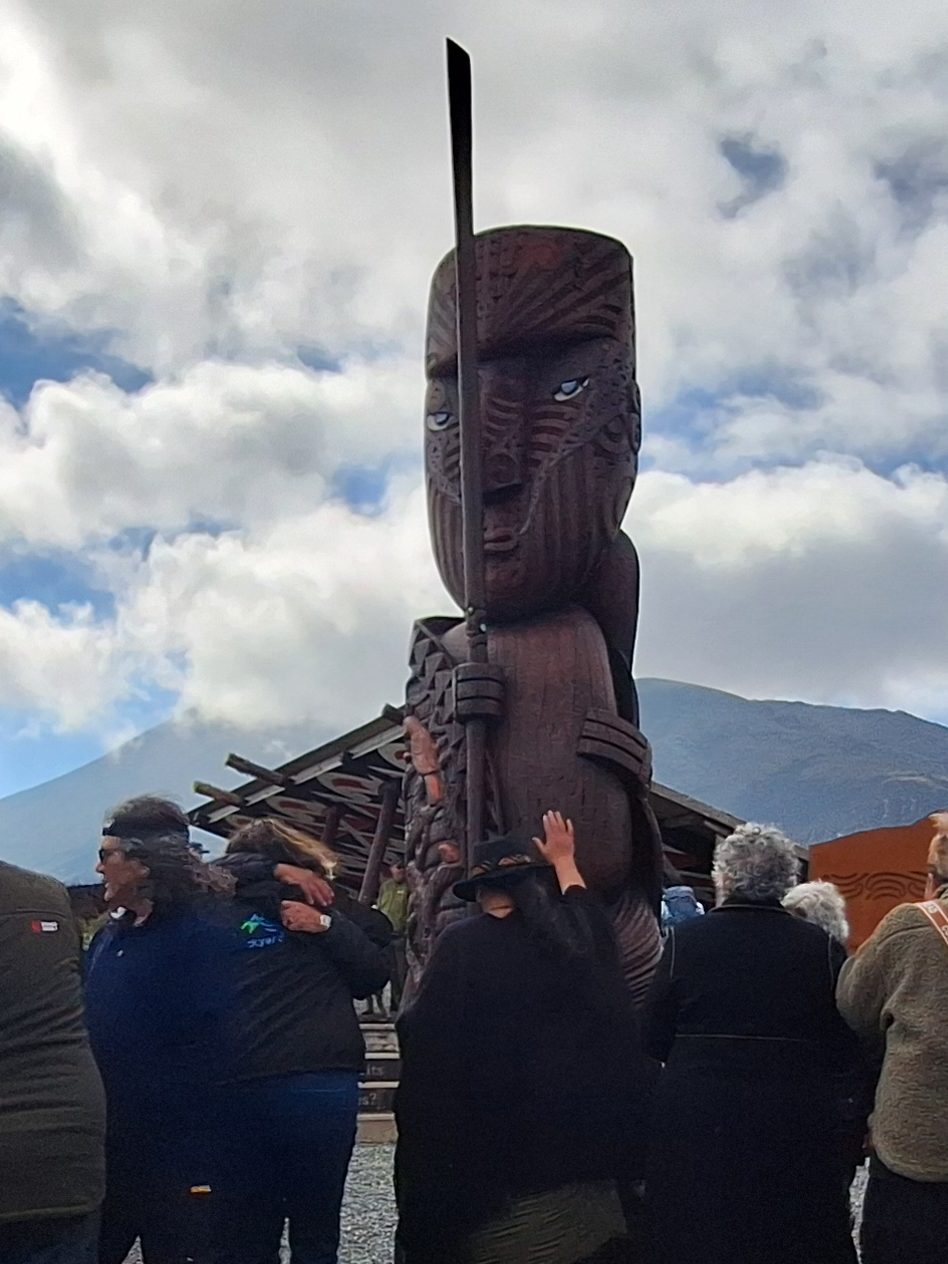
For the Ngāti Hikairo ki Tongariro, the guardian hapū of the region, the national park means more than an invigorating hike and a view. ‘Whenua’, the Māori word for land, also means ‘placenta’, a clear indication of how belonging here is rooted within the nexus of geography and ancestry. Māori subscribe to a philosophy of kaitiakitanga, guardianship or protection of the earth. It was the hapū’s belief that the effects of the fire went deeper than charred surfaces, that the very life force (mauri) of the land had been altered and could only be repaired with extensive healing. This depth of feeling towards the place, its treatment as a living entity to be actively cared for and not simply managed, was more profound than anything I had experienced. Perhaps it was my mystified expression that caused the kuia, the Māori female elder, to stop beside me and speak.
“Go with our blessing.”
Her words followed me onto the trail and across the injured land, echoing around my head like the song of the skylarks above – gracious words, welcoming when hostility may well have been appropriate. I had not started the fire, but I was more a part of the problem than the solution, contributing to the same unsustainable demand on the landscape as the parked cars lining the highways and the shuttle operators desperately vying to keep up with the influx of visitors. Beneath the graciousness of the old woman’s words, there was a smallest hint of warning. I was treading on her territory, entering her world, and I should remember that as I walked, treating what I found there with only the utmost reverence and care.
There is deep significance to the words we use to describe our relationship with the land. The Western tongue resorts to ‘ownership’, a reduction of nature to a commodity to be bought and sold, a blank canvas from which raw materials can be extracted or upon which productive forces can be built. We section off spaces for conservation and call them national parks, yet still they are defaced with paths and facilities that prioritise human access over natural growth. Rarely is nature allowed to be wild in the West, as if we didn’t quite trust anything untainted with human involvement, as if our own hands muddied in the soil must always produce better results than what the world naturally engenders itself.
Kaitiakitanga, guardianship, places humans in a more nurturing relationship to the earth. We are neither conquerors nor exploiters of nature, but products of it. We depend upon the world to survive, ingesting its fruits for sustenance and burning its refuse for warmth, and when sickness falls upon the land it is a sickness felt by the communities that dwell upon it. As great swathes of the world are swallowed up by wildfires, as oceans acidify and fill with microplastics and coral reefs become drained of colour and life, we must acknowledge the boundlessness of the sickness we face. It would be hard to deny that, as protectors of this earth, we have failed desperately in our duties.
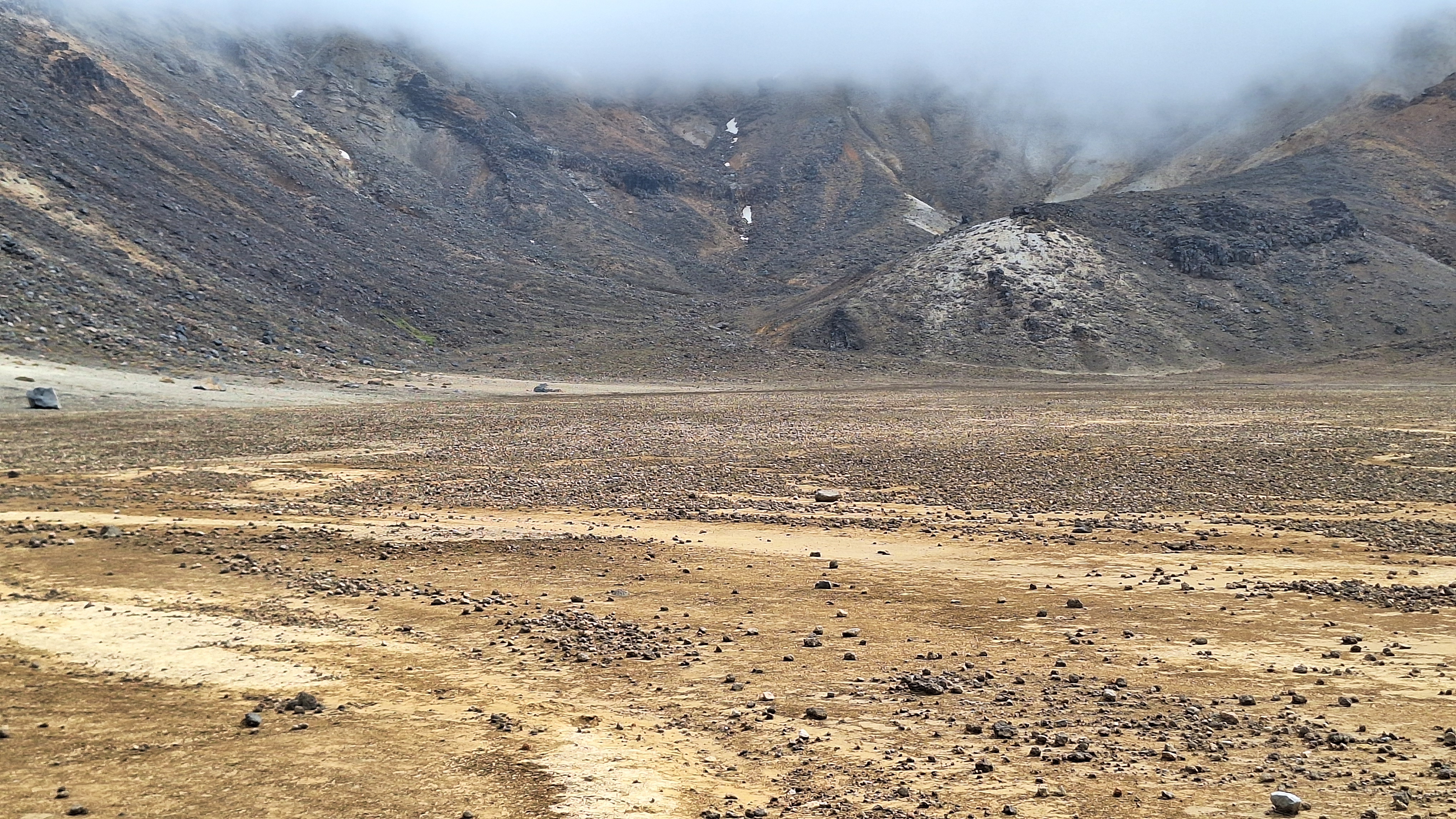
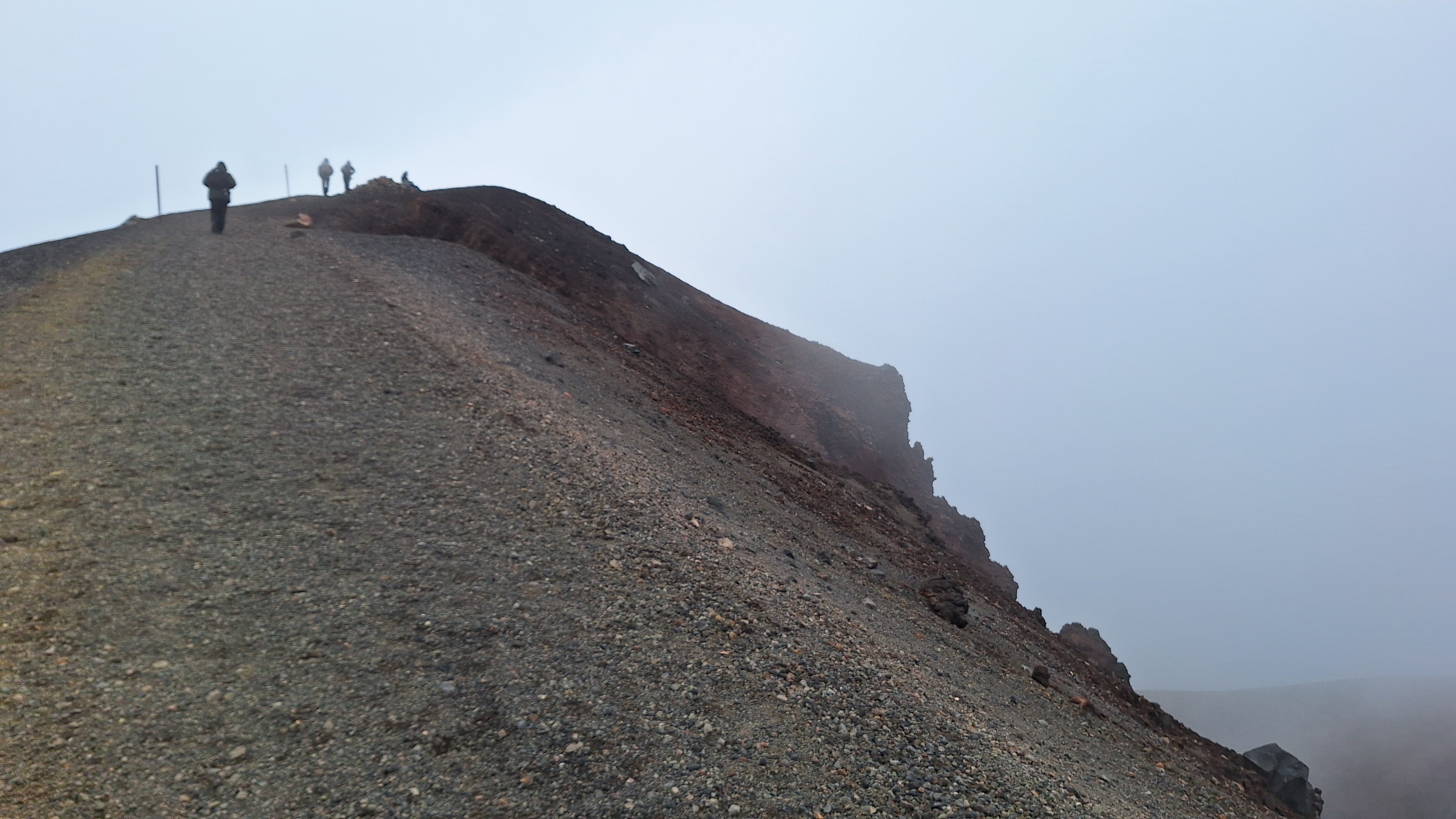
Our crossing of the Tongariro proved underwhelming. The heights we gained brought only thicker cloud and the harsh winds prevented us from taking in what little views did appear. As we queued on narrow boardwalks and cursed uphill congestion, as we stumbled along paths that crumbled beneath the footfall of so many boots, we wondered if the Crossing had become a victim of its own success. The novelty of walking across volcanic craters paled in comparison to the awe we’d felt upon first seeing that snow-capped triumvirate of mountains from the road. Huddled before the Emerald Lakes under the concealed summit of Mount Tongariro, lacerated by gnashing gales as I choked down a hurried sandwich, my thoughts returned to the kuia at the bottom of the trail. She had no need to summit the saddle in order to understand its value, her respect for the landscape founded more upon what was sacred than what was spectacular. I couldn’t help but envy that depth of feeling, a depth I had failed to muster on what was supposed to be an awe-inspiring, once-in-a-lifetime hike.
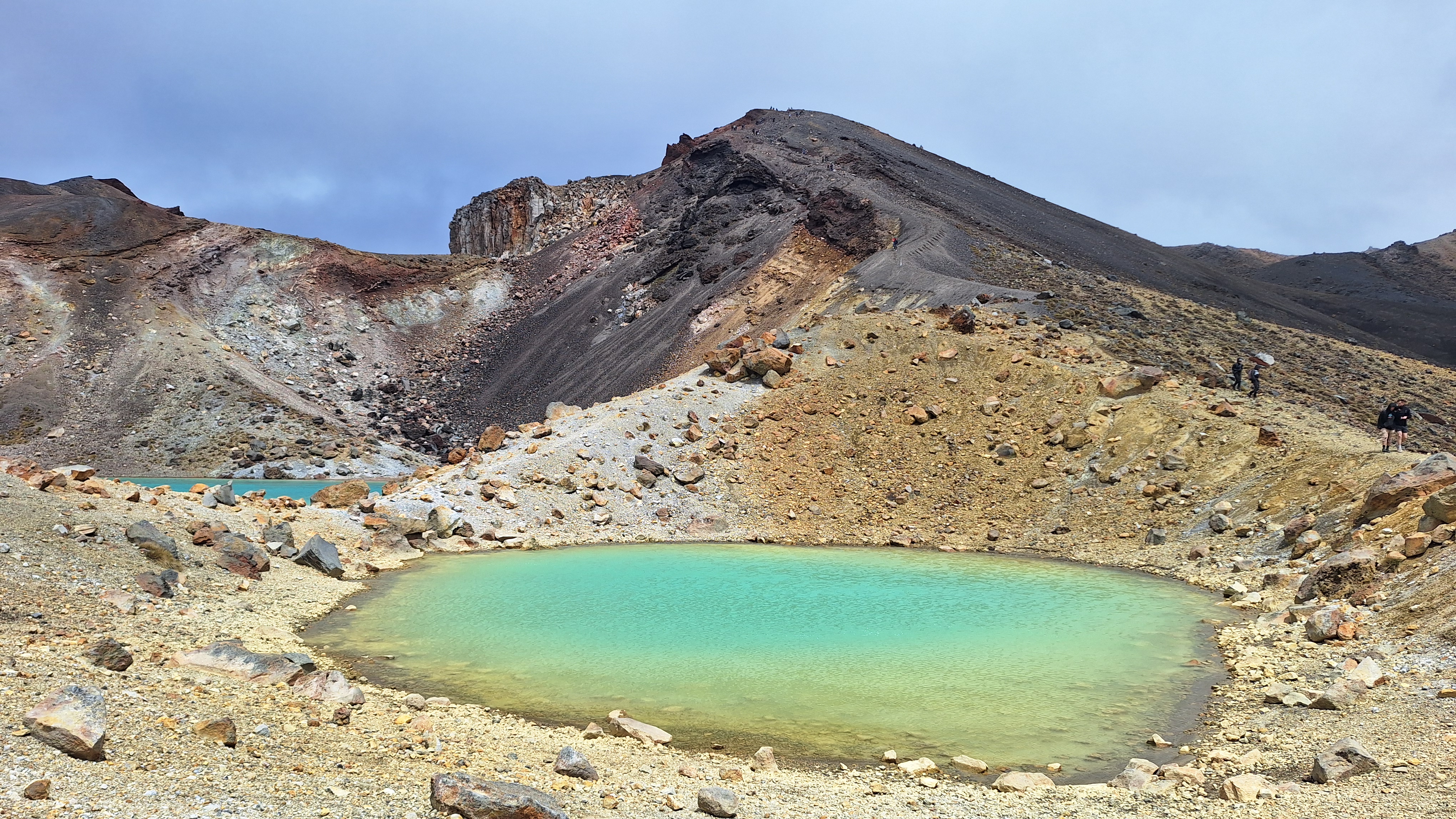
It remains to be seen what the long-term impact of the Tongariro fire will be. From an economic perspective, the show must go on: shuttle drivers, hotel owners and tour guides are all too dependent upon tourism to entertain the suggestion that it should be curtailed. Even the very notion of regulating access to the earth’s wonders seems to fly in the face of democracy. Surely nature must remain public, for all to share in and be healed by, not cordoned off or made the privy of the privileged few?
And yet, if we are to ensure access to places like Tongariro, we must accept the responsibility that comes with it. On the 8th December, exactly one month after the November blaze, more fires broke out in the national park. Another small moment of carelessness, perhaps, or simply an inevitable consequence of New Zealand’s hotter, dryer summers? Whatever the cause, it is but a footnote in the wider tale of climate change and environmental collapse. Planetary destruction is no careless accident nor lapse of concentration, but a sustained effort of wilful neglect, a steady, transgenerational degradation of the earth, its resources, and its inhabitants – ourselves included.
The practice of kaitiakitanga, the dedication to a compassionate and sustainable stewardship of the earth, is one we might turn to in reversing the damage wrought to our precious home. The world is more than a playground and a source of raw materials; it is an holistic living entity, whose wellbeing decides our own. The kuia knew that already, even as she blessed me on my journey into the mountains. By the time I came down the other side, I’d begun it grasp it too.
- The cause of the fire has since been discovered: a spark from the dragging undercarriage of a vehicle that had lost its rear wheel. ↩︎


Leave a Reply