The first encounter between Captain Cook and the Māori of Aotearoa was disastrous. Cook’s instructions had been to forge amicable relations with the indigenous peoples he met, but within hours of his ship Endeavour sailing into Poverty Bay in 1769, his nervous crew had fired upon and killed a leader of the local iwi. Tensions rose when the tribe agreed to exchange but, perhaps understandably, refused to lay down their arms. Cook resorted to kidnapping three boys in a desperate attempt to enforce friendly relations, unsurprisingly to no avail. Though the boys were returned safely before Endeavour sailed away, Cook acknowledged the whole affair had been an abject failure, with around nine Māori deaths occurring as a result of miscommunications and cultural misunderstandings. He named the area Poverty Bay, not on account of it lacking resources, but because his conflict with the local population prevented him from gathering any of the materials he and his crew so desperately needed.
It seems unjust that the name Poverty Bay has endured, especially in contrast to its bountifully-named neighbour the Bay of Plenty, so called because Cook secured there resources to satisfy his needs. A formal name change may have been adopted in 2019, with the area now officially recognised as Tūranganui-a-Kiwa / Poverty Bay, but old habits die hard. Perhaps there’s a self-fulfilling prophecy at work too, for Poverty Bay and the surrounding Gisborne region have historically scored high on deprivation indexes. It’s damning that the region with the highest percentage Māori population presents high in crime and low in wealth; but then we’d noticed early on that, counter to preconceptions of New Zealand as a well-integrated society, the correlation between race and class here is woefully apparent.
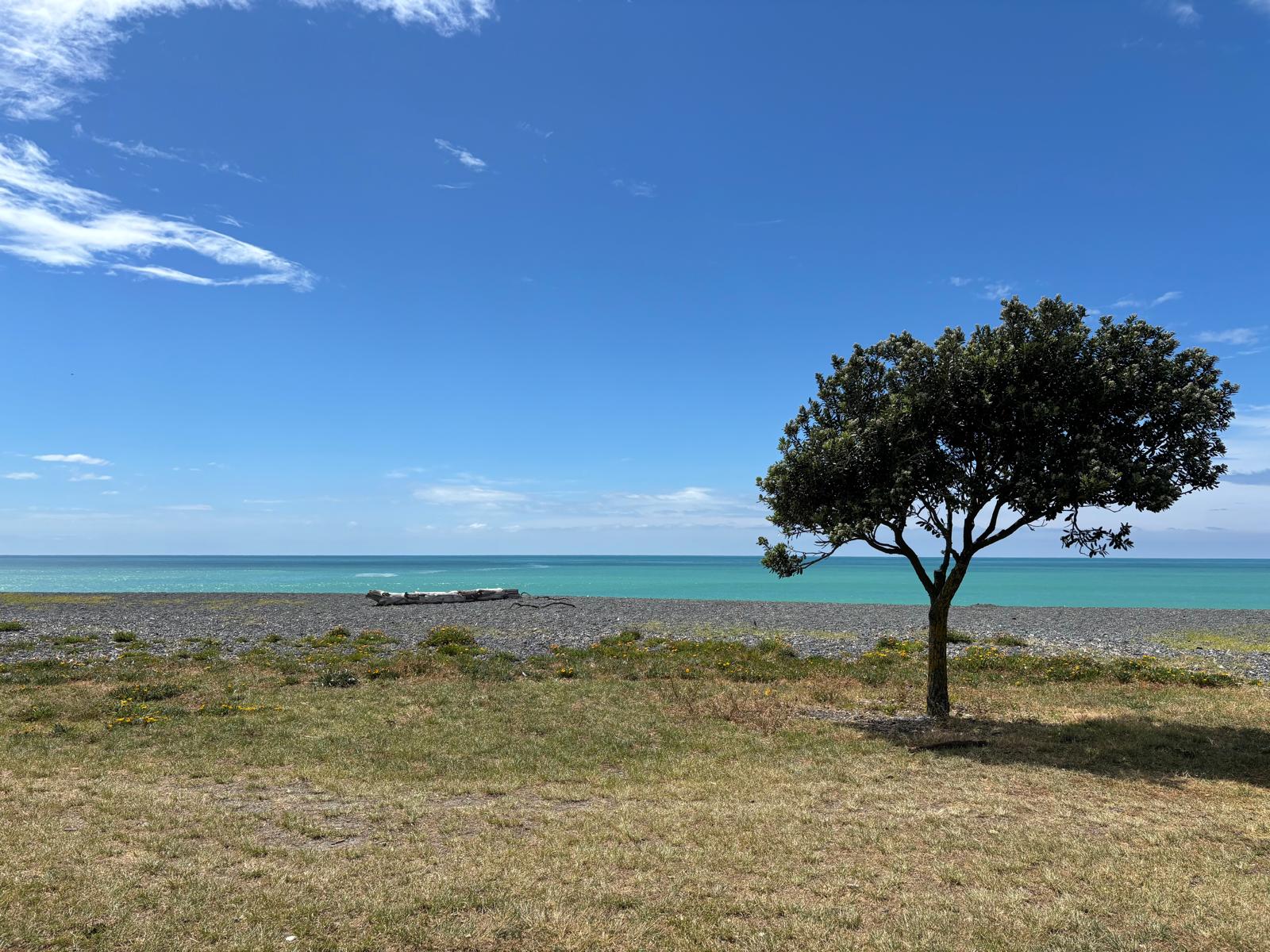
We’d taken the long route to Poverty Bay, rounding the East Cape via the meandering State Highway 35. In cloying heat we’d hugged the high bluffs of the north coast, looking across at White Island which seemed perfectly innocuous despite its cataclysmic past. We’d camped under remote cliffs at Lottin Point, where fishermen prowled the stony banks and smoked their catches on open fires, immersed in the stench of sea urchins scattered across the parched grass. The closest we came to our own catch was a panting pufferfish we discovered stranded on the shingle. Ash tried to prod it home with a big stick, but the surprisingly immovable mass was swept back in with the tide each time.
Little detained us, especially when the heat broke the next morning and a sinister mist swarmed down the grassy hillside like an army of ghosts. Rain came in fits and bursts as we turned south, obstructing our view of the rugged land and leaving us little incentive to pull over and explore. Only in one desolate town did we stop to inquire at what we thought was a café. We were deep into Māori country, and the barefoot kids on the opposite roadside eyed us curiously and suspiciously. The ‘café’ turned out to be a legion hall, it’s insides dressed to the nines with war regalia commemorating the local Māori battalions. The woman at the kitchen window shook her head, surprised. No coffee here, she declared, as if she’d never heard of the stuff.
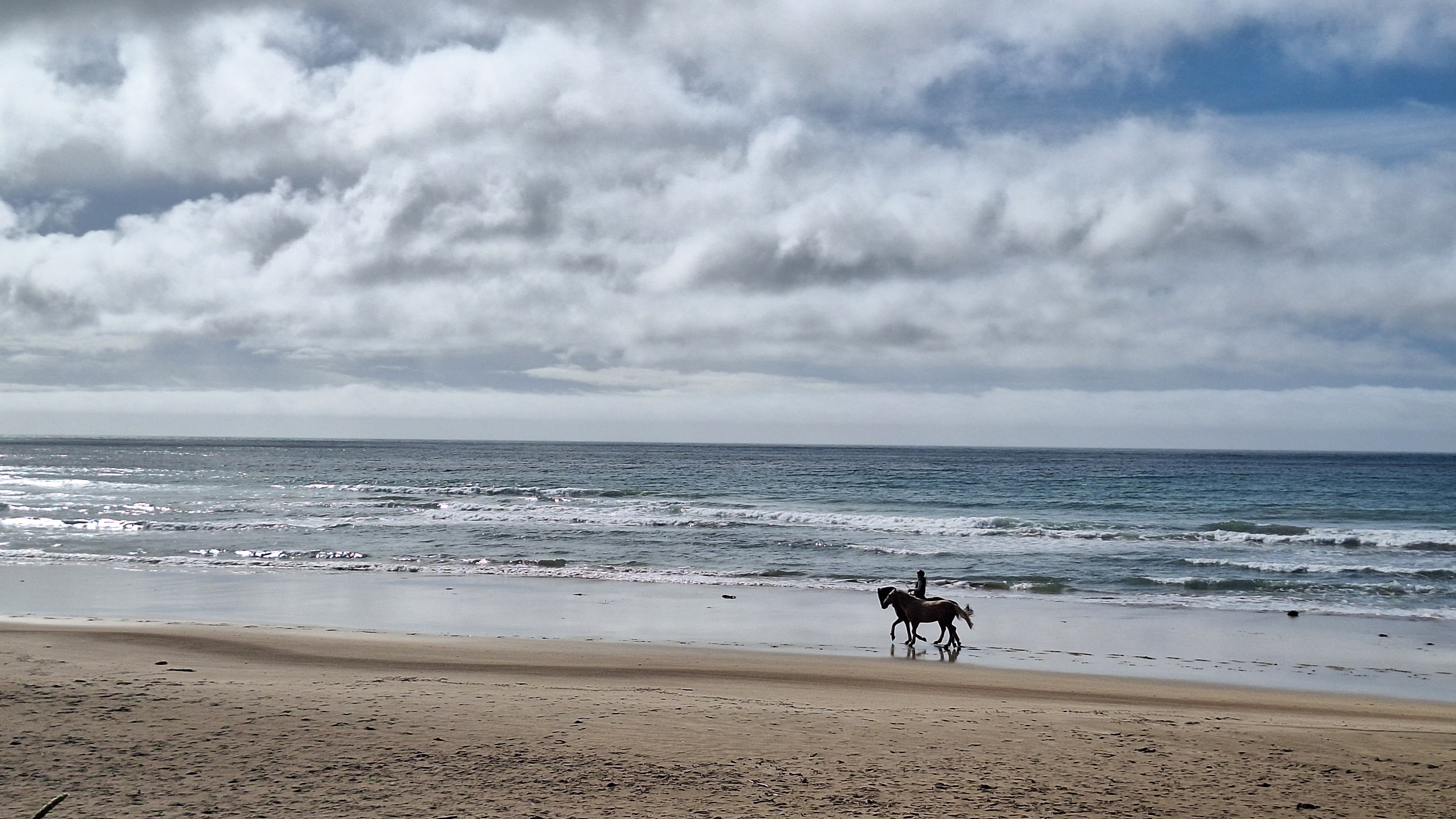
Before reaching Gisborne, the city that now stands on the site of Cook’s landing, we sheltered a night at Tatapouri Bay, passing binoculars back and forth as we spied the squally sea for seals or, more hopefully, whales. We’d booked to go wading with stingrays the following morning, but after a night of thundering rain and rocking winds we were unsurprised to receive an early morning cancellation email. Disappointment compounded when, in typical New Zealand fashion, the weather completely altered course, with the sun making an unscheduled appearance only a few hours later. The heat blanketed us as we stalked the long promenade at Gisborne making concrete plans for what would follow our crossing to South Island. With the cherry season approaching, we resolved to head straight for the orchards of Central Otago where we’d find work even if it meant knocking door to door. We were also keeping an eye on the news, as fires raged across Tongariro National Park where we’d planned to make the famous crossing before heading down to Wellington.
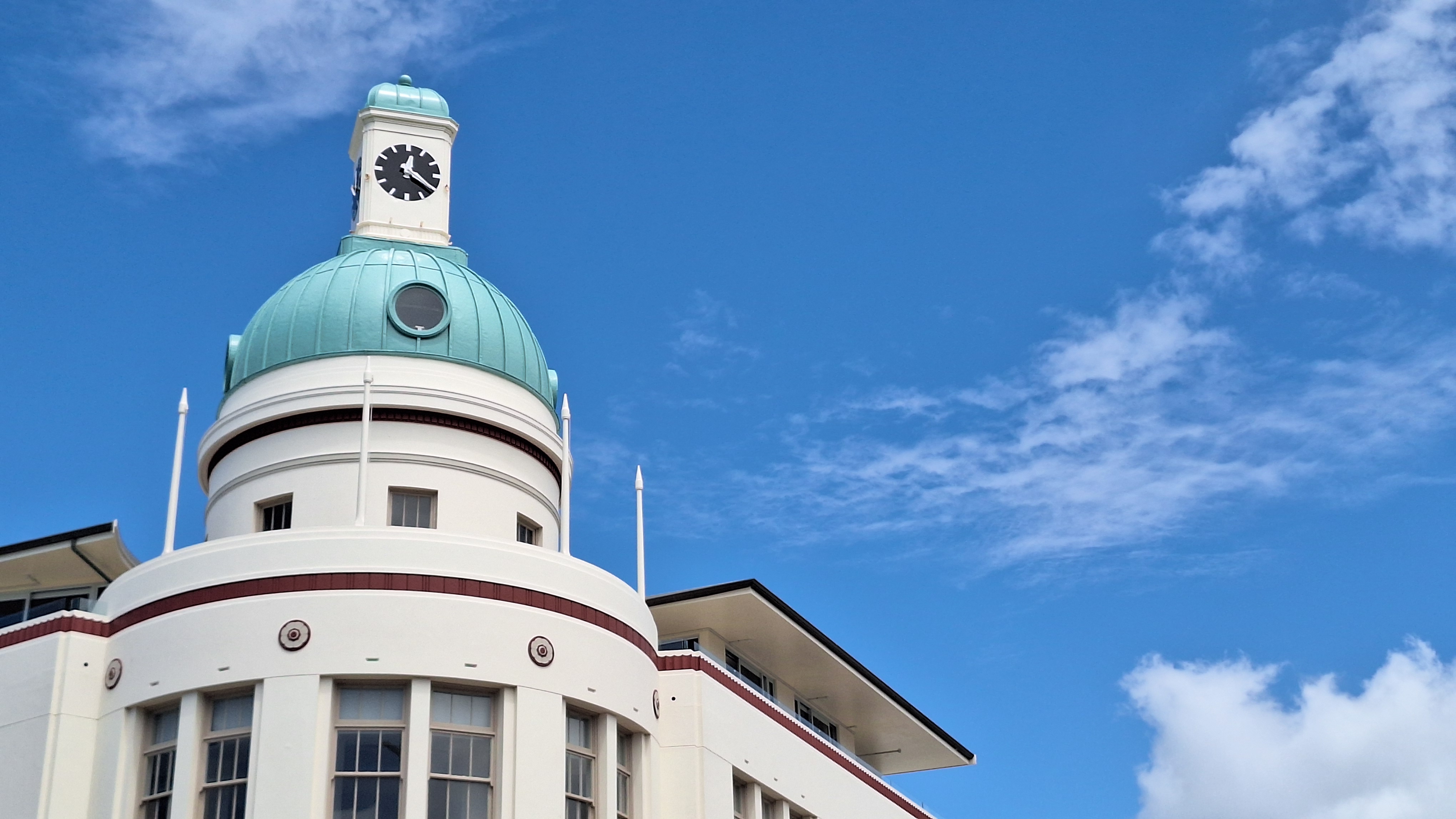
Next came Napier, a city that looked almost Adriatic from a distance, perched around Bluff Hill at one end of the swooping curve of Hawkes Bay. It was one of the prettiest towns we’d seen so far, designed to a uniform Art Deco style with streets named after literary figures (all conspicuously male). But its quirky aesthetic is one rooted in tragedy. A massive earthquake in 1931 levelled the city, causing fires to rip through on tidal winds and leading to approximately $5 million damage in Napier alone.1 256 people lost their lives, making it to this day New Zealand’s deadliest natural disaster. Reconstruction adhered to the architectural fashions of the time, though what then presented as a modern symbol of defiance now carries a whimsical old world charm.
After the empty highways of the East Cape, we had to adjust to being back in tourist country. Free camp spots were few around the city centre, and strictly regulated. We found a space on the oceanfront, beside the aquarium and the black sand beaches that dropped steeply towards the rolls of powerful waves. The storms rolled in again that evening, producing some fantastic lightning displays, though this didn’t deter the local teens who made a good Saturday night of it rallying round the car park and serenading us with their teeth-rattling sound systems.
The better spot for us was at Haumoana a little further south: a large ocean-facing zone specifically designed for free campers like us. Word had long spread for the place filled quickly, not just with foreigners but with Kiwi families too. Hawkes Bay is known wine country, so we agreed to sidestep our money-saving efforts and sample some of the local produce. We suited up (that is, put on our respective pairs of jeans) and ambled the five minutes to Elephant Hill vineyard, where we sat gazing across the eaves in luxury’s lap, an alien experience for us rustic and hardy van-lifers. No experts, we ordered a flight of wines of all shades, sipping merrily and ignorantly as we guessed at notes that never seemed to show up on the little menus provided. We resolved that the Bordeaux-style was our favourite, and finished with a full glass each, our cheeks turning rosy like the edge of the dusky sky. Admittedly a little giggly, we high-stepped into Haumoana town for fish and chips to see off the night. In truth, we hadn’t been impressed by the chippies so far, finding their helpings less generous than back home, and their oven fries a poor substitute for real hand-cut chippy chips. But, possibly assisted by the wine, the fish and chips that night were decent and sizeable. As an unclouded night sky unfurled above us, we marvelled at Orion hung upside down to the north, at the Southern Cross, and at the dust of the Milky Way sprinkled overhead. We felt happy as drunk people can, despite being no closer to either work or long-term economic security.
The next morning we were headed inland again, booked to cross the Tongariro in a few days’ time. According to the news the fires were out and the walk would reopen the very day we’d booked on for. Still, we were uncertain about what would greet us there, and we silently questioned if our presence would even be welcome so soon after such devastation.
- Nearby Hastings suffered $2 million in damage. ↩︎

 Dead Academic
Leave a comment