Following our unscheduled evacuation of Rotorua, we found ourselves back on the road, untethered and aimless. We’d earned enough over the past month to delay job hunting a few weeks, plus we felt a break in employment might help us shed the cynicism we’d acquired from our last workplace. So from the banks of the Waikato river we headed north, towards the pan-flat dairy country of the Hauraki Plains and the distant line of the Kaimai hills. Beyond lay the Coromandel Peninsula, North Island’s rugged and rural getaway, where we hoped to recharge our batteries before the school holiday rush began.
The Coromandel lies just across the Firth of Thames from Auckland, so during the summer months it attracts hundreds of thousands to its rainforest-clad mountains and blue water bays. It’s also an historically significant area, for in the 1850s gold was discovered here, the first in New Zealand. Large scale mining operations would turn the peninsula into one of the country’s most populated and profitable regions, but it was the efforts of grassroots protesters in the 1980s and 90s that made it the eco-hippy paradise it is known as today.
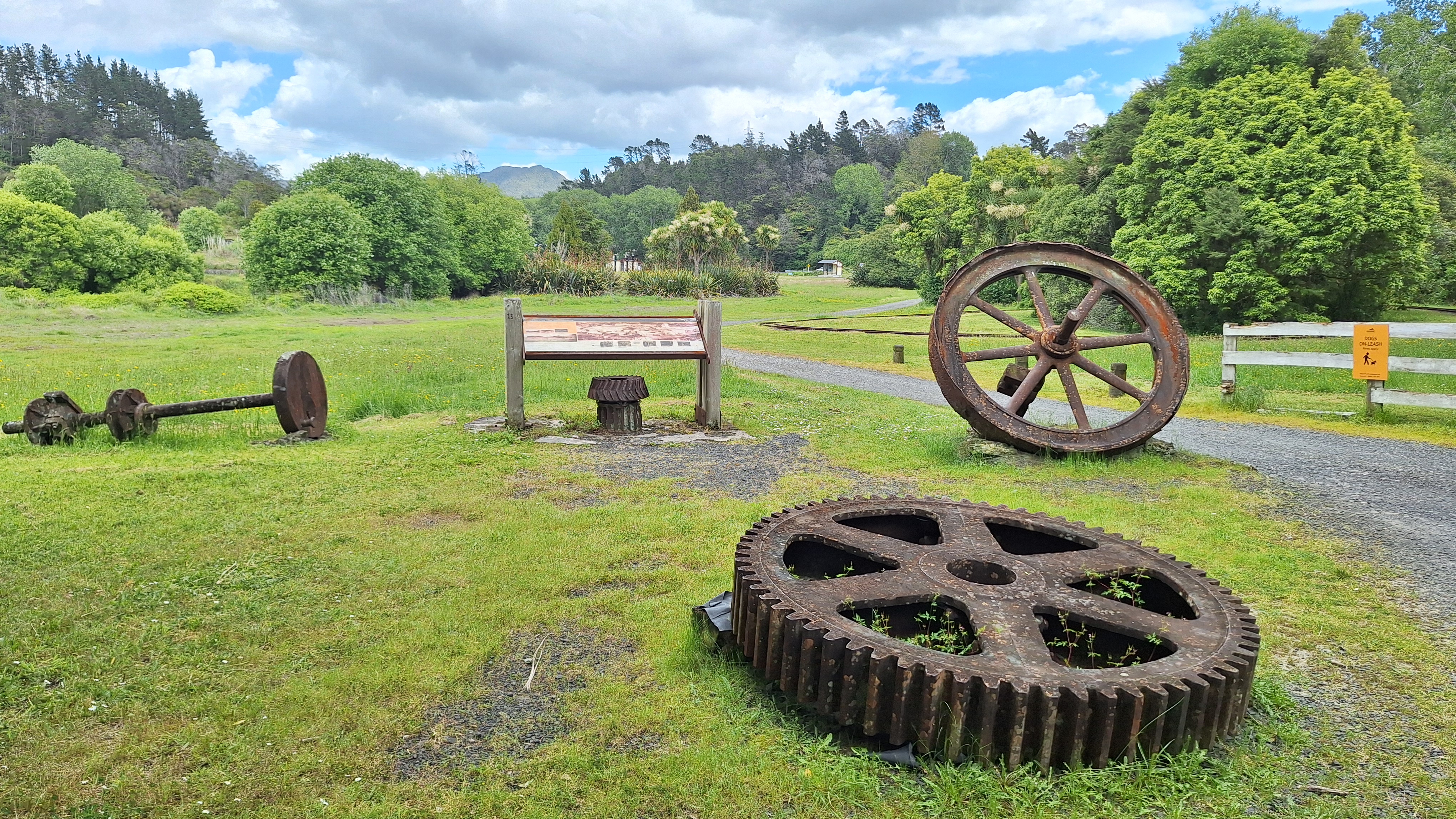
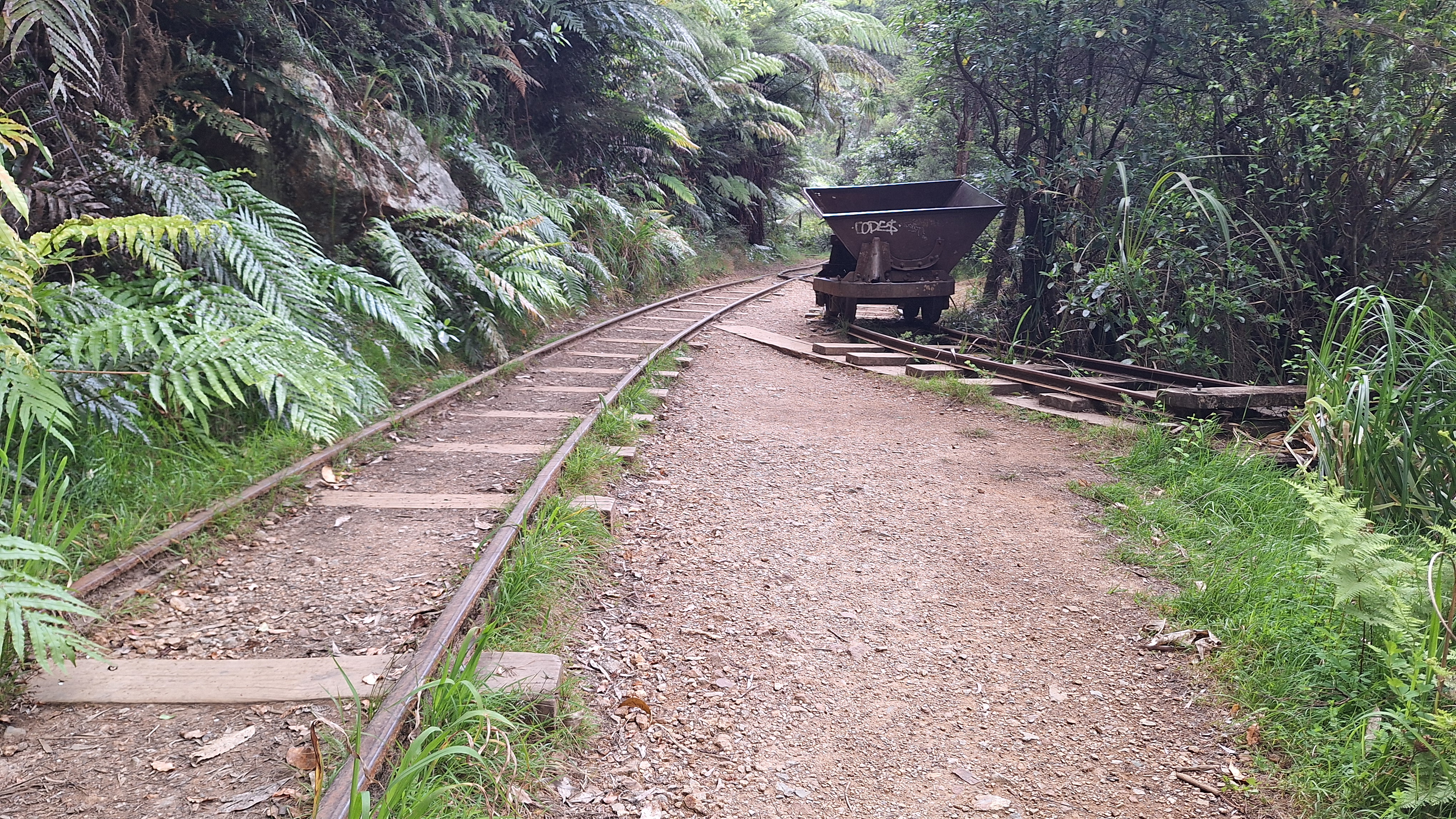
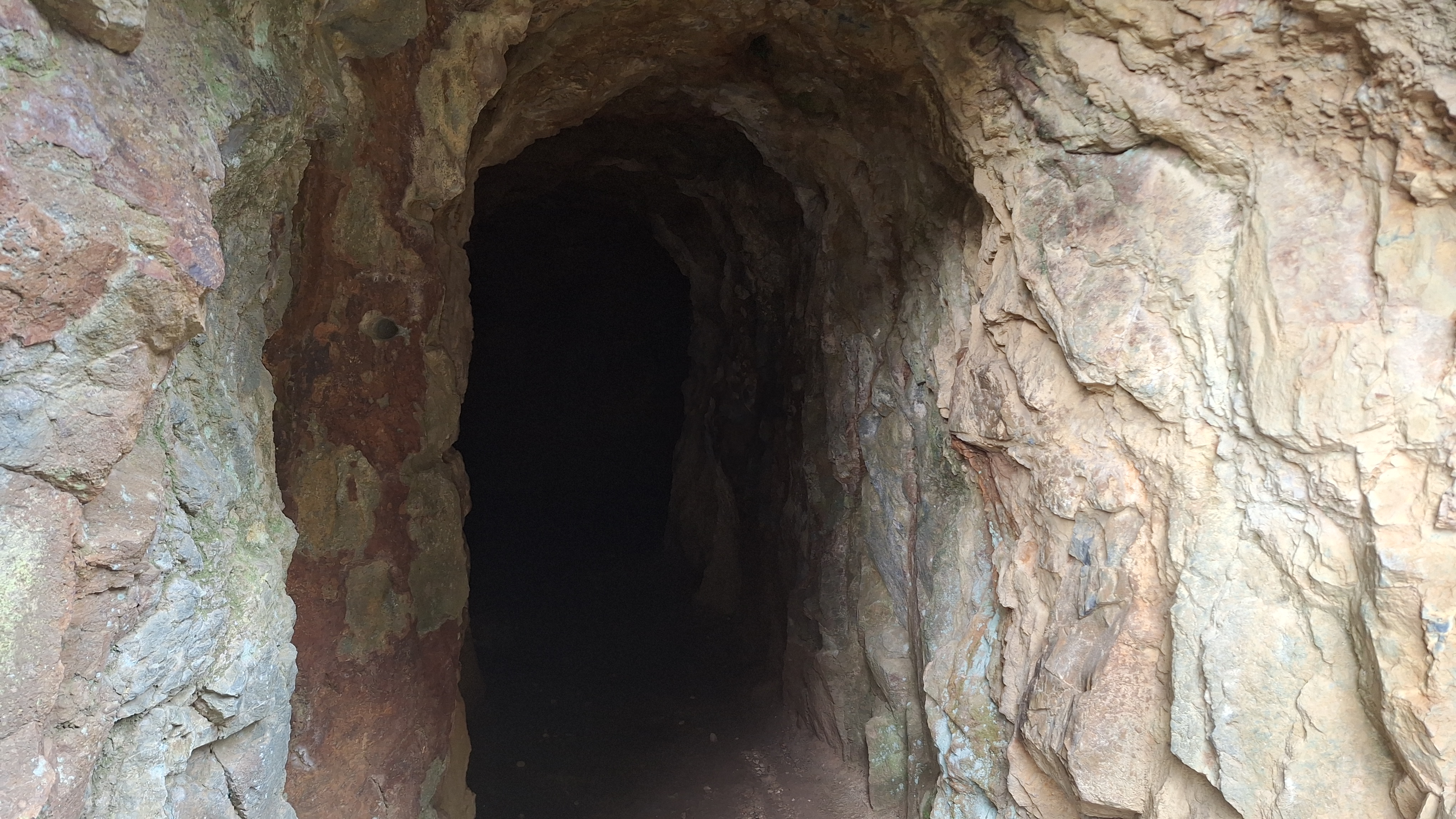
Remnants of the industrial past can still be found in places like Karangahake Gorge, where lost stamping batteries and mined tunnels have been redesigned as a network of explorable trails. The former Victoria Battery, once the largest of its kind in New Zealand, is nothing but an eery scattering of ruins – even with the help of information boards, it’s hard to imagine the assault on the senses that would have accompanied the crushing of the quartz ore before it was doused in cyanide to leach out the precious gold. Further along the gorge, at the confluence of the Ohinemuri and Waitawheta rivers, a path winds up steep cliffs and into the mine tunnels themselves. Some are punctured with small windows for dumping waste rock into the churning river below; others are impenetrably dark, their walls slithering with water trails, drips echoing eerily from the low vaulted ceilings.
The humid November weather forced us to delay our road trip and take a few days’ rest in Te Aroha, a former Edwardian spa town. In the stifling, airless heat we found ourselves camped next to a convention of the NZMCA (New Zealand Motor Caravan Association), our little van looking quite pathetic next to hundreds of brawny RVs and motorhomes. The night was oppressively sticky, and waking drained and dehydrated (and to the wail of an air raid siren!) we resolved to pay for a night in air-conditioned comfort. We found, for a reasonable price, a back garden hideout under the slopes of Mount Te Aroha. The cheery owner soothed our panic about the sirens, informing us they were merely a WWII heritage repurposed as a town-wide alarm clock.
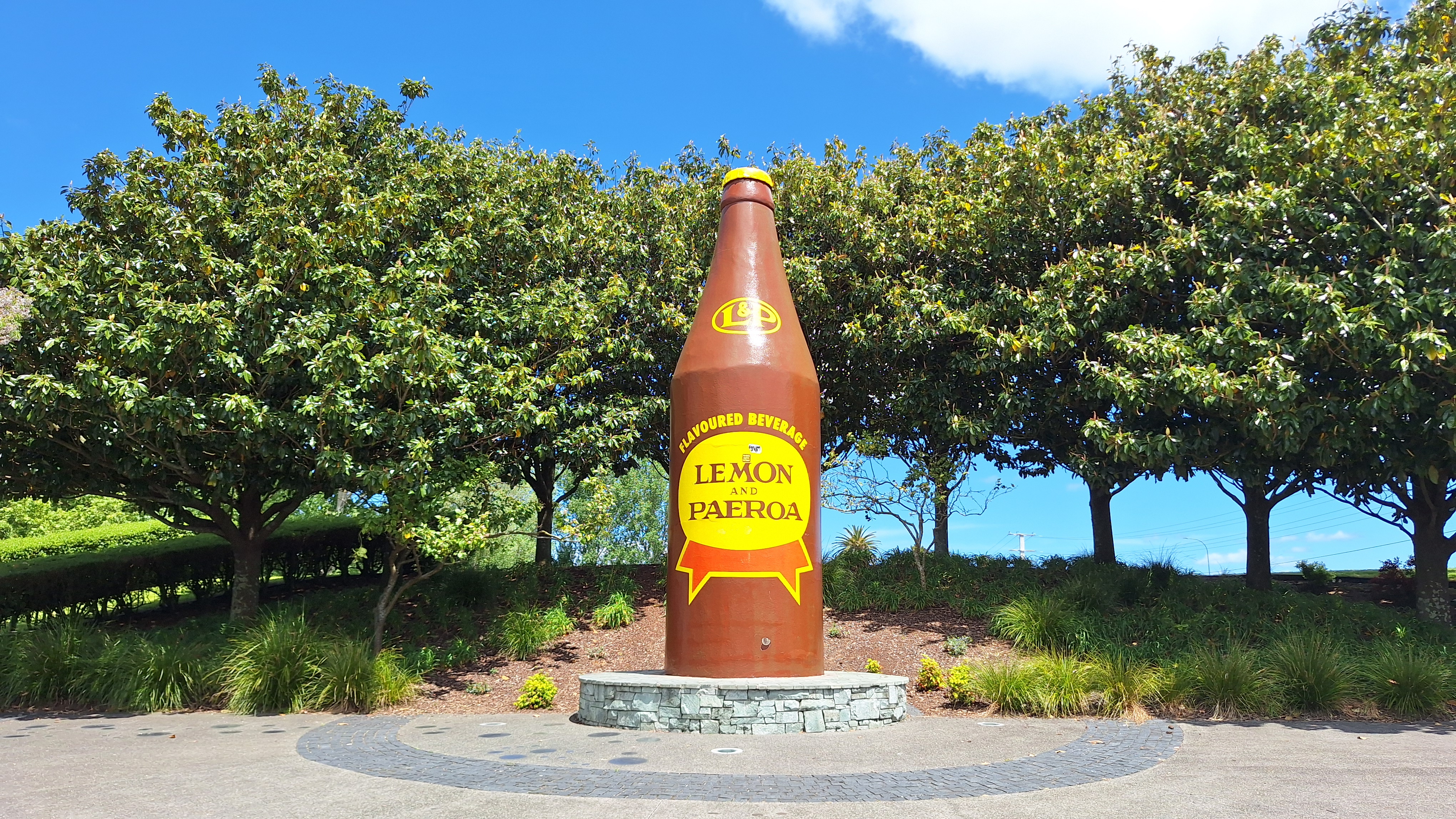
Te Aroha was once the mineral spa capital of the country, and the waters channelled from the geothermal springs under the mountain still entice with their dermatological benefits. The same springs produce the world’s only known hot soda water geyser, though we didn’t linger to catch one of its erratic eruptions. This unique water is used to make Lemon and Te Aroha, an historic rival to the more famous Lemon and Paeroa (L&P), New Zealand’s national soft drink. I bought a bottle at the town hall, the vendor proudly extolling its pure natural ingredients in contrast with the synthetic ‘trash’ of its Coca Cola-owned competitor. The clear liquid certainly looked more appealing than L&P’s murky yellow, but I didn’t taste enough of a difference to boycott a photo of the famous statue in Paeroa just 20km up the road.
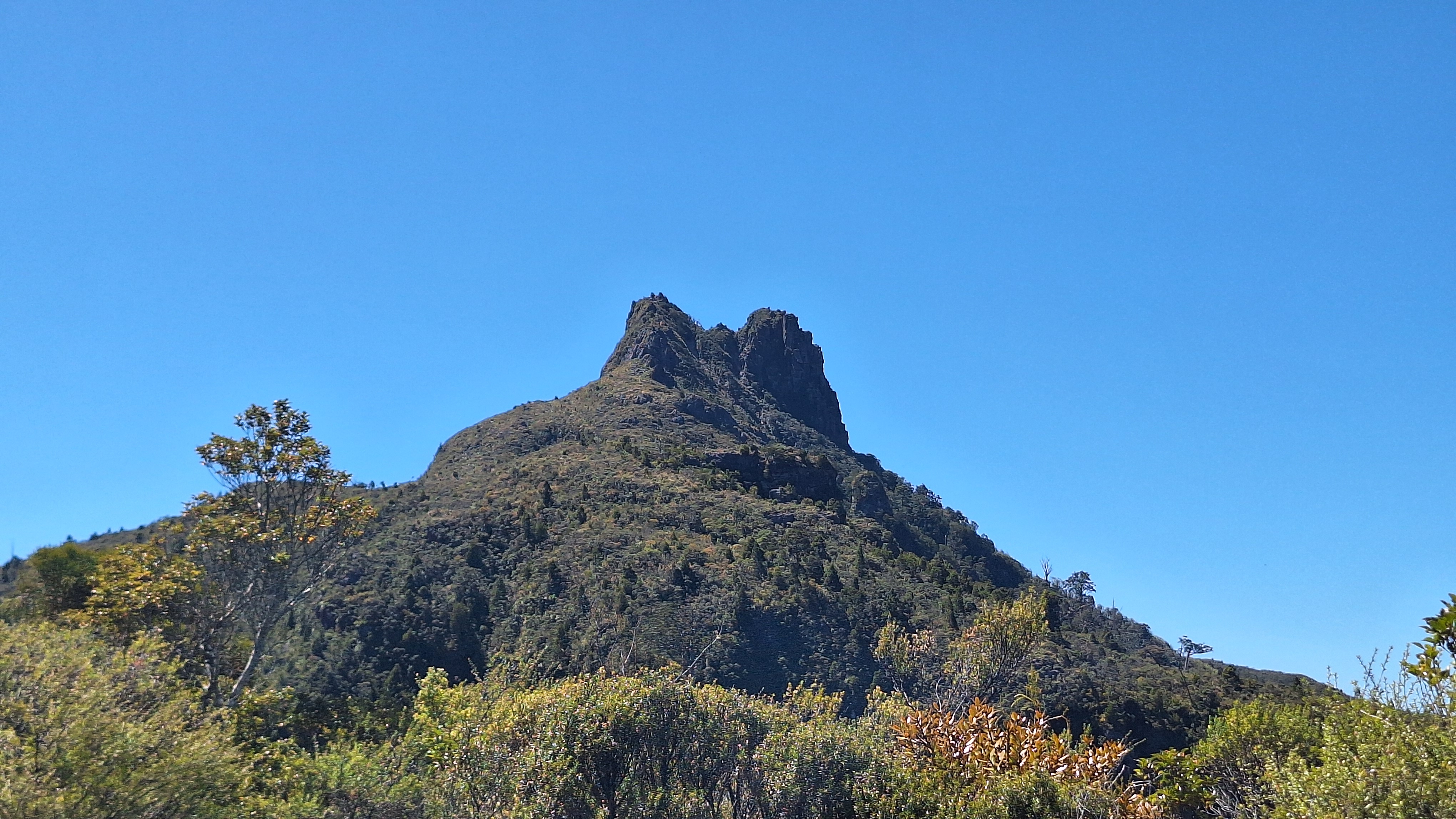
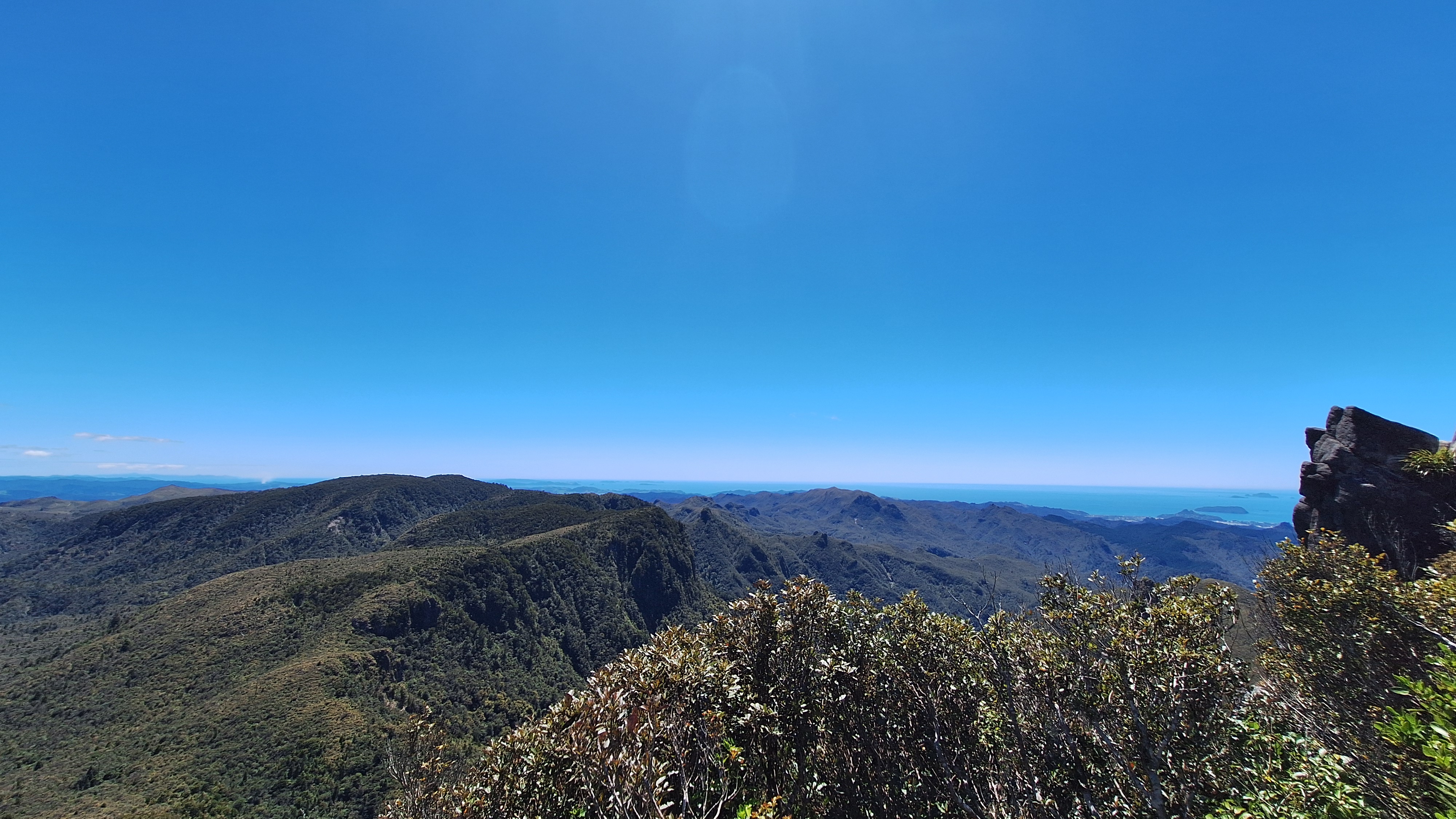
Exhaustion overcome, we travelled north to the Kauaeranga Valley, once home to a vast kauri forest that fell prey to extensive logging between the 1870s and 1920s. Another hike beckoned: The Pinnacles, a trio of rocky peaks jutting out of the mountain spine that runs the length of the peninsula. A slippery track climbed blindly through mulchy rainforest, and only after a couple of viewless hours did we emerge onto a dry plateau where the trees gave way to sun-baked brush. From the spacious DOC hut the route to the Pinnacles was clear, the stony path becoming wooden boardwalk, climbing first gradually then sharply up to the base of the three peaks. When the gradient became too steep for steps, we were left to haul ourselves up by metal rungs drilled straight into the rock. The compact platform at the summit offered views less far-reaching than I’d imagined, framed as we were by green mountains that obstructed sight of the Firth, though we did admire the blue of the Pacific above folds of forested hills away in the east.
The road north curled up the coastline, passing rocky inlets that lured fishers and swimmers alike. We were a little too early to see the Pohutukawa trees of the west coast in full bloom, but with crags looming to our right and the Firth of Thames glittering on our left, we didn’t lack for scenery. Though we could barely conceive that across those waters the endless sprawl of Auckland lay, Ash did catch sight of the distant Sky Tower as we climbed the hills near Manaia, though I was too absorbed by the treacherous roads in front and impatient drivers behind to take heed. We were lucky to find a rare free camp spot in Coromandel Town, so we made a decadent night of it with a flight of beers at the microbrewery and a bowl of locally sourced mussels for dinner.
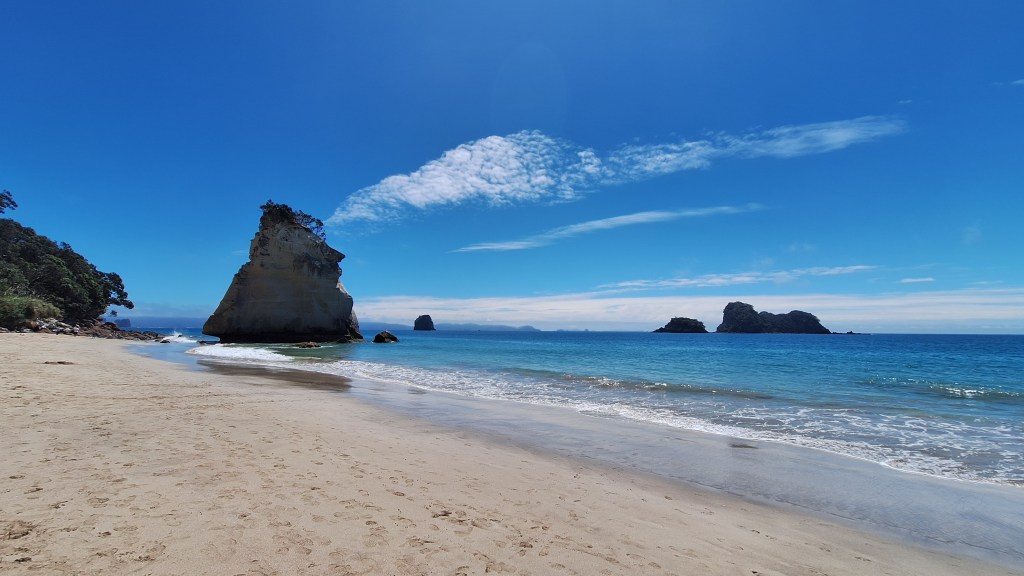
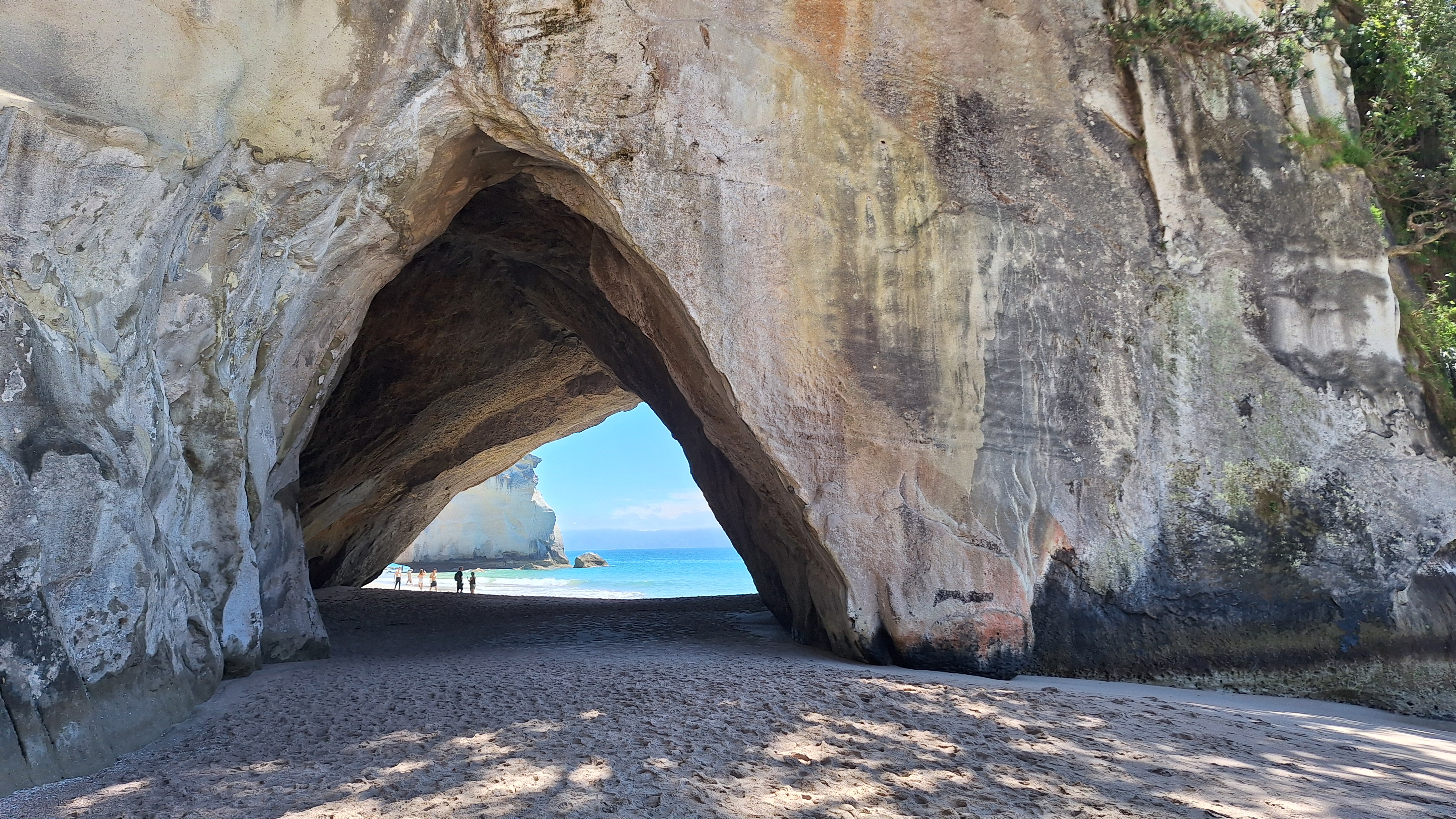
The next day we drove inland, crossing the spine of the mountains to descend via hairpin bends to the east coast. Our first destination was Cathedral Cove, its imposing natural arch made famous as the Windows background and muse of idle office workers the world over. We followed a smooth path that contoured limestone cliffs before dropping into the sheltered cove via a flight of wooden steps. Signs warned us not to linger beneath the arch because of rockfall, but we couldn’t help but dally, craning our necks as we passed beneath the high vaulted ceilings. We stayed there for a couple of hours, bathing in the glassy water, intoxicated by the waves that lapped at the white sands and the cooling breath of the wind. It was a busy spot, with people constantly coming and going, yet it never felt crowded – though perhaps we’d simply come on a quiet day. The introduction of a $20-40 entry fee by summer 2027 certainly suggests that over-tourism is a concern, though I doubt this cost will deter many from what is an astonishingly scenic place.
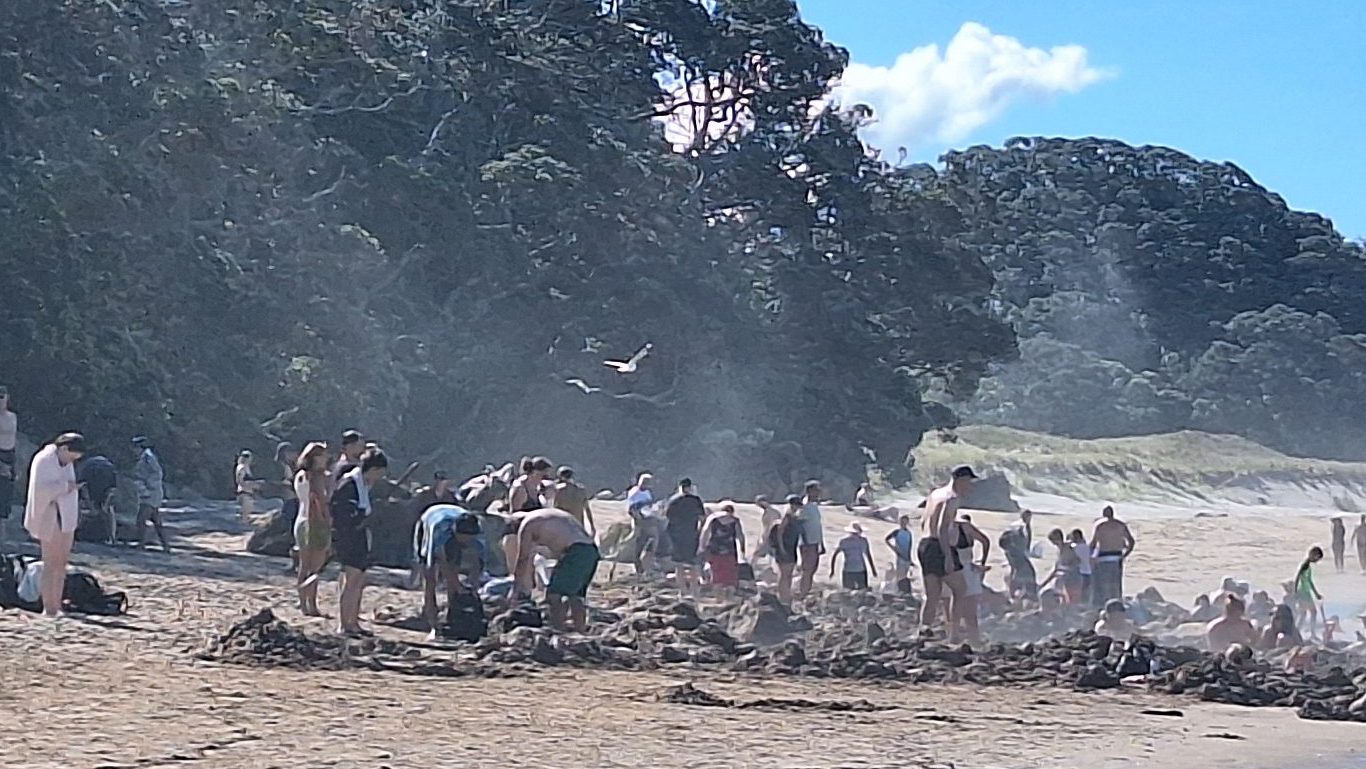
By contrast, we were grossly underwhelmed by the Hot Water Beach, where thermal springs bubble beneath the sand at temperatures rising above 60 degrees Celsius. Within a designated two-hour window when the tide is at its lowest, swarms of bathers arrive each day to excavate hot pools in the sand. We’d booked into the adjacent Top 10 holiday park, utopian compared to the dreary camp we’d left a week ago, and from there we too tottered down to the beach, our complimentary shovels swinging merrily in hand. When we saw the mass of writhing, sand-encrusted bodies, our dreams of a private natural jacuzzi melted away. On a miserable day, perhaps even early in the morning, I might understand the appeal of the Hot Water Beach. But to struggle elbow-to-elbow with total strangers for the novelty of wallowing in a shallow brown pool seemed ridiculous to us. We paddled in the cool ocean instead, bemused by those sweating languorously and obstinately in their puddles, before returning to camp for a cold beer, our shovels still dangling undirtied by our sides.
The last stop on our turn around the Coromandel was Waihi, another gold boomtown home to the utterly immense open-cast Martha Mine. Once one of the world’s most productive mines, it extracted four billion dollars worth of gold between the years 1879 and 1952.1 But there was also unrest: Waihi was the scene of a mass miners strike in 1912 that resulted in New Zealand’s first death from an industrial dispute (apparently still a polarizing subject in town) and the eventual establishment of the New Zealand Labour Party. Unlike elsewhere in the Coromandel, underground mining still happens here. Operations are run by the multinational OceanaGold corporation (themselves not controversy free), though it doesn’t appear their wealth has trickled far into Waihi itself, so forlorn did the town appear on that muggy afternoon we passed through.
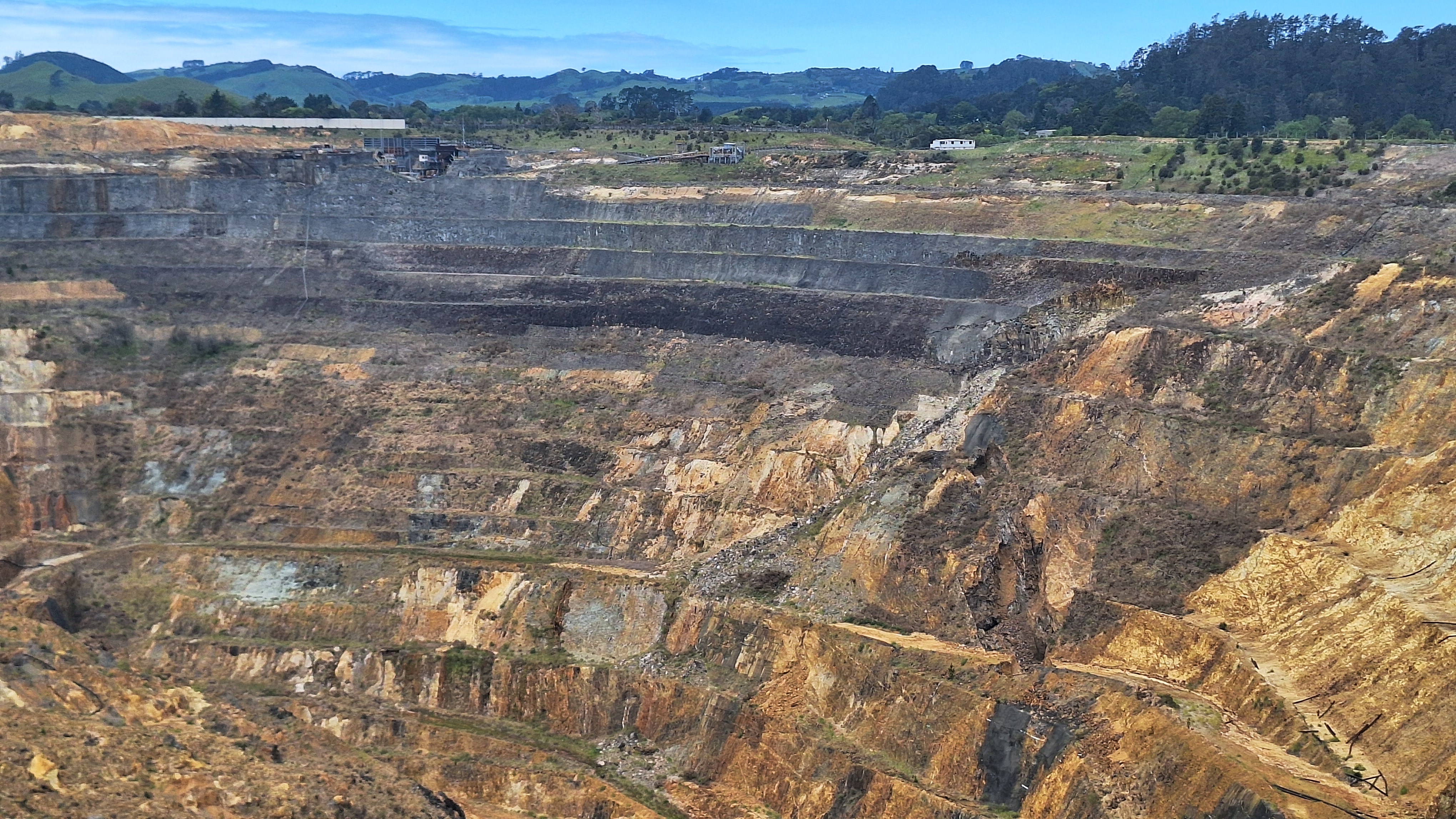
Sitting staring into that vast pockmark on the face of the earth, our minds turned, appropriately enough, to our own (lack of) labour. Life on the road has many positives – leisure, freedom, spontaneity – but these facilitate neither structure nor routine. We’d noticed a looming problem a day earlier, when a breakfast of eggs benedict had come to seem more like a banality than a treat. Too much indulgence twinned with no long-term plan had left us sliding towards apathy, and as we stared anaesthetized into that pit – literal and metaphorical – we realised the need for work was about more than simple economics. The job search would have to begin again in earnest, though from previous experience we knew it might take weeks to find success. In the meantime, a complete reset was essential to help restimulate our wearied sense of adventure.
We resolved to head south, crossing the Cook Strait as soon as was feasible, to begin again on Te Waipounamu, ‘the place of greenstone’ – South Island. We booked ferry tickets on the spot and plotted a meandering course for Wellington, with plans to take in the East Cape and Hawkes Bay before we said farewell to North Island, for a little while at least.
- The Penguin History of New Zealand, Michael King, 2003, p.208-9. ↩︎

 Dead Academic
Leave a comment