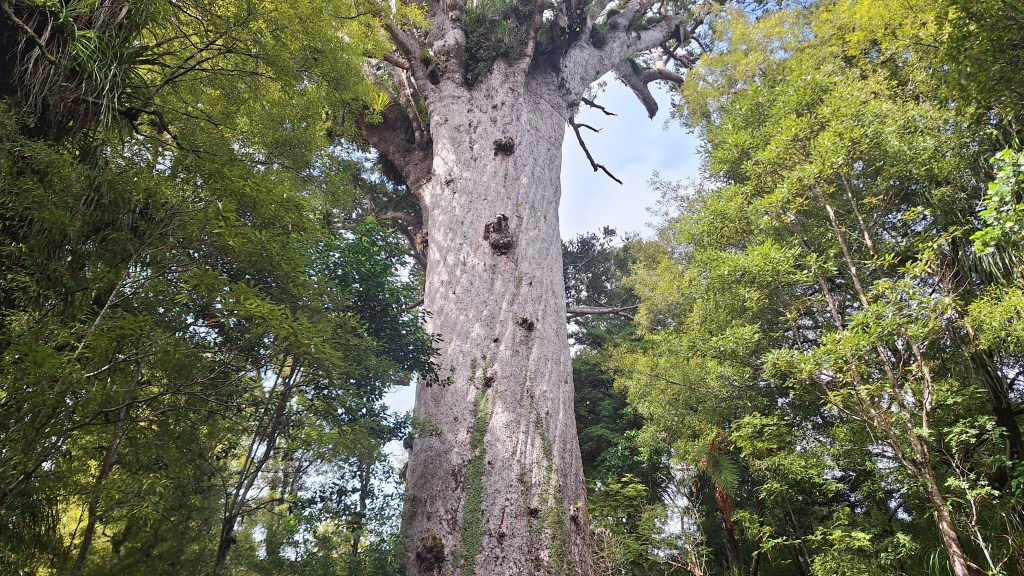
Round each blind and perilous bend we followed State Highway 12, the main thoroughfare down Northland’s remote west coast. The road threaded through forest so dense that the walls of vegetation looked flat and two-dimensional, like we were driving through one of the video games of our childhood. We’d come there, to Waipoua Forest, a swerving detour on our return to Auckland, in search of Tāne Mahuta – New Zealand’s largest kauri tree.
The kauri is the second largest species of tree in the world, second only to the giant sequoia of California. But it is a species barely clinging to existence, felled throughout the centuries for Māori waka (war canoes) and European ships masts, cleared for agriculture and the extraction of its prized gum. Whereas these trees once covered much of New Zealand’s northern regions, now less than 1% of original kauri forests remain. Waipoua, the largest untainted kauri forest in the country, was officially protected in 1952, with only its relative isolation saving it from the extensive logging of the past.
Kauri protection is a top priority for New Zealand’s Department of Conservation. The species has been threatened in recent years by kauri dieback disease, a fungus that spreads through the soil and leaves the trees grey and desolate. Initiatives have been brought in to minimize the spread, such as cleaning stations near endangered areas for visitors to wash their shoes of dirt, but it’s a setup entirely dependent on trust and goodwill.
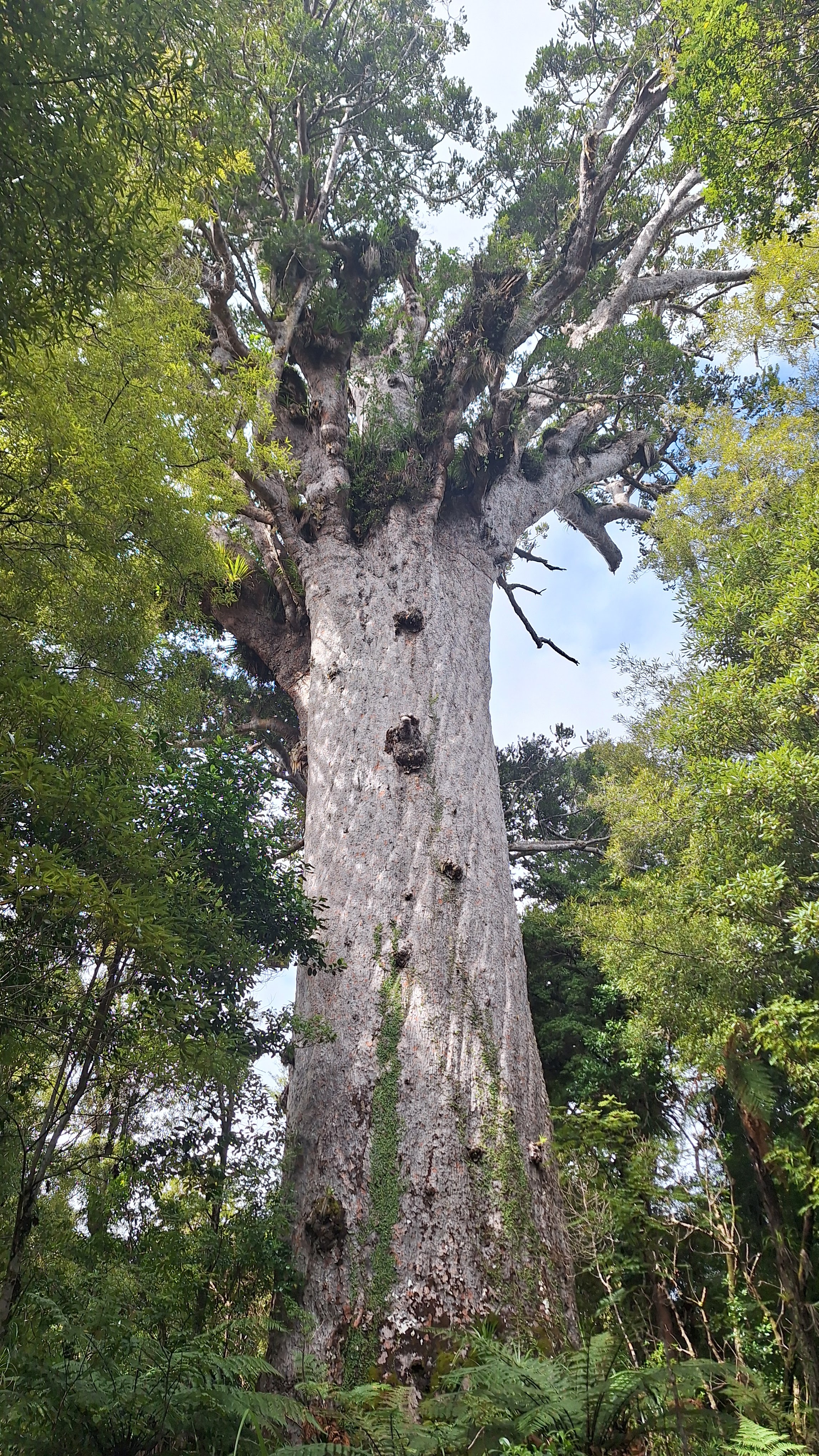
Passing through the cleaning station built into the side of the road, we followed a boardwalk through tangled vegetation to where Tāne Mahuta stood. At over 51m in height, 14m in circumference, he loomed above us, bathed in a silvery light, the sole tree to penetrate the thick canopy overhead. His name means ‘Lord of the Forest’, yet still he is dwarfed by his ancestors, those other giants now lost to fires and logging and disease. While his size could not fail to impress, it was hard not to think gloomily of those others, nor of the mammoth task ahead, the valiant effort of preserving him for generations of New Zealanders to come.

 Dead Academic
Leave a comment