For a city of such global renown, Geneva can appear inconsequential. It lacks the self-assurance of a capital, the vibrancy of a metropolis, and, as a French-speaking global centre on the periphery of a majority German-speaking nation, a certain stability of character. Perhaps from some silent insecurity, Geneva can come across as aloof to the undistinguished visitor. Stoically diligent and permanently preoccupied, it seems bashfully unconvinced by its own charms.
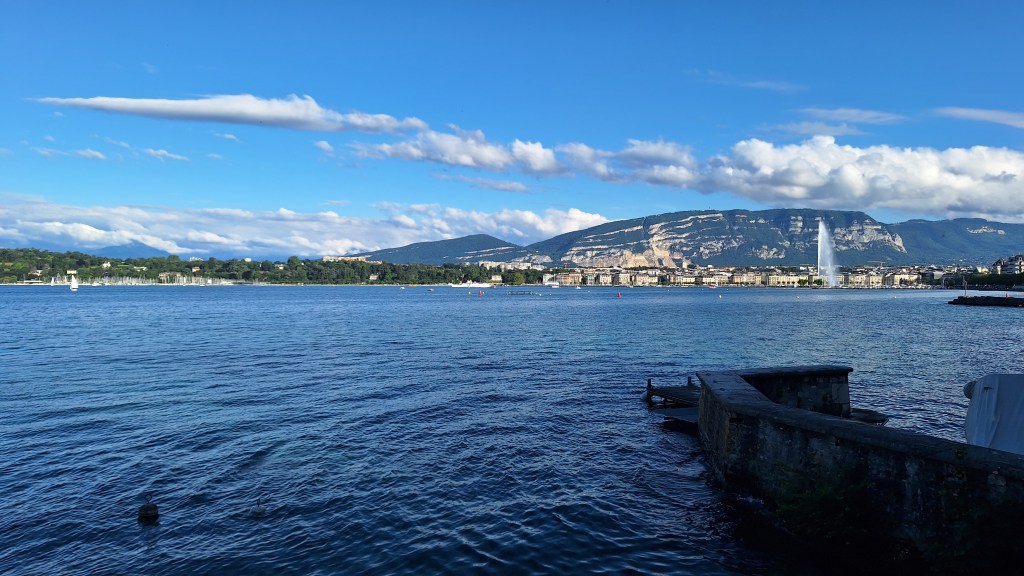
Unlike many cities in Western Europe, tourism is not the priority in Geneva. It remains, first and foremost, a centre of bureaucracy – attractions are extraneous and few. The closest it has to a metonymic landmark is the bathetic Jet d’Eau, a hydraulic pressure release repurposed as spectacle. The effect of the foamy mist curving over the glassy surface of Lac Léman is winsome enough, but it’s hard not to see the ‘fountain’ as emblematic of Geneva as a whole: resourceful, distinctive, yet rarely breathtaking.
Defying its global import and nigh-unliveable economy, Geneva remains a working city for those who fulfil neither diplomatic nor ambassadorial roles. A walk from Gare Cornavin to Lac Léman reveals the usual panoply of modern life: sex workers and kebab shops; primary schools and corner stores; massage parlours and pharmacies. Yet as ‘real’ as Geneva gets, it lacks the usual barbarisms of urban life. (How could the home of the Red Cross be anything except conflict-averse?) The city – like much of Switzerland – feels safe in a discreet, standoffish way.
Reserved civility is essential when everyone has a job to do. Cities with high unemployment lead to more impromptu chats on the bus, but the clockwork efficiency of Geneva is reliant on a cordial disinterestedness. It was in Geneva that the symbol of Swiss efficiency was birthed, after all. In 1541 John Calvin ordered a ban on jewellery under the auspices of the Reformation’s ‘sola fide’ doctrine. The humble wristwatch he excluded, conceding its inherent utility, and thus a lucrative loophole was established. Now it is Rolex that adorns prime advertising positions overlooking the lake, where anywhere else the scarlet curls of Coca-Cola would prevail.
The irony of course is that Swiss watches are now among the most coveted luxury goods on the market. Somewhere in Geneva, Monsieur Calvin is turning in his unmarked grave. But the appeal of the grandest horology to those who can afford it is as much symbolic as it is ostentatious. Scrupulous mechanics communicate an attitude of meticulousness; the wearer wants the world to know that accuracy matters, that even seconds are essential. It is precision to the point of tedium – and therefore suitably Genevan.

Twice I’d been to Geneva before, and twice it had left me cold. The steely alpine climate was reflected in the still, grey lake, and the streets were conspicuously subdued. To say I disliked it would be unfair; I felt only a dulled ambivalence. And this ambivalence I also felt from Geneva towards me. I am drawn, like most, to cities where character is unmistakeable, where atmosphere bubbles on the streets and an unfamiliar chaos envelops the foreign visitor. But atmosphere in Geneva seems confined to the isolated corridors of power. For the everyman wandering its hushed streets, it can feel like the party is elsewhere.
Strolling through the city on a cheerless Sunday in July, I was not shocked to encounter that same Geneva – efficient, polite, entirely lacking in exuberance. The Jet d’Eau spurted still and clouds clung to the Salève. Swiss flags dangled limply from balconies, hungover from the defeat to England the night before. Towards the lake we wandered, observing everywhere a listlessness and a solemnity.
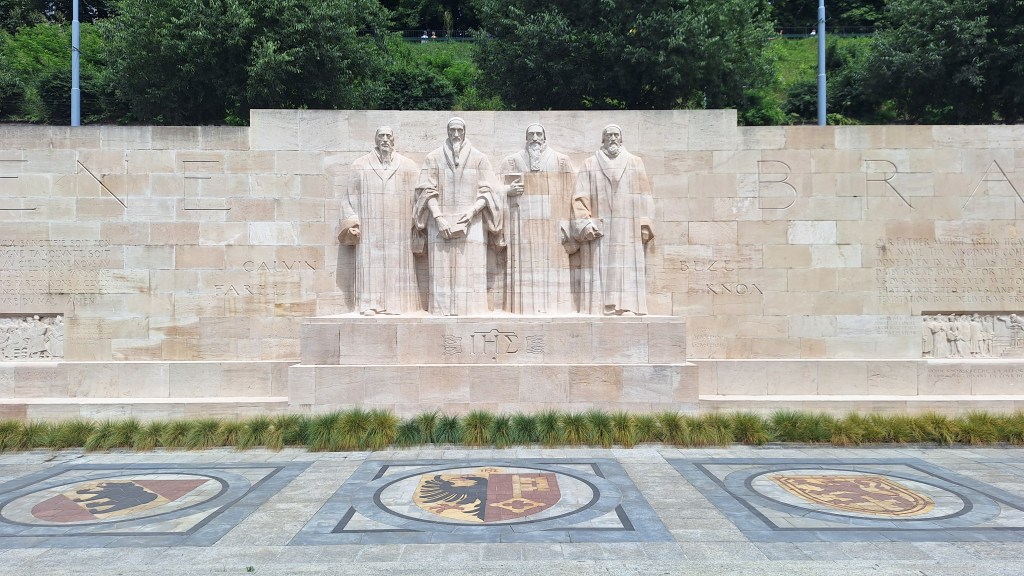
Crossing the Rhône as it funnelled out from Lac Léman with dreams of the distant Mediterranean, we ascended the cobbled alleys of the old town. On the crest of the hill, its base lost to a tangle of cloistered backstreets, the church of St Pierre rises, still today the highest point in central Geneva. Though ‘Protestant Rome’ is no longer protestant (Catholicism being the majority for some years now), Calvin’s legacy lingers on. St Pierre, despite its incongruous Neoclassical porch, is a paean to austerity, a bricky palace where Catholic opulence is exchanged for brooding solemnity. Here, communion with God is encouraged through sheer lack of anything better to do. Along the opposing slopes of the old town, the Reformation Wall frames one side of the Parc des Bastions. A sort of greatest hits of frowning Protestants, this monument conveniently ignores the idol-smashing edicts of Calvinism to commemorate the triumph of free religious expression in Geneva. To read the Battle of the Boyne accoladed in such terms was rankling for us who connote Orangeism with intolerance; but bigotry and liberty are, I suppose, separable only in perspective. The wall is a sight to behold, if not convincing in its appeal to glory.
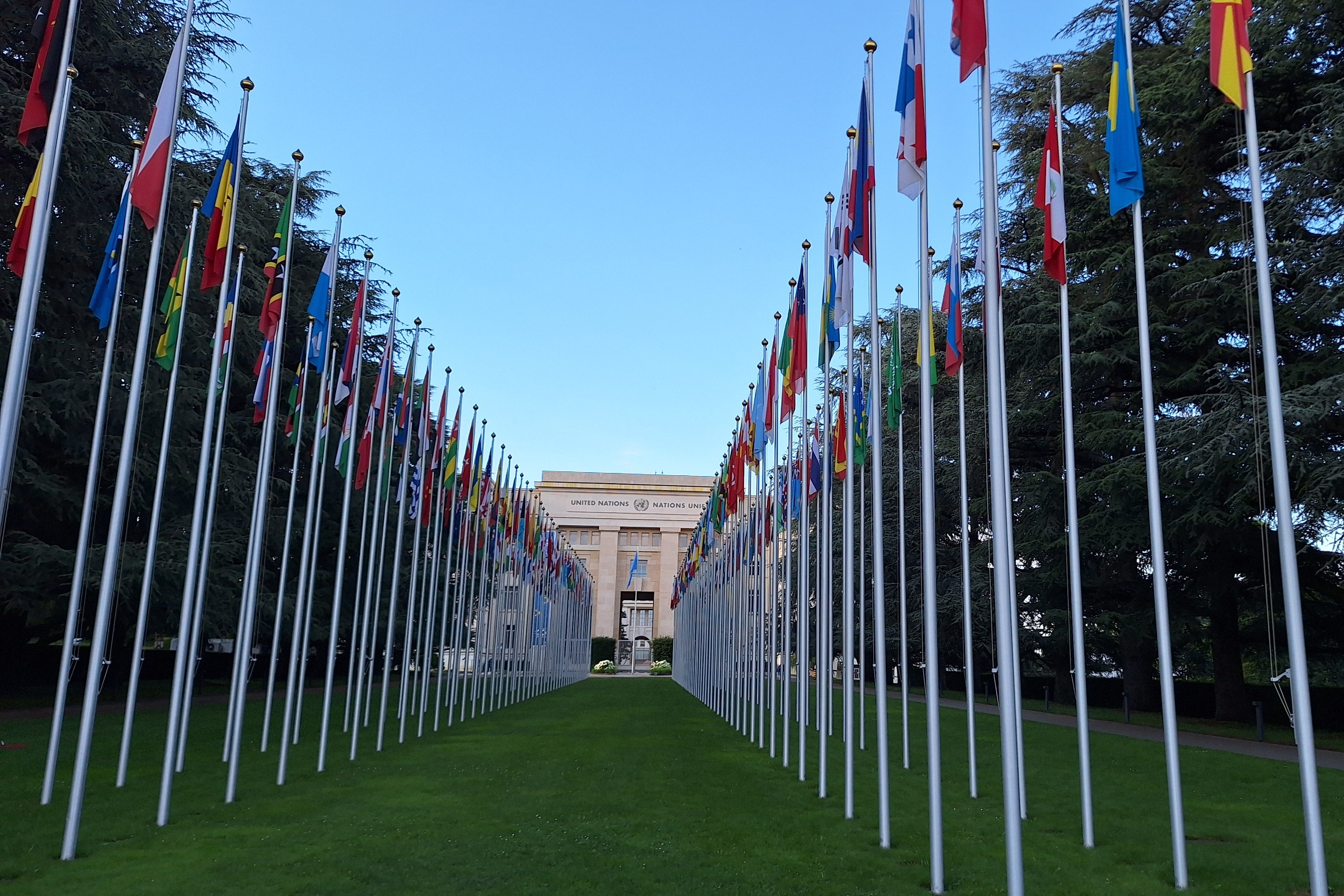
If it seems that I only want to denigrate Geneva, let me qualify what I like about the place. Geneva is not a party city. It is a serious city, with serious institutions and serious affairs to attend to. As a relatively serious person myself, it’s therefore a city I admire. It takes a certain type of tourist to ogle wondrously at the boxy headquarters of the WTO; yet there we were, poking our noses through the locked gates, suspiciously eyed by the closed-circuit cameras. Dawdling around the Palais de Nations, we felt the thrill of proximity to power. I daydreamed a starry-eyed internationalism, lamented the League of Nations, remembered reconstruction, and pondered the persistent dream of a unified world. Yet even as the sacristy of institution tugged at my sentiments, I couldn’t but succumb to a drab materiality. On that infamous lawn with its columns of flags, attention-stood like an army of idealists, I noticed the grass was shoddily trimmed at its edge. Despite my clinging reverence, I could only feel the failings of a quality strimmer had left the Palais looking a little forlorn.
Outside the Palais de Nations stands Broken Chair, a gigantesque sculpture built to encourage the passing of the Ottawa Treaty, a ban on landmines. The allegory of the three legged chair is impressive; the adorning canvas and scaffolding less so. For when we visited, Broken Chair was (the irony eats itself) in a state of disrepair. Could there be a more potent symbol for the beleaguered state of the UN, its repeated failures in preventing global conflict, the dream of a warless world further from reality than ever?
And then the sun came. The afternoon had worn on and the heat steadily built. Low mantles of cloud cleared and a sky of UN blue unfurled. Neckties were loosened, trainers were donned, and Geneva came blinking from its shell. We followed the crowds (magically appeared) to Perle-du-Lac on the lakeshore. And there, for the first time, we witnessed a carefree Geneva. As families played and professionals lazed, as barbeque smoke clogged the air, the city revealed a side of itself we thought did not exist. The stultified demeanour had slipped, like a stiff colleague unveiling a worthy sense of humour on a work night out. The lake had become a splendour, glittering and clear and strikingly blue, and by its side we snoozed, facing the distant foothills of Mont Blanc. And though the hulking giant of the Alps slumbered still behind white puffs of cloud, we were content with the rocky crags of the Salève and the paragliders that whirled from its plateaued summits. The sun browned our skin as we found leisure in the city of professionalism.
Squinting through the sunlight, I could almost envision Calvin himself, beard-dipped in his summer trunks, the flash of a shameful serenity crossing his permanently frowning face.

 Dead Academic
Leave a comment