
Stromboli is desolate. The locals are leaving, enticed by the promise of modernity abroad. The island, drifting somewhere between mainland Italy and Sicily, is blackened and barren, a volcanic cone towering over a few bruised villages. Little grows from the ashen land, the vegetation regularly decimated by eruptions. Fishing alone sustains the dwindling population.
Karin is a recent arrival to this stark setting. It is the aftermath of WWII and she has joined her newly-wedded husband on his return home from combat. Karin is Lithuanian, Baltic-blonde, a modern woman used to material comforts and independence. Her husband Antonio is parochial, content to live in simplicity. Theirs is a misaligned dynamic from the start.
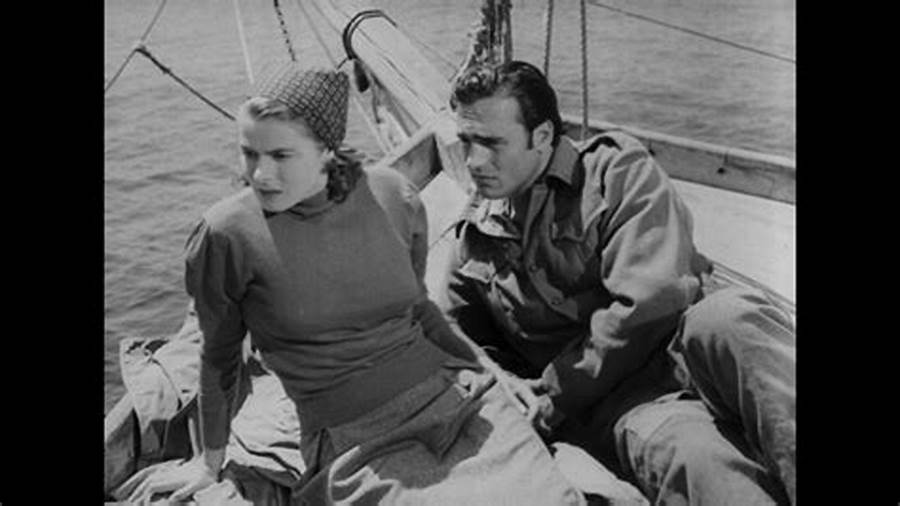
A central theme of imprisonment threads the film together. The couple meet in a refugee internment camp, two among the many cobbling a future together from the detritus of war. All Karin seeks is escape. Application to migrate to Argentina is denied, and so marriage with Antonio presents the next best option. Yet no matter how far Karin runs, the mysterious sins of her past follow. Island life becomes just another cell, and though she tries to mask her claustrophobia with a false optimism, tending their rundown home with feigned humility, Karin fails to keep her frustrations at bay.
While the viewer does sympathise with Karin’s isolation, she remains an inherently self-centred character. Her marriage to Antonio is born from a desire for personal penance and not any sincere affection. Karin will always be at odds with the backwardness of the village. She cannot relate to their commitment to tradition in spite of the daily hardships they face. When the priest informs her of a deceased émigré who has left his life savings to the village, Karin begs it for her and her husband instead, unable to recognize loyalty to anyone but oneself. She represents a modern, individualist spirit clashing with the pre-modern setting. While occasionally patient, Antonio is too much a product of this environment to help her bridge the gap. He is antagonistic, though not inauthentic – from their first meeting he promises only what he is, an uneducated breadwinner who will beat her if she ‘misbehaves’. That Karin agrees to marriage despite his upfront promises of domestic violence testifies to the desperation she feels. Her regret is apparent even at the altar, the elopement a means of self-flagellation rather than any genuine expression of affection. She sees her past mistakes as redeemable only through punishment. Despite her outward protestations, the barren asceticism of life on Stromboli is all she feels she deserves.
In one renowned scene Karin is rowed out to visit Antonio at la Mattanza, the annual catching of the tuna. She witnesses the entrapment and slaughter of the fish, hauled thrashing one by one from the sea. The camera cuts from Karin’s horrified reaction to the boatloads of identical fisherman dotted across the water, her husband indistinguishable among them. The catch takes the form of ritual, men singing ancient call-and-responses, blessing the catch with thanks to the Virgin. But Karin feels more in tune with the encircled fish, victims of the brutal necessities of this life. She is drawn to the simplicity of this foreign world, yet cannot contain her horror at its violent reality.
Rosellini rarely shies away from melodrama in his endings. Pregnant, crying out to God at the edge of the billowing crater, Karin grieves at the dead-end of her life. An aborted escape from the island is thwarted not because Stromboli is physically inescapable, but because her personal anguish is. There is a brief moment of wonder as Karin experiences the mystery of the natural world in alignment with her own impending motherhood. But despite her awe at the expanse of stars above, she is catapulted back into the cell of her psyche. The film grants Karin no resolution, no escape; she cannot find the penance she seeks. To do so would involve a relinquishing of herself, which Karin – symbol of the modern in clash with the ancient and unchanging – refuses to do. Refuting any hope for personal salvation, an avowal to her unborn child is all she can muster. Her revelation is tragic – hope cannot save her. Forever at the mercy of her past decisions, she discovers that rebirth is impossible.

 Dead Academic
Leave a comment