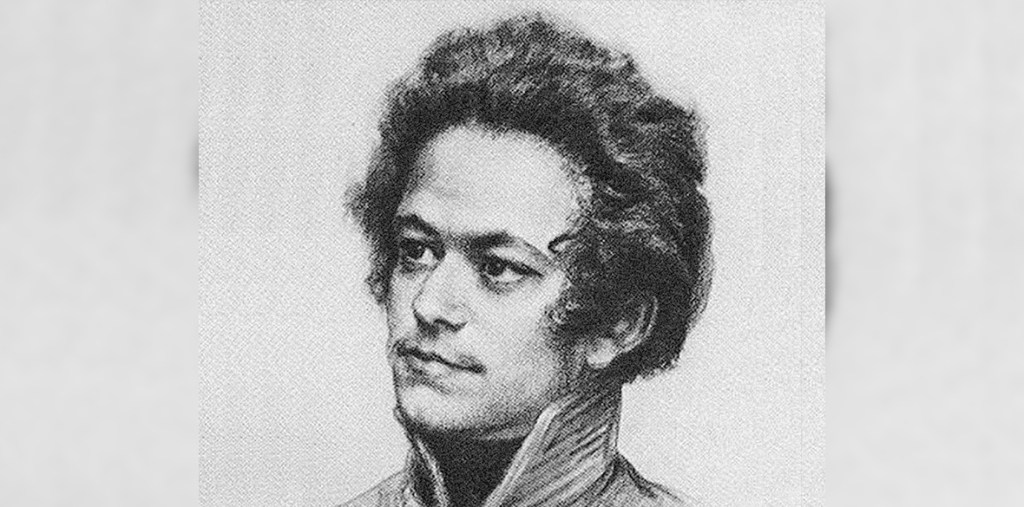
September, 1843. Karl Marx was feeling stifled. His editorship of Cologne’s Rheinische Zeitung had come to an abrupt end following the publication’s termination by Prussian censors. Authorities were clamping down on anti-monarchical, pro-democratic voices and free political discourse was becoming impossible. Now Marx was looking to Paris, a city open to the liberal exchange of ideas. Already there was his friend Arnold Ruge, a Young Hegelian who had fled Germany’s oppressive conservatism and was a known figure amongst leftist intellectuals. The letters they exchanged prior to Marx’s arrival in Paris would be published the following year in their short-lived journal, the Deutsch–Französische Jahrbücher.
In his final letter to Ruge, Marx argues against idealistic utopian fantasies that distract from a critical engagement with society in its present, imperfect form. He criticises utopian socialists such as Etienne Cabet, author of Voyage en Icarie (a novel describing a fictional communist paradise), for being out of touch with the concerns of the masses. Marx recognizes that working people can take nothing tangible from idealism when everyday material concerns loom so perilously. “Real needs”, he declares, “must be satisfied in reality”. Stories, however fanciful, cannot fill empty stomachs.
Reflecting the evolving nature of his own thinking, Marx argues for an open-minded pragmatism. Political dogma implies pre-knowledge of a quasi-religious final destination, something which Marx here refutes. For Marx, to lack a permanent solution to all social ills is not a flaw but a necessity, for it leads to an adaptability that can only benefit the cause of political change. Like moving through darkness by the beam of torchlight, we can only know what lies ahead by continually pressing on.
Marx argues that “internal obstacles are greater than external”, that failure results more from fragmentation amongst potential allies than the actual strength of oppressive forces. We can waste time squabbling in the mud of competing theories, or we can address the obvious issues that all agree upon. Since “[w]hatever is necessary adapts itself”, we can reframe divergences in progressive thought as engines for development, not obstacles. Marx sought to unite leftist thinkers into building a future that could only come into being dialectically: “We do not anticipate the world with our dogmas but instead attempt to discover the new world through the critique of the old.” Only by overcoming real social problems can we discover the society we deserve. It cannot be imagined into being.
For those dissatisfied with the current state of politics, Marx counsels: remain alert. It is as unuseful to become immersed in political in-fighting as it is to withdraw into mindless disengagement. Neither stance imminently threatens the true wielders of power. While the current system may be far, far removed from the ideal that many seek, it is yet necessary to engage with the working channels of the maligned system in order to deconstruct its intricacies. In the age of the distraction machine, it is too easy to withdraw. It takes stamina to unpick the minutiae of political problems that would not exist in the world of our dreams. Furthermore, our task is not to tell others the truth of their existence, but to promote this exact stance of unerring criticality. Marx writes:
“Nothing prevents us … from entering into real struggles and identifying ourselves with them. This does not mean that we shall confront the world with new doctrinaire principles and proclaim: Here is the truth, on your knees before it! … We shall not say: Abandon your struggles, they are mere folly; let us provide you with true campaign-slogans. Instead, we shall simply show the world why it is struggling, and consciousness of this is a thing it must acquire whether it wishes or not.”
History shows that meaningful change does not come from above. Mass consciousness of the need for change is the sole driver of change; without it, change becomes dictatorial and dogmatic. Young Marx recognized that sloganeering would only stagnate the cause of progress, that this can only come from cognizant subjects engaged in real situations, not lost in fanciful rhetoric.
Read the letter here: https://www.marxists.org/archive/marx/works/1843/letters/43_09-alt.htm

 Dead Academic
Leave a comment